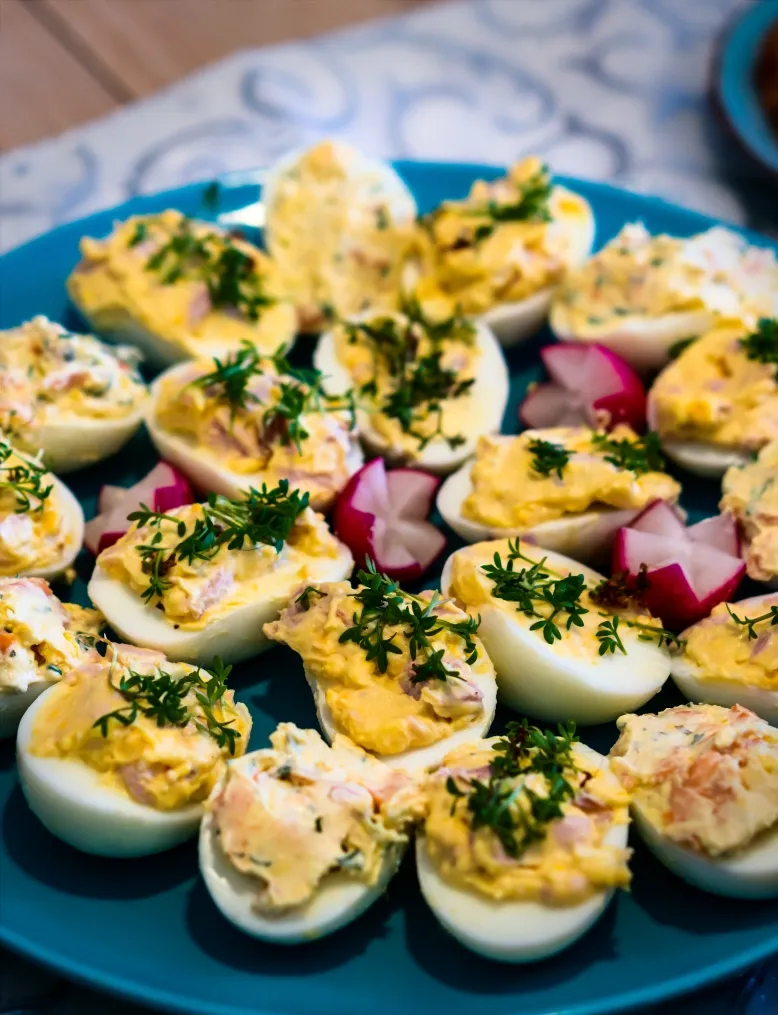
Mimosa Eggs (French Deviled Eggs)
 Prep Time 15 minutes
  Cook Time 10 minutes
  Total Time 25 minutes
  Servings 4
Ingredients
- 8 eggs
- 6 tbsp mayonnaise homemade or good quality
- 4 tsp Dijon mustard Dijon
- 2 tsp white wine vinegar
- 2 shallot very finely minced
- 1 handful parsley finely chopped
- 1 handful chives finely chopped
- salt and black pepper
Equipment

Instructions
1. Cook the eggs
- Place 8 eggs in a saucepan and cover with cold water. Bring to a rolling boil, then lower the heat and simmer for 10 minutes . Transfer straight into cold water to cool completely before peeling.
2. Prepare the eggs
- Peel the eggs gently. Cut each one in half lengthways. Scoop out the yolks into a mixing bowl and set the whites on a platter.
3. Make the filling
- Reserve about a quarter of the yolks for the mimosa garnish. Mash the rest well with a fork, then mix with 6 tablespoons mayonnaise, Dijon mustard, white wine vinegar, shallots, very finely minced, most of the 2 tablespoons fresh parsley, finely chopped and 2 tablespoons fresh chives, finely snipped, plus salt and pepper to taste. Work it until smooth, no lumps.
4. Fill the whites
- Spoon or pipe the yolk mixture back into the egg white halves, mounding it slightly above the rim.
5. Mimosa finish
- Press the reserved yolks through a fine sieve, or crumble them finely with your fingers, over the filled eggs until they're dusted like mimosa flowers. Finish with scattering over the remaining herbs.
6. Serve
- Chill in the fridge for 30 minutes if possible. Serve cold as a starter or apéro.
Notes
- Sieving the reserved yolks gives you a finer, more feathery mimosa effect than crumbling, worth the extra minute.
- Add a little minced cornichon or capers to the filling for a punchier, more bistro-style result.
- Homemade mayonnaise gives unbeatable richness, but good shop-bought is perfectly fine.
- Make ahead: fill and refrigerate up to 2 hours in advance. Add the mimosa garnish just before serving so it stays fluffy.
About this recipe
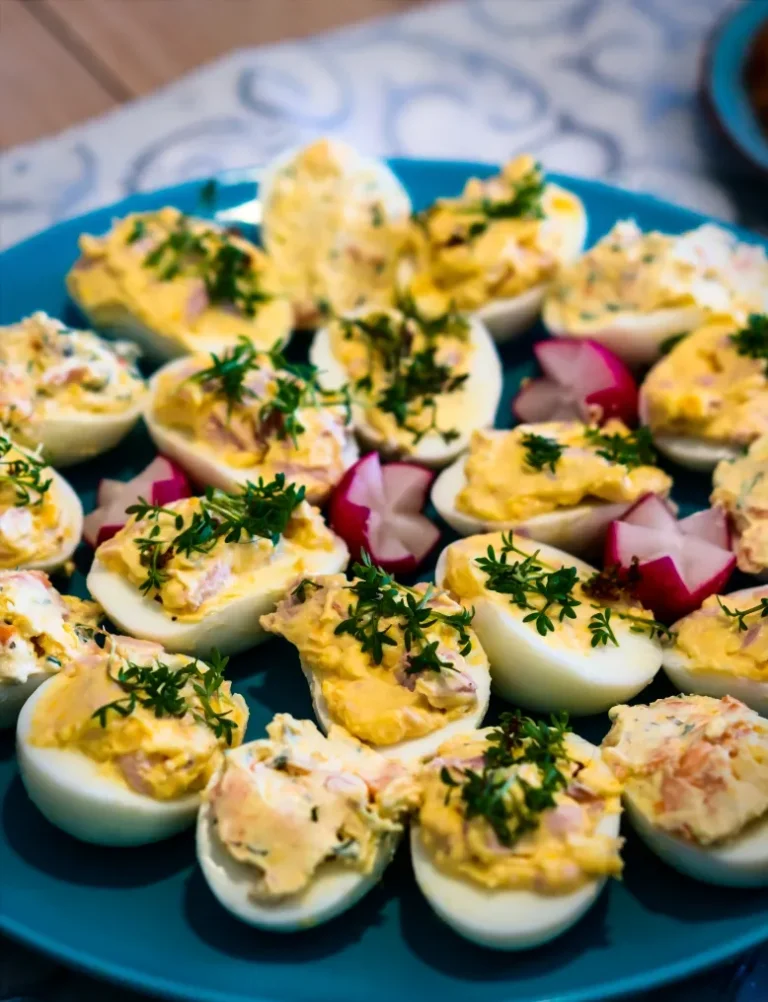
Mimosa eggs are the French answer to deviled eggs, and they are considerably more elegant than most versions you’ll find elsewhere. The filling is lighter, the presentation is more careful, and the name comes from something genuinely beautiful: the grated egg yolk scattered over the top resembles the small, bright yellow flowers of the mimosa tree that blooms across the south of France every February. It’s one of those French touches that turns a simple dish into something worth looking at before you eat it.
Why the French call them mimosa eggs
The mimosa tree was introduced to the French Riviera from Australia in the 19th century and took hold so completely that it became a symbol of the region. Every February, Mandelieu-la-Napoule holds the Fête du Mimosa, a festival celebrating the bloom. The flowers are small, round, intensely yellow, and appear in dense clusters. In Nice, you can buy candied mimosa flowers, I used to love them as a kid. Grated hard-boiled egg yolk looks remarkably similar, and some French cook at some point made that connection and named the dish accordingly. It stuck immediately.
The name tells you something about French food culture. Where deviled eggs focuses on the technique and the heat of the filling, mimosa eggs focuses on the appearance and the season. The dish is named after what it looks like, which is the more poetic approach.
Mimosa eggs in French home cooking
These french deviled eggs hold a specific place in the French culinary calendar. They appear at Easter, when eggs are abundant and celebrations call for something that looks festive without requiring much effort. They appear at spring brunches, apéro spreads, and picnics throughout the warmer months. They are considered a starter or an apéritif bite rather than a side dish, which is a different positioning from the American deviled eggs tradition where they typically appear alongside other dishes at casual gatherings.
The French version is lighter in texture than most deviled eggs recipes. The yolk filling is mixed with mayonnaise, Dijon mustard, and sometimes a small amount of crème fraîche, which keeps it smooth and airy rather than dense. No vinegar, no hot sauce, no aggressive seasoning. The flavour is delicate, which suits the context of a French spring table.
The deviled eggs recipe that France forgot to share
The broader world knows deviled eggs primarily through the American tradition. France has been making its own version for just as long, arguably longer, and the French approach is worth knowing separately from the more familiar one.
The key differences are the filling texture, which is smoother and less heavily seasoned, the presentation, which involves grating the yolk rather than piping a filling, and the context, which is always spring and always elegant rather than casual. This deviled eggs recipe produces something that looks like it came from a proper kitchen rather than a party spread.
Getting the eggs right
The foundation of good mimosa eggs is a properly cooked hard-boiled egg. Overcooked eggs turn grey around the yolk and develop a sulphurous smell that affects the flavour of the filling. The target is a yolk that is fully set but still bright yellow, with no grey ring.
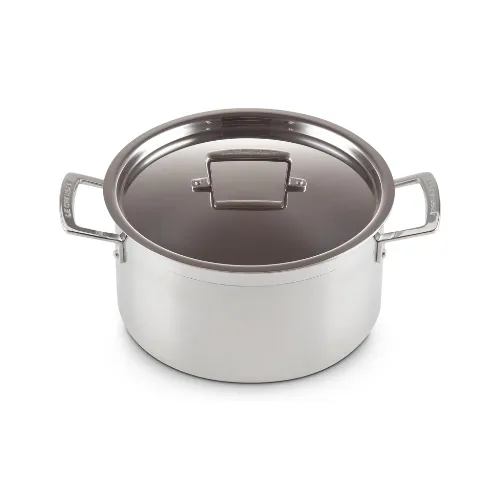
I cook these in the Le Creuset 20cm saucepan. It’s the right size for a batch of eggs without crowding them, the even heat distribution means they cook consistently, and the enamel interior doesn’t react with the cooking water. Bring cold water to the boil, lower the eggs in gently, and cook for exactly ten minutes. Transfer immediately to cold water to stop the cooking. Peel once fully cooled for the cleanest result.
Serving mimosa eggs
Arrange them on a flat plate or a small board, grated yolk on top, a small sprig of chervil or flat-leaf parsley alongside if you have it. Serve cold, straight from the fridge. They hold well for a few hours once assembled, which makes them ideal for preparing ahead of a gathering.
One egg per person as an apéritif bite. Two eggs per person as a starter with dressed leaves alongside. Either way, they disappear quickly.
Share your feedback and spread the love!
If you try this recipe, I’d love to hear how it turns out! Leave a ★★★★★ rating and your thoughts in the comments, it helps fellow French foodies discover this recipe too. Snap a photo and tag me @obviously.french on Instagram if you’re sharing your bake or cooking online. Don’t forget to save this recipe to Pinterest so you’ll always have it handy for your next French-inspired meal!
Disclosure: Just so you know, this post contains sponsored content and/or affiliate links, If you make a purchase through these links, I may receive a small commission. Doesn’t cost you anything extra. I only link to things that are actually worth your time. All opinions are my own!