A charming little town
Most people drive through the Indre without stopping. That is their loss.
La Châtre is classic rural France done properly: twisted medieval lanes, proud old houses, a Saturday market that fills the square with local produce, and just enough going on to keep things interesting without becoming overwhelming. With a population of just over 4,000, it is perfectly sized. Large enough to have real character, small enough to feel like a discovery rather than a destination.
The town sits in the Indre department, number 36, in the Centre-Val de Loire region. It is about 45 minutes south-east of Châteauroux, and it is the kind of place that rewards a slow afternoon far more than a quick drive-through.
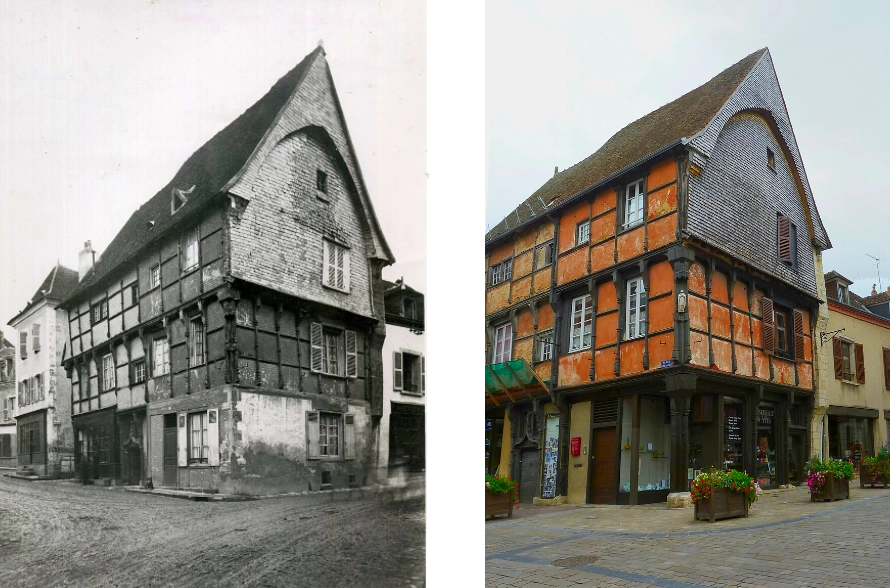
The Maison Rouge
Maison Rouge is the town’s most immediately recognisable landmark, and one of the most striking half-timbered buildings in the region. Built in the early 1500s for a prosperous merchant family, it sits at the point where three streets meet in the centre of town. The red timbers that give it its name came from a 19th-century renovation, which is when it started turning heads.
What makes Maison Rouge more than just attractive architecture is its literary history. George Sand, who made this part of France famous through her writing, used Maison Rouge as a setting in her novel André. The carved vines and grapes on the doorway are worth looking at closely.
In recent years, local groups and businesses rallied to save and restore the building. It now houses the Confiserie Saint-Yves, which alone makes it worth stopping at.
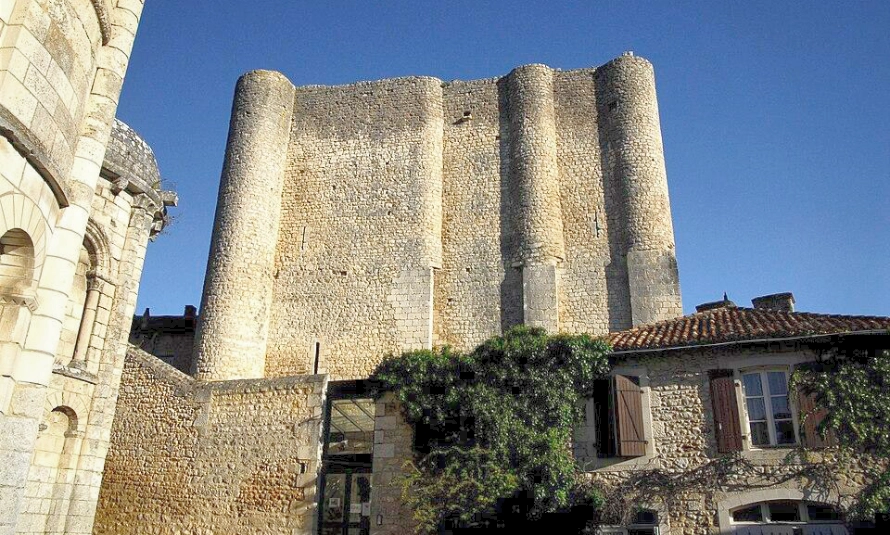
The donjon of Chauvigny
The Donjon des Chauvigny is a solid medieval tower that has been standing since the 15th century. The walls are about two metres thick, built for defence, with narrow arrow slits that allowed guards to watch and shoot without exposure. It served various purposes over the centuries, including as a prison from 1734 until 1937.
Jean Despruneaux later took ownership and used it to house his collection dedicated to George Sand. On his death, he gave the donjon to the city of La Châtre, where it became part of the town’s cultural heritage and eventually the original home of the George Sand museum.
Worth a note: this is not the same as the Donjon de Gouzon in Chauvigny in the Vienne department. This one is here in La Châtre itself.
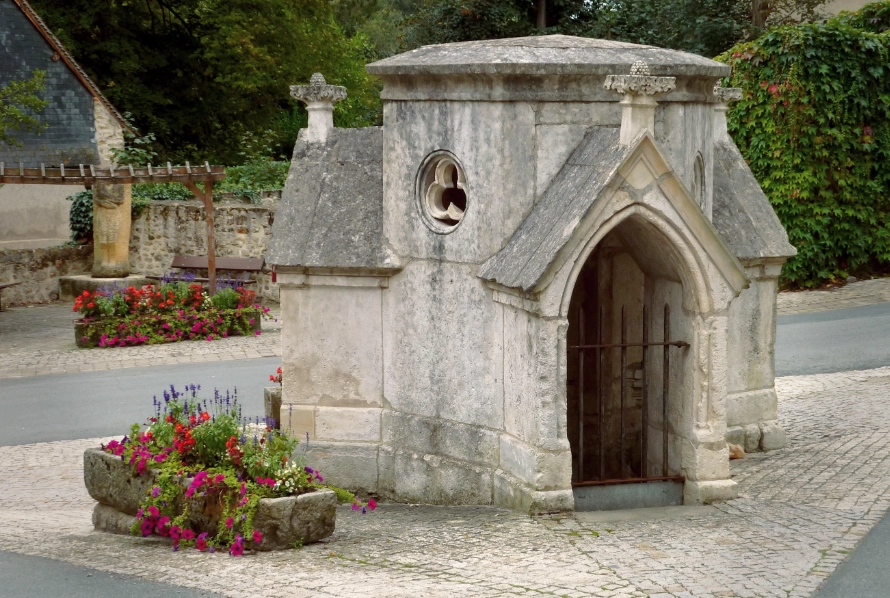
Fontaine Sainte Radegonde
Tucked at the base of the old donjon, the Fontaine Sainte Radegonde is a small neo-gothic fountain with roots going back to the 15th century. Locals once believed its spring water had protective properties, particularly for pregnant women hoping for an uncomplicated birth. The tradition was to light a candle by the statue of Sainte Radegonde, the patron saint of Poitiers and a secondary patron of France.
The structure itself is distinctive, with a set of niches and a statue on a six-sided base. It has been listed as a historic monument since 1925. It is the kind of detail that is easy to walk past without noticing, but worth pausing at for a moment.
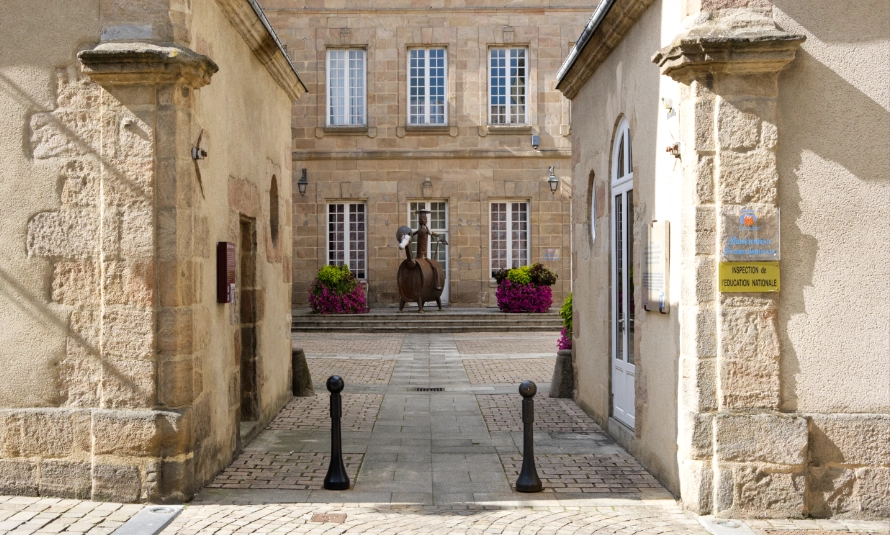
Hôtel de Villaines
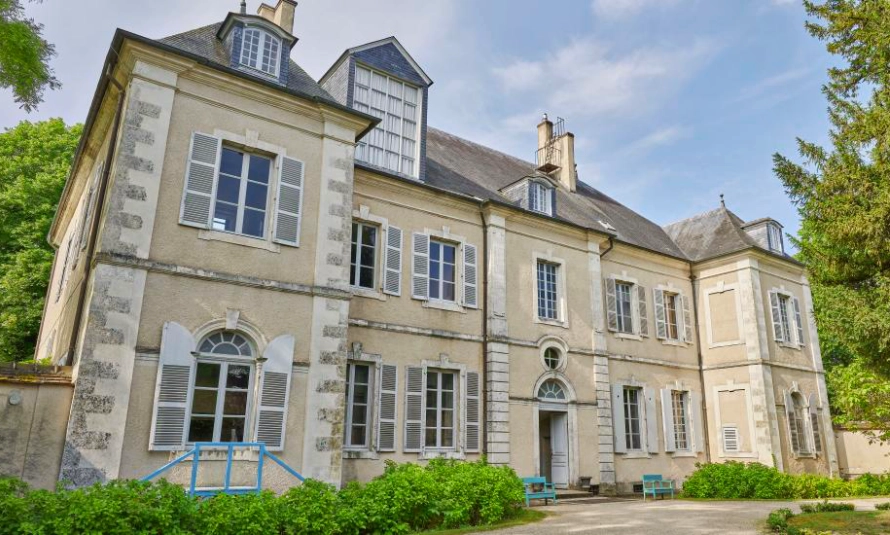
The Hôtel de Villaines has been a central part of La Châtre’s civic life since the 18th century. Nicolas Pardoux de Villaines married into a local family and became marquis in 1770, giving the house its elegant character. His son, Étienne Philippe, expanded it into a proper townhouse just before the French Revolution. The building fronts rue Nationale and opens onto what is now the Raymonde-Vincent square.
During the Revolution, the family’s influence faded and the property changed hands. By 1807 it had become a school. In recent years it was repurposed as the temporary home of the Musée George Sand et de la Vallée Noire, a role it still plays while the main museum undergoes its major rebuild.
The Hôtel de Villaines is a good example of how La Châtre france layers its history into everyday buildings. It has been a merchant’s home, a noble residence, a school, and a museum, all without losing its essential character.
Le Musée George Sand et de la Vallée Noire
George Sand, one of the most important French writers of the 19th century, spent much of her life in this part of the Berry region. The Musée George Sand et de la Vallée Noire has been dedicated to her life, work, and the landscape that shaped her writing since the late 19th century. The collection covers archaeology, natural history, and art, all connected to Sand and the region.
The museum was originally housed in the Donjon des Chauvigny, but closed there in 2016 due to access issues and the need for significant repairs. Since 2020 it has operated as a smaller setup called a musée de poche in the Hôtel de Villaines, allowing visitors to get a sense of the collection in a more compact form.
Important note for planning: the musée de poche has been closed since September 2025 for a major rebuild. The plan is to reopen a substantially larger and better-equipped museum in 2030. Check current status before visiting.
For anyone interested in George Sand, La Châtre france is the right place to start. The landscape she wrote about is still recognisable, and the town takes her legacy seriously.
Treat yourself at Confiserie Saint-Yves
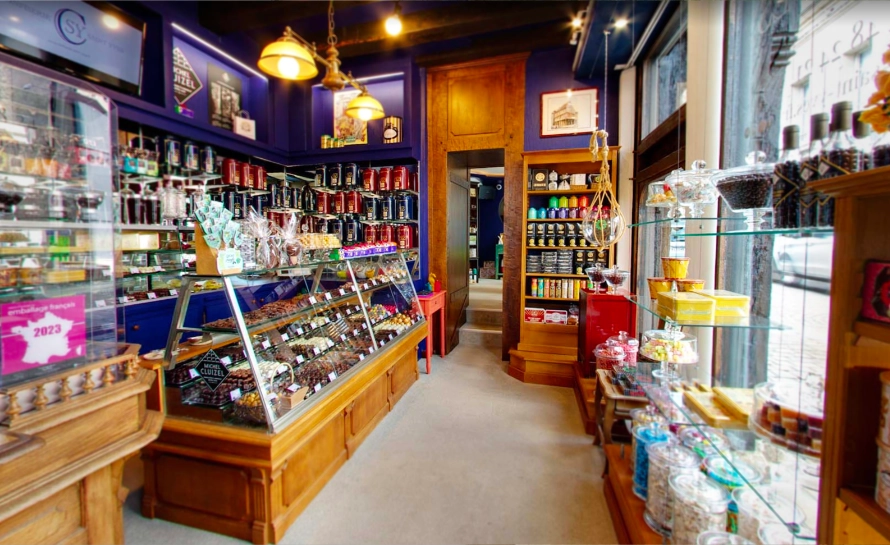
If there is one stop in La Châtre that you should not miss, it is the Confiserie Saint-Yves, housed in the Maison Rouge building in the heart of town. The shop has been a family business since 1980. Clothilde Loiseau took over from her grandparents in 2010 and has maintained the same commitment to quality and tradition that the shop was built on.
Inside, you will find handmade chocolates, nougats, and regional sweets displayed with real care. While I was there, a neighbour from across the street came in for his usual chocolates. If I lived opposite, I would be there every day too.
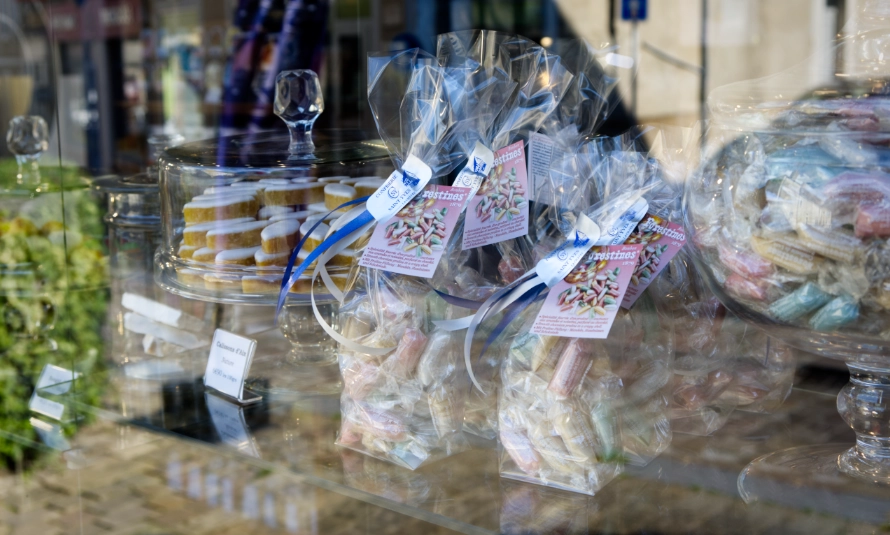
The Calissons d’Aix are the ones to go for: the same almond sweets traditionally served as part of the 13 desserts at Christmas in Provence, and rarely found as fresh and good as these. Take a proper selection of chocolates alongside them.
Do not rush this stop. It is worth lingering.

Treasure hunting at Jour D’Occase
For anyone who enjoys a proper rummage, Jour D’Occase is the place. This brocante shop is what I would call an Ali Baba’s cave: books from nearly a century ago sold for a euro, old scarves, curiosities, and objects with genuine histories behind them. The owner, Monsieur Jourdain, is friendly and knowledgeable and happy to share the stories of what fills the space.
The prices are reasonable compared to similar markets elsewhere, and the pleasure of wandering here is real. It is the kind of shop where you lose track of time without minding.
Café (and Hotel) du Commerce
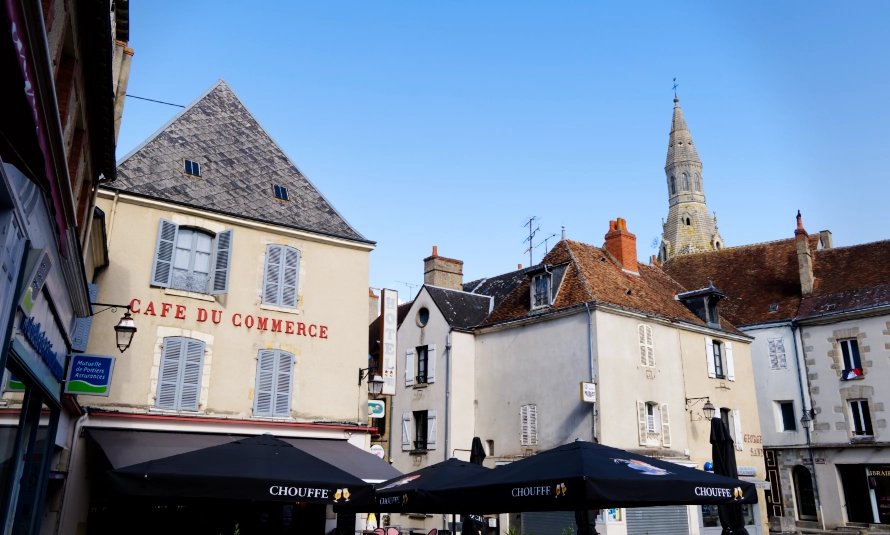
Café du Commerce sits on the main square and is the right place to pause after walking the town. We sat down for a strong cup of coffee and asked if we could eat the Calissons we had just bought from the Confiserie Saint-Yves. No problem. It became a perfect hour: sun on the square, good coffee, proper sweets, people going about their day.
The hotel above offers simple, well-kept rooms with positive reviews for the welcome and relaxed atmosphere. The terrace is the best in town for people-watching at any time of day. The brasserie menu is good value. If you are staying overnight in La Châtre, this is a sensible base.
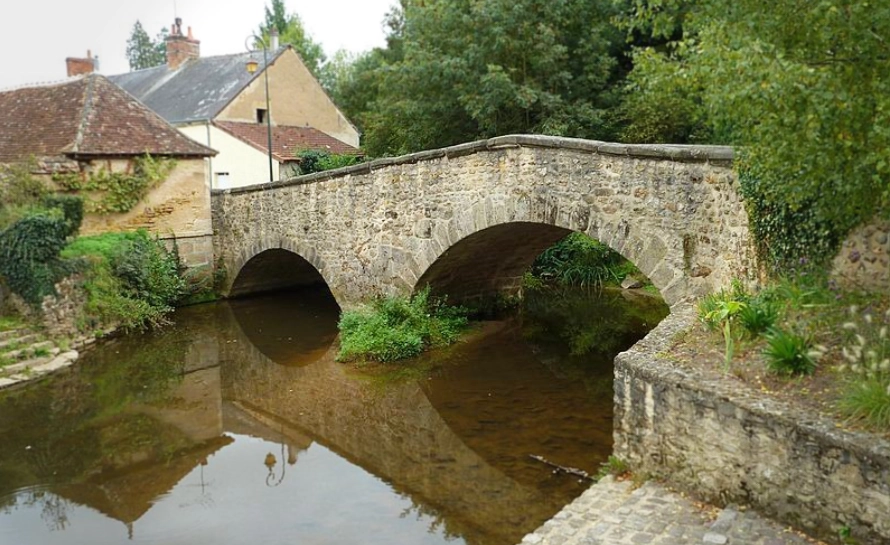
Pont-aux-Laies
The Pont-aux-Laies is a two-arched stone bridge now listed as a historic monument. It sits where an old Roman road once crossed the river, which gives it a sense of continuity that the more obvious landmarks sometimes lack. Nobody quite agrees on the etymology of the name, but local legend says wild boars once tried to enter the town via the bridge during a drought.
It is still in use today. The view along the river from the bridge is one of the quieter pleasures of La Châtre france, and easy to miss if you are not looking for it.
What to see and do in La Châtre
- Tour Maison Rouge
Admire this 15th-century half-timbered house, an iconic bit of local history and architecture. - Treat yourself at Confiserie Saint-Yves
Step inside for handmade chocolates, proper French sweets, and the friendliest welcome in town. Don’t miss the Calissons d’Aix and chocolates. - Visit the Musée George Sand et de la Vallée Noire
Check out the “musée de poche” at Hôtel de Villaines for a taster of local culture and George Sand’s history, just be aware the main museum is reopening in 2030. - Walk up to the Donjon des Chauvigny
See the imposing medieval tower that once kept an eye on the town. It’s a key part of La Châtre’s story, closely linked to the George Sand Museum. - Break at Café du Commerce
Order a cup of Richard coffee, enjoy your treats from the confiserie, and take in the everyday buzz of the main square. - Browse Jour D’Occase
Hunt for treasures and bargains in this Ali Baba’s cave of old books, antiques, and vintage finds. - See the Fontaine Sainte Radegonde
Visit this centuries-old fountain where women once prayed for easy births and good fortune. - Cross the Pont-aux-Laies
Walk across this historic two-arched stone bridge and imagine the stories of travellers and townsfolk who’ve crossed here for centuries. - Explore the market (Saturdays)
Mingle with locals and stock up on fresh fruit, veg, cheese and regional produce at the lively Saturday market.
Practical information for visitors
- Getting there
La Châtre is best reached by car, on the D943 about 45 minutes south-east of Châteauroux. There is a regular bus service from Châteauroux if you prefer not to drive. The town centre is compact and entirely walkable once you arrive. Parking near the main squares is generally straightforward. - When to visit
La Châtre works year-round. Spring and autumn offer mild weather and good light on the old buildings. Summer brings festivals and open-air events but slightly more visitors. For quieter streets and the most atmospheric version of the town, visit midweek outside the main holiday periods. - Accommodation
The Hôtel du Commerce in the centre is the most convenient option and well-reviewed for its welcome and location. For more space and quiet, countryside gîtes and chambres d’hôtes just outside town are widely available and give a better sense of the Berry landscape that George Sand wrote about.