Leek Tart
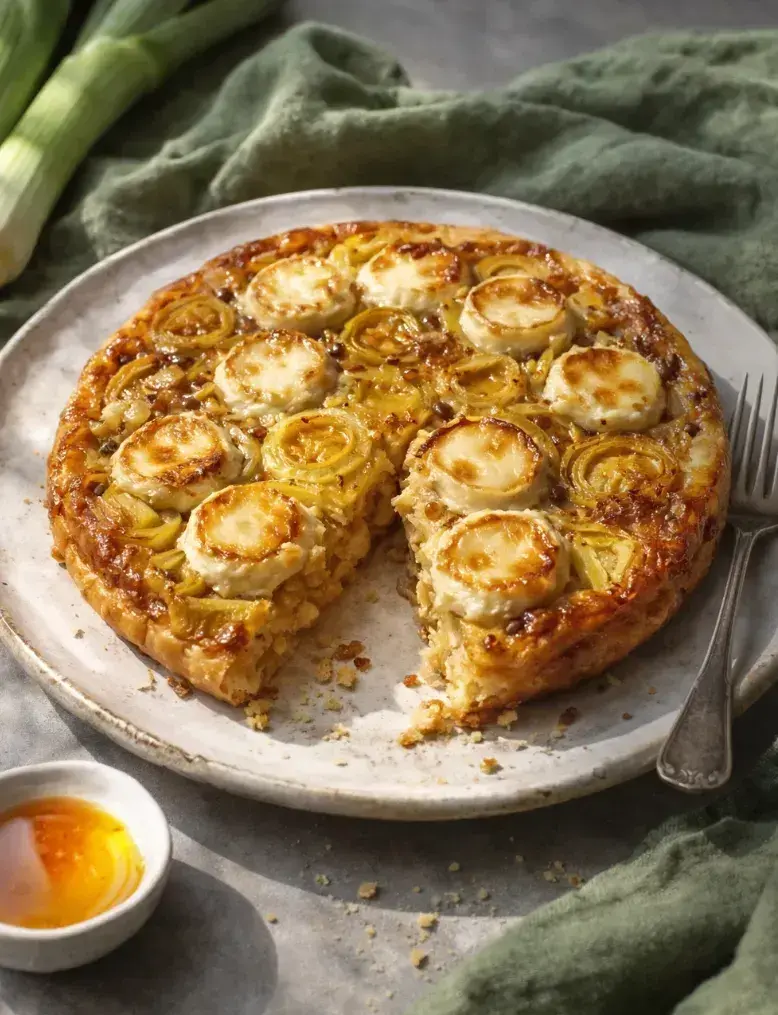
 Prep Time 25 minutes
  Cook Time 40 minutes
  Total Time 1 hour 5 minutes
  Servings 4
Ingredients
- 6 leeks about 1kg total, white and pale green parts only
- 1 sheet all-butter puff pastry
- 200 gr goat’s cheese
- 1 egg optional, for egg wash
- 50 gr unsalted butter
- 2 tbsp honey
- 2 tbsp dry white wine
- 4 sprigs thyme
- salt and black pepper
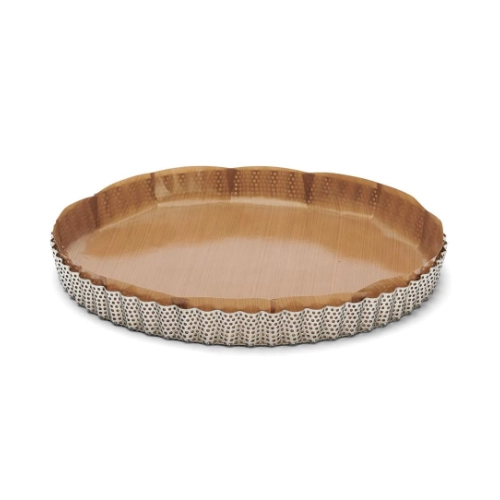
Equipment
Instructions
1. Prepare and steam the leeks
- Trim the dark green tops off the leeks and cut off the roots. Rinse the leeks thoroughly to remove any grit between the layers.Cut the white and pale green parts into 3cm cylinders. You want neat, even pieces that will stand upright.Preheat your oven to 180°C (160°C fan)/350°F/Gas Mark 4.Arrange the leek cylinders upright in a baking dish. Pour in the stock, it should come about 1cm up the sides of the leeks. Cover tightly with foil.Steam in the oven for 15-20 minutes until the leeks are tender when pierced with a knife but still holding their shape. They should be cooked through but not falling apart.Remove from the oven and drain well. Pat dry with kitchen paper, this is important for the glaze to stick properly and for proper caramelization.Increase the oven temperature to 200°C (180°C fan)/400°F/Gas Mark 6.
2. Arrange the leeks
- Stand the steamed leek cylinders upright in your tart tin, packing them in tightly. Start from the outside edge and work your way to the centre. They should fit snugly together with no gaps.If you have small pieces that won't stand up, tuck them into any gaps horizontally.Season with salt and pepper.
3. Make the glaze and brush
- In a small bowl, mix the melted butter, honey, white wine, and thyme leaves. Whisk together until combined.Brush this glaze generously over the top of the standing leeks. Make sure they're well coated, this is what caramelizes them and makes them sticky and golden.
4. Top with pastry
- Drape the pastry over the leeks, tucking the edges down inside the tin all the way around. The pastry should completely cover the leeks and be tucked in snugly against the sides.Prick the pastry a few times with a fork to let steam escape.
5. Bake
- Bake for 25-30 minutes until the pastry is puffed up and lightly golden but not deeply browned. You want it cooked through but pale, it'll finish colouring when you grill the goat cheese on top.The pastry should feel firm and crisp when you touch it, but it shouldn't be dark golden yet.Remove from the oven. Let it sit for 5 minutes, this lets the glaze settle slightly and makes flipping easier.
6. Flip the tart
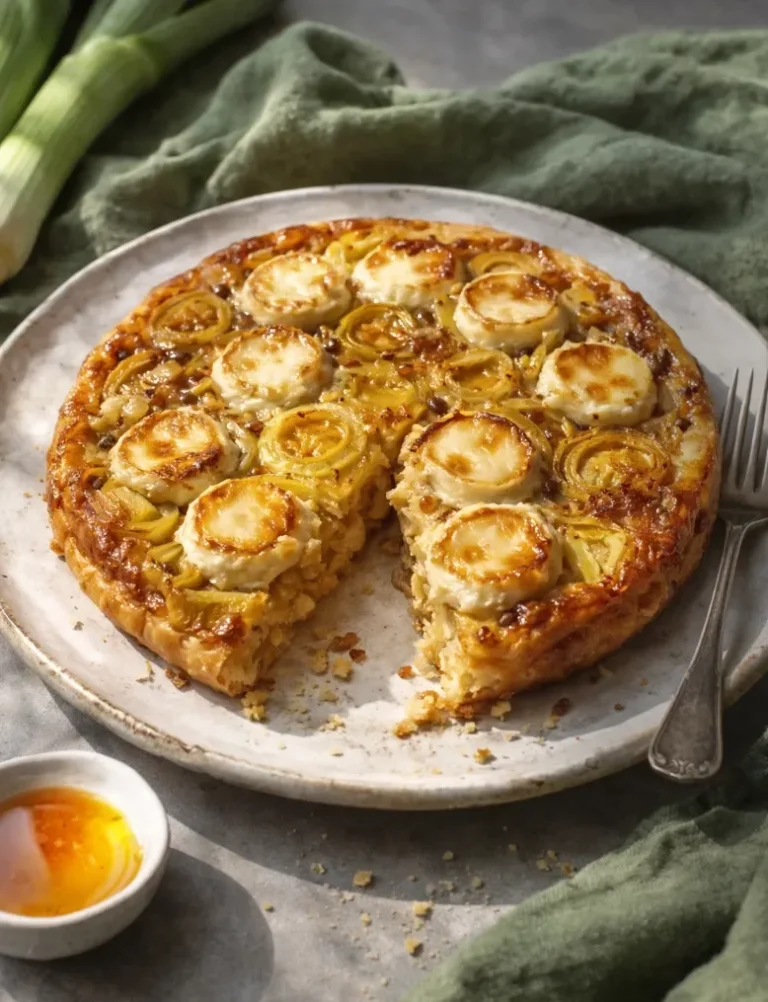
- Place a large plate or serving board over the top of the tin. Hold it firmly and flip the whole thing over in one confident motion.Lift the tin off carefully. The leeks should be glazed and golden, standing in neat rounds like little towers.If any have stuck to the tin, just lift them off with a knife and put them back in place on the tart.
7. Add goat cheese and finish
- Slice the goat cheese log into rounds about 5-7mm thick. Place a slice of cheese on top of each leek round. Don't worry if you can't cover every single one, just place them where they fit naturally.Turn your grill to high (or set the oven to 220°C/200°C fan). Place the tart under the grill (or back in the hot oven) for 5-7 minutes until the goat cheese is melting, turning golden, and starting to bubble.Watch it carefully, you want golden and slightly charred in spots, not burnt.
8. Serve
- Serve immediately whilst the cheese is still warm and melty. Cut into wedges and serve with a green salad.
Notes
- Steaming the leeks in stock is more flavourful than blanching in water. The stock adds depth, and the gentle oven heat cooks them evenly without making them waterlogged.
- After steaming the leeks, pat them really dry. Wet leeks won’t caramelize properly and will make the pastry soggy.
- Soft, fresh goat cheese (chèvre frais) works best. It melts beautifully and turns golden under the grill. Aged goat cheese is too firm and won’t melt properly.
- If you wish to make it ahead, you can steam the leeks and arrange them in the tin a few hours ahead. Keep covered at room temperature, then glaze, top with pastry, and bake when needed. Don’t flip until just before serving.
- Grilling gives you better colour on the cheese, it browns faster and more evenly. But if your grill isn’t strong, just whack the oven up to 220°C and bake for 5-7 minutes instead.
- This leek tart is lovely at room temperature too. Serve leftover wedges for lunch the next day with salad.
About this recipe
There is a particular kind of French recipe that looks like it took skill and took all afternoon, but actually just required a good idea and decent ingredients. This goat cheese leek tart is exactly that. It is a showstopper that comes together in just over an hour, and the technique, borrowed directly from the Tarte Tatin, does most of the impressive work for you.
The Tarte Tatin connection
The original Tarte Tatin was, famously, a mistake. The Tatin sisters, running a hotel restaurant in Lamotte-Beuvron in the Loire Valley in the late 19th century, allegedly left their apple tart on the heat too long, rescued it by covering the caramelised apples with pastry and finishing it in the oven, then flipped the whole thing out upside down. The result was better than the original would have been. France adopted it immediately and has never looked back.
The savory tart version of this technique, laying vegetables directly in the tin, covering with pastry, baking, then flipping, is a natural extension of that same logic. You get caramelisation you simply cannot achieve any other way. The leeks, pressed against the bottom of the hot tin with their honey and butter glaze, develop a stickiness and depth that no amount of pan-frying would give you. The flip reveals something that looks genuinely restaurant-quality, even though the hardest part was just having the confidence to turn it over.
Why leeks are the right vegetable for this
Leeks have been fundamental to French cooking for centuries, far longer than they have been fashionable anywhere else. The Romans cultivated them across Gaul, and medieval French kitchens used them as a foundational flavouring alongside onions and garlic. By the time French cuisine started developing its modern identity in the 17th and 18th centuries, leeks were established as a serious vegetable in their own right, not just an aromatic.
In northern France particularly, Normandy, Brittany, the Nord-Pas-de-Calais, leeks appear in tarts, gratins, soups, and alongside fish in ways that the more tomato-focused south rarely bothers with. A leek tart recipe in this tradition is not a modern invention. It is a regional staple dressed up in a clever technique.
What makes leeks ideal for the upside-down method of this leek tart is their structure. Cut into cylinders and stood upright, they hold their shape beautifully through both steaming and baking. They caramelise evenly. And their natural sweetness, more subtle than onion, less aggressive than shallot, pairs perfectly with the tangy, creamy goat cheese placed on top after the flip.
Which goat cheese to use
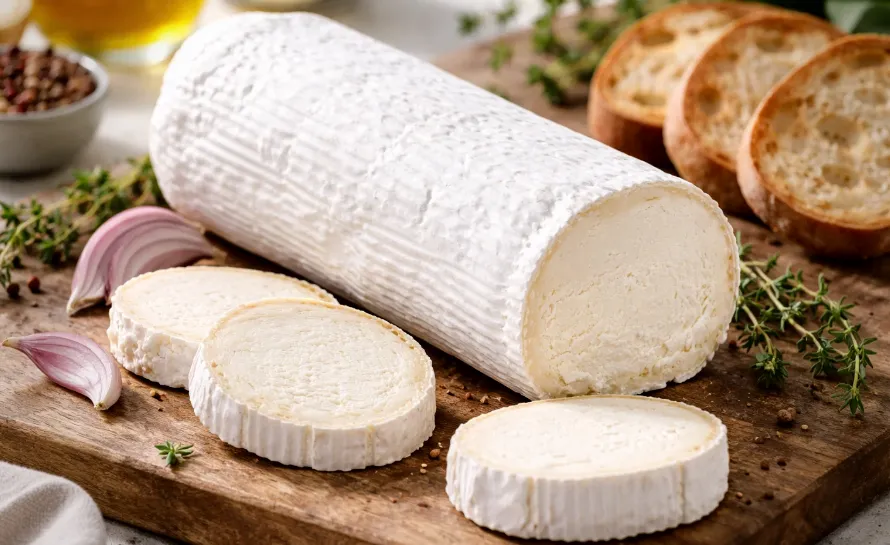
This matters more than people expect. For this leek tart with puff pastry, you want fresh goat cheese, soft, young goat’s cheese that melts under the grill into golden, slightly bubbling rounds. Aged goat cheese is too firm, too dry, and won’t give you that molten quality that makes the finished tart so appealing.
In France, the Loire Valley is the heartland of goat cheese production. Crottin de Chavignol, Selles-sur-Cher, and Sainte-Maure de Touraine are the famous names, all AOP protected, all made within a few hours of Lamotte-Beuvron where the Tarte Tatin was invented, which feels like a convenient coincidence. For this recipe you don’t need anything that prestigious. A good fresh goat cheese log works perfectly. Soignon goat cheese is widely available and gives excellent results, it melts cleanly, browns beautifully, and has the right level of tang without overwhelming the leeks.
How the French serve it
In France, a tart like this is often lunch. With a properly dressed green salad alongside and a glass of something cold. A crisp Sancerre or Pouilly-Fumé from the Loire, if you want to stay regional. A Muscadet if you want something lighter. The point is that the tart is the main event, and everything else is there to support it rather than compete.
Leftovers of this leek tart, if there are any, are served at room temperature the next day. Cold from the fridge is not how the French do it. Room temperature lets the pastry soften slightly, the cheese settle, and the leek flavour come forward in a way that is actually different from the hot version. Some people prefer it. I am not one of them, but I understand the argument.
This leek tart is the kind of recipe that earns you a reputation in your household. Make it once and you will be asked to make it again. It looks like effort. It tastes like France.
Share your feedback and spread the love!
If you try this recipe, I’d love to hear how it turns out! Leave a ★★★★★ rating and your thoughts in the comments, it helps fellow French foodies discover this recipe too. Snap a photo and tag me @obviously.french on Instagram if you’re sharing your bake or cooking online. Don’t forget to save this recipe to Pinterest so you’ll always have it handy for your next French-inspired meal!
Disclosure: Just so you know, this post contains sponsored content and/or affiliate links, If you make a purchase through these links, I may receive a small commission. Doesn’t cost you anything extra. I only link to things that are actually worth your time. All opinions are my own!