 September 15, 2025
Disclosure: This post may contain affiliate links which provide us a small commission when used for purchase. Please read my disclosure policy for more information. I am grateful for your support!
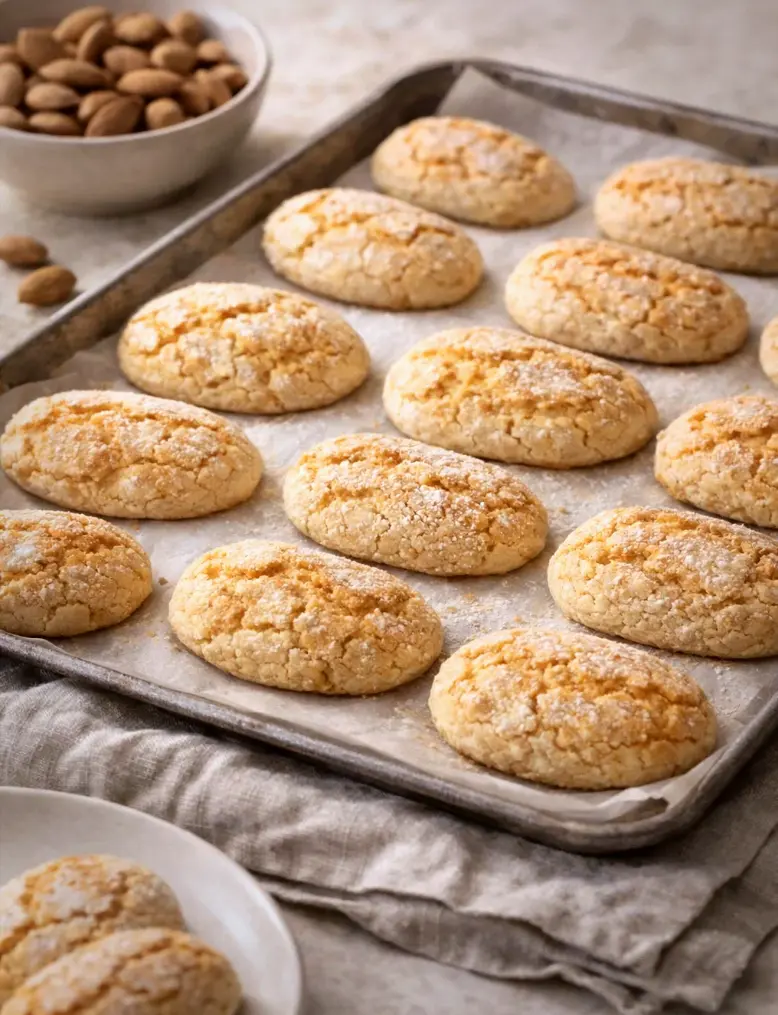
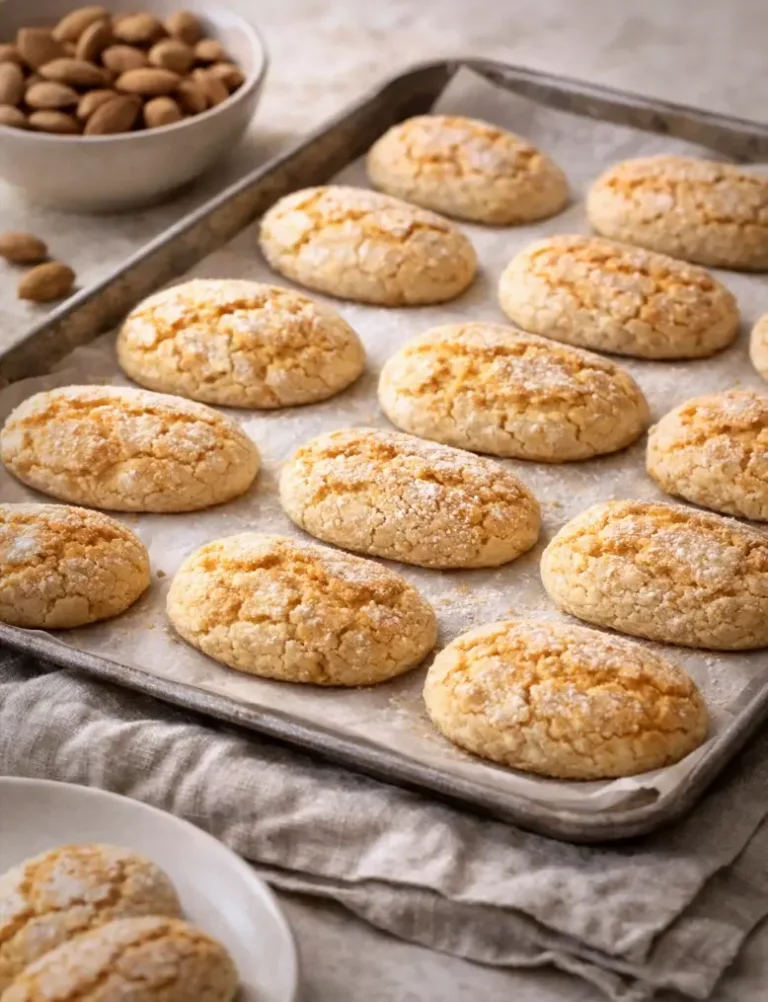
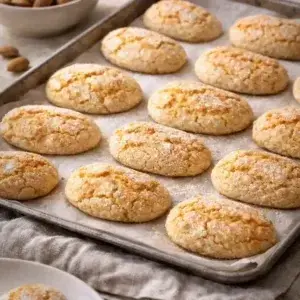
We’d heard so much about Saint-Léonard-de-Noblat that we obviously had to go and see it for ourselves. It’s a small medieval town in the Limousin, best known for a very special little biscuit called massepain. We make a point of checking the bakeries in every town we visit, because every region has its own specialities. We came out with a big bag of massepain biscuits that were incredible. When we first bit into one we looked at each other and said the same thing: this tastes like a macaron. And it does, because they’re family.
Because this is a region specialty, they were a bit expensive to buy, which is exactly why I’m sharing this massepain recipe with you. Make them yourself and eat as many as you want!
Table of Contents
Where massepain comes from
The story starts on the road to Santiago. Saint-Léonard-de-Noblat was an important stop for pilgrims heading south, and on their way back from Spain they brought mazapán with them: a paste of ground almonds, egg white and sugar that was dense with energy and kept for weeks on the road. It arrived in the Limousin in their bags and stayed.
Then it faded, until a pâtissier called Camille Petitjean brought it back in 1899. His daughters sold the biscuits singly at market, and the baking paper came out of the oven so soaked in almond fragrance that he’d sell it cheaply to local children, who sucked on it like a lollipop!
Which brings me to the best part. Walking through the centre of town we counted five bakeries, and every pâtissier makes their own version. They guard their recipes fiercely, because the legend is that only one of them holds Petitjean’s original, bought along with the bakery itself. Which one? Nobody will say.
Ingredients
- Almonds — grinding whole blanched almonds yourself gives a fresher, nuttier result and a better texture than pre-ground powder, though almond powder works perfectly well if you’d rather.
- Caster sugar — sweetens and, crucially, gives the crisp outer shell as it caramelises. Fine sugar dissolves into the almonds evenly.
- Egg whites — used unbeaten in the traditional recipe. They bind the almonds and sugar into a paste and keep the centre soft and chewy rather than airy.
- Icing sugar — dusted over before baking, for the classic look and a slightly crackled surface.
How to make massepain
1. Mix the almonds and sugar, then add the whites slowly
Tip the almond powder and caster sugar into a bowl and mix them thoroughly before anything wet goes near them, so the sugar is evenly distributed and you don’t end up with sweet patches. Lightly whisk the egg whites just to loosen them, no peaks, no meringue.
Then add them to the almonds a little at a time, folding gently, until you have a thick smooth paste that holds its shape when you press it. Hold some back. Egg sizes vary and almonds vary, so you may not need all three whites, and this is the one thing that really decides the recipe. Too wet and the biscuits spread flat in the oven; too dry and they crack across the top.
2. Chill the mixture
Cover the bowl and put it in the fridge for at least two hours, or overnight if that suits you better. It firms the paste up so it pipes cleanly and holds its shape on the tray, and the flavour settles and deepens while it sits. Trying to pipe unchilled paste is a genuinely frustrating twenty minutes, so don’t be tempted.
3. Pipe and bake
Heat the oven to 180°C (160°C fan) and line a tray with a baking mat. Fill a piping bag and pipe batons about 5 to 6cm long, spaced 2cm apart, keeping them as consistent as you can. Size matters here: too large and the centre won’t set before the outside cracks, too small and they dry out before they get that soft chewy middle.
Dust generously with icing sugar, then bake for about 15 minutes. Start checking at 12. These are almost entirely sugar and almonds, so they go from perfectly golden to burnt in about a minute, and there’s no coming back from that. Cool them completely on a rack before you move them, because straight from the oven they’re fragile and they firm up as they cool.
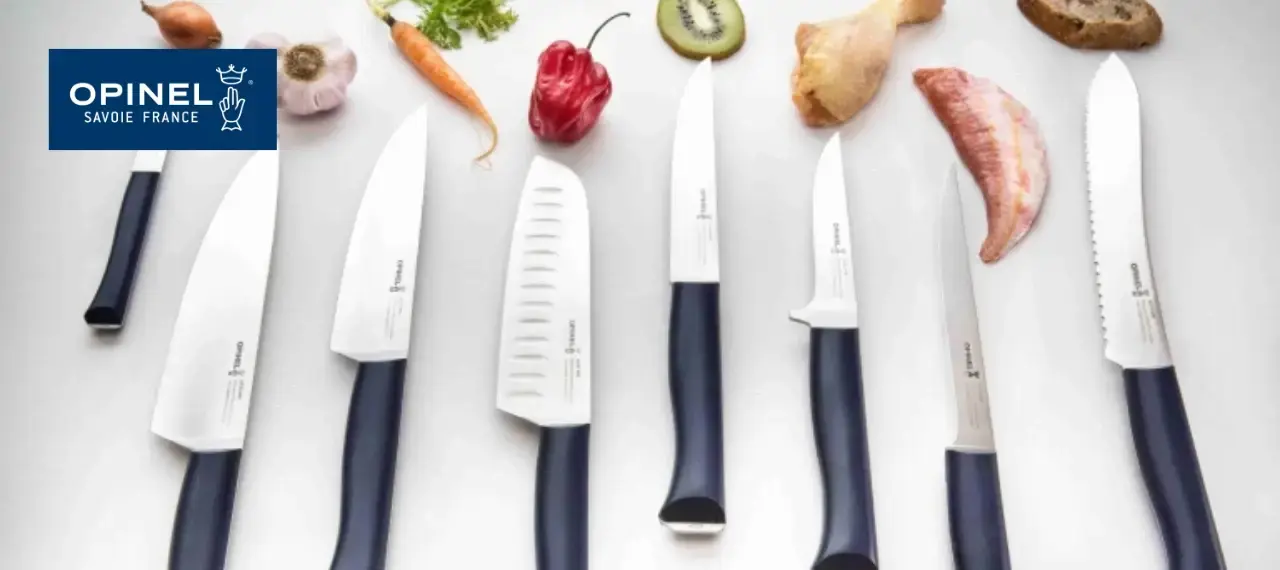
Tools for this recipe
Check out my favorite kitchen essentials and cookware!
- Use a piping bag to pipe even batons, since consistent size is what gives you that crisp shell and soft centre rather than one or the other.
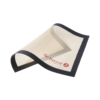
- Use a perforated baking mat so the bases cook evenly and the biscuits release cleanly without sticking or catching.
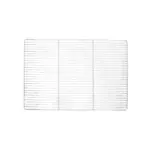
- Use a cooling rack so air circulates underneath and the shells set crisp instead of steaming soft.
Tips for success
- Hold back some of the egg white: add roughly two-thirds, then work in the rest a spoonful at a time until the paste just holds its shape. This is the single biggest variable in the recipe and it depends on your eggs and your almonds.
- Test-bake one biscuit first: pipe a single baton and bake it before committing the batch. You’ll learn instantly whether your paste is too loose (it spreads) or too stiff (it cracks), and you can adjust.
- Keep the batons the same size: uneven piping means some are burnt while others are underdone, since the margin here is a minute or two.
- Set a timer for 12 minutes, not 15: they brown fast because of the sugar, and the difference between perfect and ruined is genuinely one minute. Golden, not brown.
- Let them cool completely before moving them: they’re fragile straight from the oven and firm up as they cool. Moving them early is how you end up with broken biscuits.
- Dust the icing sugar generously: it gives the traditional finish and a delicate crackled surface as it bakes.
How to store it
- At room temperature: In an airtight container for several days, and they’re excellent as a gift for that reason. Traditionally massepain kept for one to two months.
- In the freezer: They freeze well, baked and fully cooled, for up to 3 months. Layer them with parchment so they don’t stick together, and thaw at room temperature. The raw dough also freezes, which is useful since it needs chilling anyway.
- In the fridge: Only for the dough, which keeps 2 to 3 days covered. Don’t refrigerate the baked biscuits, they’ll soften and lose the crisp shell.
More dessert recipes to try
Variations
- Orange flower water: a teaspoon in the paste is a traditional southern touch and plays beautifully against almond without overwhelming it.
- Lemon zest: finely grated into the almonds, for brightness that cuts the sweetness.
- Bitter almond: a drop or two of bitter almond extract intensifies the almond flavour considerably. Use sparingly, it’s powerful stuff.
- Different shapes: petitjean piped batons, but the same paste piped into rounds gives you something even closer to a macaron, which makes the family resemblance obvious.
- Less sugar. Difficult here as the sugar isn’t just sweetness, it’s what creates the crisp caramelised shell and it’s one of only three ingredients. You can drop 170g to about 150g and still get a good biscuit, but below that they turn pale, dry and soft rather than crisp.
FAQ
What is a massepain de Saint-Léonard-de-Noblat?
A small almond biscuit from the Limousin town of Saint-Léonard-de-Noblat, made from just almonds, sugar and egg white, crisp outside and soft in the middle. It’s been the town’s speciality since the 19th century.
Is massepain the same as marzipan?
Not really, despite sharing a root. Marzipan is a dense almond paste usually moulded into shapes, while the massepain de Saint-Léonard is a baked biscuit with a crisp shell and a soft centre.
How is massepain different from macarons?
Both use ground almonds, sugar and egg white, so they’re closely related. Massepain is denser and moister, baked as a single biscuit with no filling, and closer to what almond biscuits looked like before the macaron was refined.
Do you whip the egg whites for massepain?
No. The traditional recipe uses unbeaten egg whites, folded gradually into the almonds and sugar until the paste holds its shape. Whipping them gives a lighter, more meringue-like biscuit.
How long does massepain keep?
Several days in an airtight container, and traditionally one to two months, which is why pilgrims carried it. It also freezes well for up to three months.


 Prep Time 15 minutes
  Cook Time 15 minutes
  Total Time 2 hours 30 minutes
  Servings 20 biscuits
Description
Ingredients
- 200 gr ground almonds
- 170 gr caster sugar
- 3 egg only the whites
- icing sugar
Equipment

Instructions
1. Mix dry ingredients
- In a large bowl, combine the almond powder and caster sugar thoroughly, so the sugar is evenly distributed through the almonds.
2. Add the egg whites
- Lightly whisk the egg whites just to loosen them, without beating them to peaks. Add them gradually to the almond and sugar mixture, folding gently, until you have a smooth thick paste that holds its shape. You may not need all of it.
3. Chill the paste
- Cover and refrigerate for at least 2 hours, or overnight, to firm up and improve the flavour.
4. Preheat the oven
- Heat to 180°C (160°C fan). Line a baking tray with a baking mat.
5. Shape the biscuits
- Transfer the paste to a piping bag fitted with a smooth or fluted nozzle. Pipe batons about 5–6cm long onto the tray, spacing them 2cm apart. Dust generously with icing sugar.
6. Bake
- Bake for about 15 minutes, until golden with a delicate crust but not over-browned. Start checking at 12 minutes, these go from perfect to burnt very quickly.
7. Cool and serve
- Let them cool completely on a rack to set the texture, crisp outside and tender inside, then enjoy with coffee or tea.
Notes
- The paste should be smooth and pliable but not runny. If it’s too dry to shape, add the remaining egg white a little at a time.
- Don’t skip the chill. It makes piping much easier and improves the flavour.
- Keep the batons a consistent size for even baking.
- Watch closely after 12 minutes. The difference between perfect and burnt is a minute.
- Cool fully before moving them, or they’ll break.
- Store in an airtight container at room temperature, where they’ll keep for several days.
Share your feedback and spread the love!
If you try this recipe, I’d love to hear how it turns out! Leave a ★★★★★ rating and your thoughts in the comments, it helps fellow French foodies discover this recipe too. Snap a photo and tag @obviously.french on Instagram. Come talk about it in our Facebook group. And don’t forget to save this recipe to Pinterest so you’ll always have it handy for your next French-inspired meal!