Pear And Blue Cheese Salad
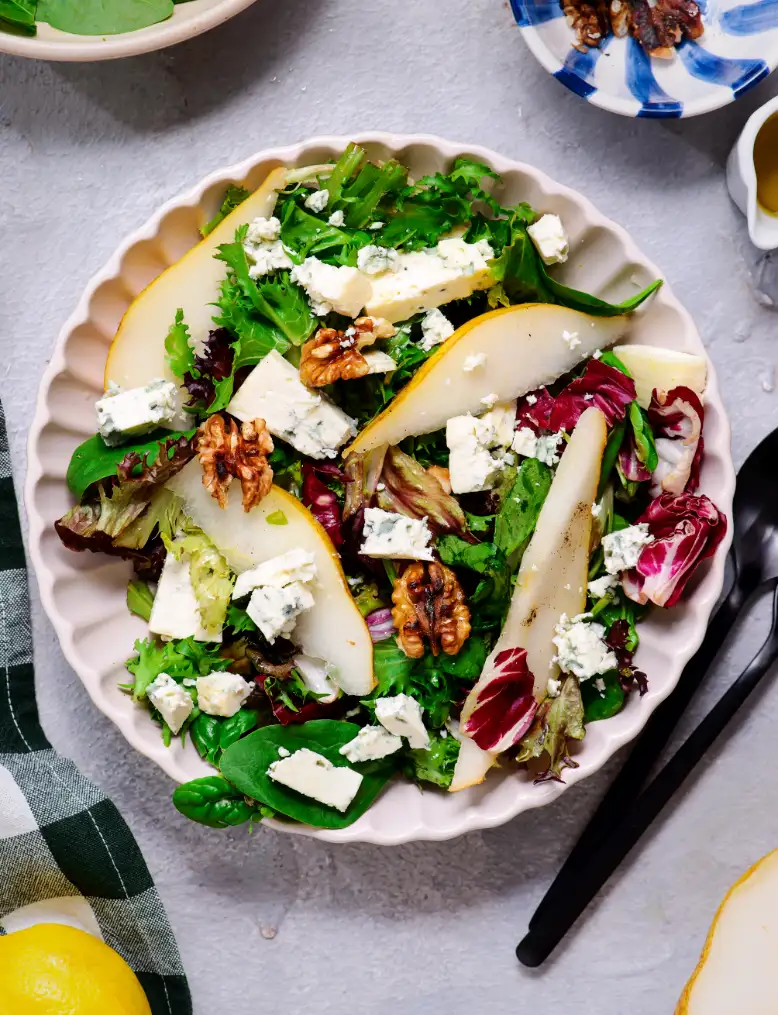
 Prep Time 15 minutes
  Cook Time 5 minutes
  Total Time 20 minutes
  Servings 4 As starter
Ingredients
For the salad
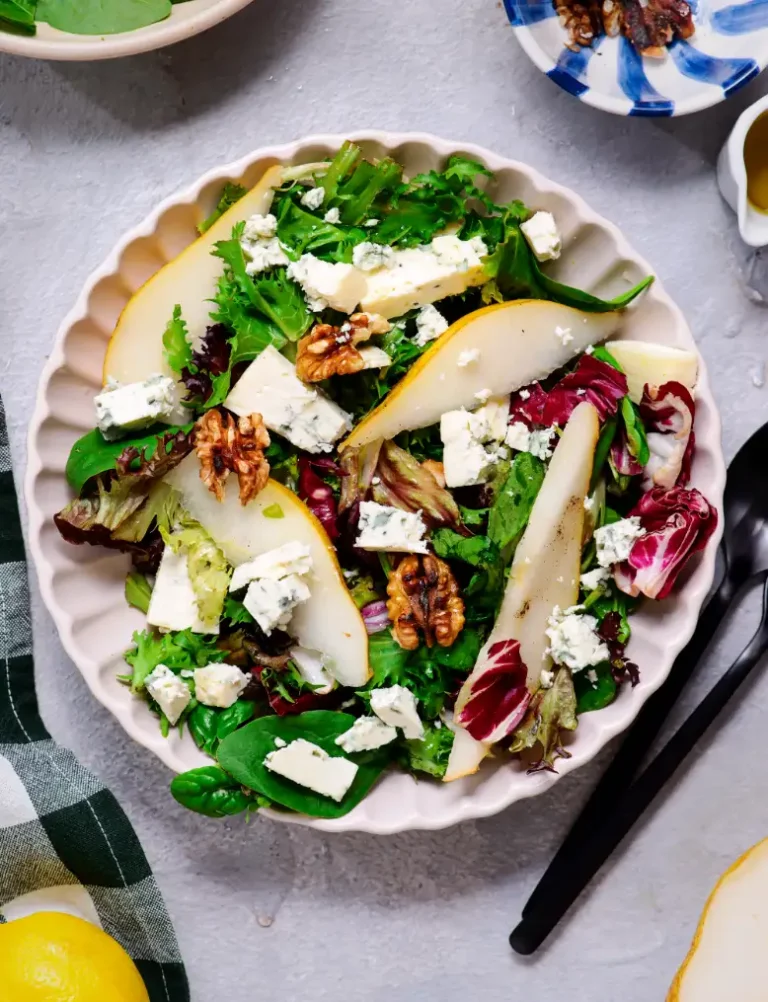
- 2 pears ripe but firm
- 120 gr Roquefort
- 80 gr walnuts
- 60 gr lamb's lettuce
- 40 gr curly endive
- 40 gr radicchio
- 1 squeeze lemon juice to stop the pear browning
For the walnut vinaigrette
- 3 tbsp walnut oil
- 1 tbsp olive oil or neutral oil
- 1 tbsp red wine vinegar
- 1 tsp Dijon mustard
- salt and black pepper
Equipment

Instructions
1. Toast the walnuts
- Put the walnuts in a dry frying pan over a medium heat. Toast for 3–4 minutes, shaking the pan regularly, until they're golden and smell nutty. Watch them closely, they go from toasted to burnt faster than you'd think. Tip onto a plate and leave to cool, then roughly break them up with your hands.
2. Make the vinaigrette
- Whisk together the Dijon mustard and red wine vinegar in a small bowl. Add the walnut oil and olive oil in a slow stream, whisking as you go, until you have a smooth, emulsified dressing. Season well with salt and pepper. Taste it, it should be sharp and nutty, with a bit of backbone from the mustard.
3. Prepare the pear
- Core the pears and slice them thinly, around 5mm. You don't need to peel them. Toss the slices very briefly in a little lemon juice to stop them going brown. Don't drown them in it; you just want a light coating.
4. Assemble
- Dress the leaves lightly with about two thirds of the vinaigrette and toss gently. Divide between four plates or arrange in a large bowl. Lay the pear slices over the top, scatter over the Roquefort in rough chunks, and finish with the toasted walnuts. Drizzle the remaining vinaigrette over everything just before serving.
5. Serve immediately
- This salad doesn't sit well once dressed, so bring it to the table straight away. The leaves will wilt and the pear will start to soften if you leave it. Five minutes is fine. Thirty minutes is not.
Notes
- Roquefort is the traditional choice, and there’s a good reason for that, the saltiness and creaminess is hard to match. But Fourme d’Ambert works well if you want something slightly milder, or Bleu d’Auvergne if you want to stay in the AOP French blue cheese world without quite the same intensity.
- Walnut oil is non-negotiable here, really. It’s what makes the dressing taste specifically French rather than generically nice. It goes rancid quickly once opened, so keep it in the fridge.
- The leaves: mâche, frisée, and radicchio are the classic combination, and most supermarkets sell mixed bags that include all three. A bag labelled ‘bistro salad’ or ‘bitter leaves’ will do the job perfectly well.
- Add some vegetarian lardons if youfancy, pan-fried until crispy and scattered over the top while still warm. A very common French variation, and a good one

About this recipe
This pear and blue cheese salad is one of those combinations that feels like it’s always existed. Ripe fruit, sharp cheese, bitter leaves, toasted nuts, a properly made vinaigrette. Five components, each one doing a specific job, none of them interchangeable. The French have been putting versions of this blue cheese & pear salad on bistro menus for a very long time, and it hasn’t changed much because it doesn’t need to.
The pear
Start here, because it matters more than people give it credit for. France produces some of the best pears in Europe, and the Comice variety now widely available in supermarkets was developed in the Anjou region in 1849 at the Comice Horticole d’Angers. Bred specifically for eating rather than cooking, with a focus on sweetness, juice content, and that particular soft texture that collapses slightly when you bite into it.
For this pear and blue cheese salad, that’s exactly what you want. A hard, underripe Conference pear sitting next to a chunk of Roquefort tastes like two separate things on the same plate. A ripe Comice melts into the cheese and becomes something else entirely. Worth the extra thought at the supermarket.
The blue cheese
Roquefort is the traditional choice, and it earns its place. One of France’s oldest protected cheeses, made exclusively from Lacaune sheep’s milk and aged in the natural caves of Combalou near Roquefort-sur-Soulzon in the Aveyron. It became the first French cheese to receive AOC protection in 1925, and the rules remain strict. Only seven producers are currently authorised to make it. That specific sharpness and creaminess is what makes a blue cheese and pear salad with walnuts work so well, the cheese needs to be bold enough to hold its own against the sweetness of the fruit.
The walnuts
The Périgord and the Dordogne are walnut country, with production dating back to the 13th century. Noix du Périgord received its own AOP in 2002, protecting four specific varieties. In this blue cheese pear and walnut salad, the walnuts do two things: they add crunch against the soft pear and creamy cheese, and their slight bitterness cuts through the richness in a way that toasted pine nuts simply wouldn’t. Don’t skip the toasting step. Two minutes in a dry pan transforms them from fine to genuinely good.
The vinaigrette
The walnut oil is where a lot of home cooks make a substitution they shouldn’t. Olive oil is a decent dressing fat, but it’s not what this blue cheese pear walnut salad needs. Good walnut oil, cold-pressed from the Périgord if you can find it, has a depth and nuttiness that echoes the walnuts and ties everything together. Available in most decent supermarkets, keeps in the fridge for a few months. The Dijon mustard is doing more than it appears: beyond flavour, it acts as an emulsifier, binding oil and vinegar into a smooth, cohesive dressing that coats the leaves evenly. Thirty seconds of proper whisking makes a real difference.
The leaves
The classic French combination of mâche, frisée, and radicchio isn’t accidental. Mâche is soft, mild, and slightly nutty, a gentle base that doesn’t compete. Frisée brings bitterness and texture, its curly leaves catching the dressing in a way flat leaves don’t. Radicchio adds colour and a more assertive bitterness that stands up to the cheese. Together they make something more interesting than any one of them alone. Most supermarkets sell mixed bitter leaf bags that include all three. Anything labelled “bistro salad mix” will do the job.
As pear and blue cheese salads go, this one is about as classic as it gets. The French worked this combination out a long time ago and haven’t felt the need to improve on it since. That’s probably the most French thing about it.
Share your feedback and spread the love!
If you try this recipe, I’d love to hear how it turns out! Leave a ★★★★★ rating and your thoughts in the comments, it helps fellow French foodies discover this recipe too. Snap a photo and tag me @obviously.french on Instagram if you’re sharing your bake or cooking online. Don’t forget to save this recipe to Pinterest so you’ll always have it handy for your next French-inspired meal!
Disclosure: Just so you know, this post contains sponsored content and/or affiliate links, If you make a purchase through these links, I may receive a small commission. Doesn’t cost you anything extra. I only link to things that are actually worth your time. All opinions are my own!