 October 9, 2025
Disclosure: This post may contain affiliate links which provide us a small commission when used for purchase. Please read my disclosure policy for more information. I am grateful for your support!



About this recipe
If you have ever sat at a Jewish friend’s table eating latkes, those crisp, golden potato pancakes with sour cream or apple sauce, then a crique ardéchoise will feel instantly familiar. Same basic idea, different country, different seasoning, and a slightly different method that makes it feel French. I discovered it exactly that way, through my neighbour, took one look and knew I had to try it and it did not let me down.
Two cultures, one idea
The fact that French and Jewish cooking both ended up with some version of potato latkes says a lot. It is not really coincidence, it is just solid kitchen logic. Potatoes are cheap and filling and the fat carries heat to create crispy edges with a soft centre that makes almost everyone happy.
Traditional latkes use egg and sometimes flour or matzo to hold everything together. Crique ardéchoise leans on the potato’s own starch, so there is no flour, and the flavour stays very focused on potato, garlic, and French herbs. Latkes are usually made as small individual cakes you can pick up. A classic crique is one large galette: all the mixture into the pan at once, cooked slowly until the underside is deeply golden, then flipped in one confident move using a plate.
I prefer making little pancakes instead as you get more crispy edges per person. But there is something very satisfying about bringing a single, golden disc to the table and cutting it into wedges too.
The Ardèche and its cooking
The Ardèche is a corners of France that does not get talked about enough: volcanic plateaus, deep gorges and chestnut forests. Its food matches that landscape which is straightforward and honest.
These potato cakes come from farmhouse kitchens where meals had to be filling, cheap, and based on what was already there. Potatoes stored well through winte, garlic was easy to grow and parsley was always on hand. All is grated together and cooked slowly in butter and olive oil until the starch bound everything into a firm tasty crique ardechoise, and they became a local staple that never really disappeared.
The grating matters
The feel of the finished potato pancake depends almost entirely on how you grate the potatoes. If the shreds are too coarse, the mixture never quite knits together and the crique ardechoise falls apart when you try to flip it. If you go too fine, you end up with a sort of paste and lose all texture. You want a middle ground: strands long enough to give structure, fine enough to release plenty of starch.
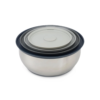
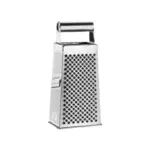
A simple box grater on the medium holes works well. I recommend using the Joseph Joseph grater with a non-slip base and a container underneath, which catches all the grated potato and juice. For a recipe where the potatoes give off a lot of liquid, keeping everything contained makes life easier and lets you pour off the excess water cleanly before you cook.
What makes Ardèche cooking distinctive
Patience, mostly. This is not a “quick” potato dish if you want it done properly. The grated potato needs a little time so the starch can start doing its job. The pan has to be properly hot before the mixture goes in. And once it is in the pan, you really do have to leave it alone. No nudging, no lifting to peek (which I am guilty of), just slow, steady crisping until the bottom is golden and the whole thing feels set.
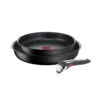
Whichever pan you use, be generous with the butter and olive oil. The mixture should sizzle as soon as it hits the heat. After that, you wait. The crique ardéchoise will tell you when it is ready to turn: the edges look firm and the smell in the kitchen suddenly becomes impossible to ignore.
Serving it
Serve hot, cut into wedges, with a green salad dressed simply with vinaigrette. That is the Ardèche way, and it turns out it is also the best way.

 Prep Time 20 minutes
  Cook Time 25 minutes
  Total Time 45 minutes
  Servings 4
Description
Ingredients
- 6 firm-fleshed potatoes
- 1 cloves garlic
- 1 handful flat-leaf parsley
- 80 gr unsalted butter
- 2 tbsp olive oil
- salt and black pepper
Equipment


Instructions
1. Prepare the potatoes
- Peel the potatoes and rinse them thoroughly under cold water. Dry well with a kitchen towel. Grate the potatoes coarsely into a large bowl. Do not rinse after grating, this keeps the natural starch and helps the mixture bind.
2. Prepare the herbs and seasoning
- Finely chop the garlic and parsley. Add both to the bowl of grated potatoes. Season with salt and freshly ground black pepper. Mix thoroughly by hand to distribute the herbs and seasoning evenly.
3. Infuse the flavours potato pancakes mixture
- Let the mixture rest for 10–15 minutes to allow the flavours to infuse and the starch to help the mixture hold together. If using an egg (optional), incorporate it now and mix until just combined.
4. Choose your style: Classic or Crispy
- Traditionally, the potato mixture is poured straight into the hot pan all at once, forming one thick, rustic galette. However, for more crispy edges (and individual portions), you can instead drop heaping spoonfuls of the mixture into the pan to make several smaller, thin potato pancakes. Both methods are authentic, the only difference is the amount of crispiness and the serving style.
5. Cook the criques
- Heat a generous layer of olive oil and a little butter, in a wide frying pan over medium heat.
6. Serve and enjoy
- Drain the cooked criques on kitchen paper if needed. Serve piping hot, garnished with more chopped parsley. Accompany with a fresh green salad for true Ardèche style.
Notes
- No flour or egg is traditionally required if potatoes are fresh; however, egg can be added for a firmer texture.
- Use a mix of butter and olive oil for best taste and texture.
- Be patient during cooking; the key to a perfect crique is a slow crisping process!
Share your feedback and spread the love!
If you try this recipe, I’d love to hear how it turns out! Leave a ★★★★★ rating and your thoughts in the comments, it helps fellow French foodies discover this recipe too. Snap a photo and tag @obviously.french on Instagram. Come talk about it in our Facebook group. And don’t forget to save this recipe to Pinterest so you’ll always have it handy for your next French-inspired meal!