Pressed Cheeses

Pressed cheeses are the everyday workhorses of the French kitchen, the ones that end up as a wedge on the cheese board, a few slices in a sandwich, a sprinkle on a tomato tart or a handful grated over a gratin. They melt beautifully, they slice without crumbling, and they’ll sit happily in the fridge for weeks, which is more than you can say for a ripe soft cheese.
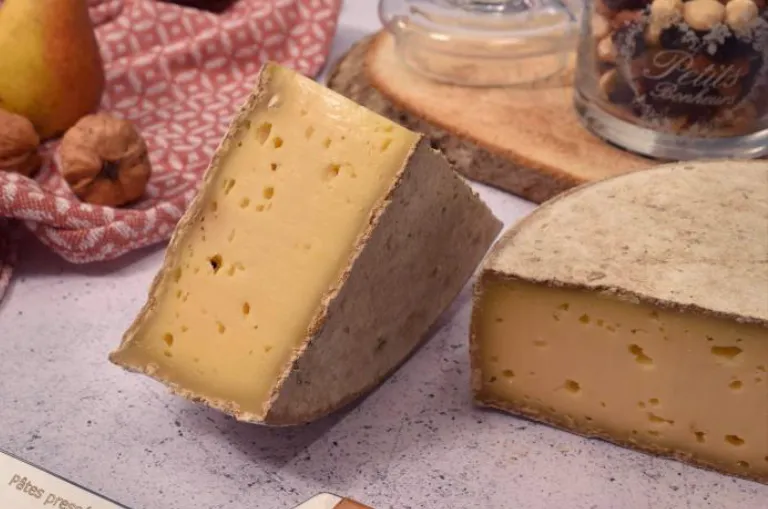
At a French cheese counter they’re the firm, golden wheels and blocks with smooth or dusty grey rinds, sitting somewhere between the runny soft cheeses at one end and the huge mountain wheels at the other. Some are mild and milky enough for children, others have been aged for a year or more and taste of hazelnut, caramel and cellar. The last are my personal favourite!
Table of Contents
What is an uncooked pressed cheese?
In French, these are fromages à pâte pressée non cuite, which translates as “pressed, uncooked paste cheeses”. The pâte is the inside of the cheese, pressée tells you the curd has been pressed into its mould, and non cuite means it hasn’t been “cooked”, the cheesemakers’ word for heating the curd in the vat.
That last part is what separates them from their cousins, the pâtes pressées cuites, where the curd is heated to over 50°C (122°F) before moulding and pressing, which gives the big, hard wheels you’ll find in my pressed cooked cheese guide. Uncooked pressed cheeses may be warmed a little during making, but they stay well below that, so the curd holds on to more moisture and the cheese is usually more supple.
Most French uncooked pressed cheeses are made with cow’s milk, though the Pyrenees have a long tradition of sheep’s milk ones and you’ll occasionally find goat’s milk versions too. Some are protected by an AOP, many more are farmhouse or dairy cheeses without one, and the family has a few overlaps: some pressed cheeses have their rinds washed during ageing, which puts them with one foot in the washed rind family as well. You’ll find the individual cheeses in their own articles, linked in the collection section further down.
Why are pressed cheeses pressed?
Pressing is about the water in the cheese. Once the milk has set and the curd has been cut, the little pieces of curd are still full of whey, and a cheese that keeps a lot of that whey stays soft and ripens fast, like a Camembert.
When the curds are packed into moulds and pressed, sometimes under a weight and sometimes in a mechanical press, the whey is pushed out and the curds knit together into a solid wheel or block. The harder and longer the press, the drier and denser the cheese becomes, which is why the same family can give you anything from a supple cheese that bends when you squeeze it to a firm one that you’d rather grate over a French onion soup.
Less water in the cheese also means slower ripening and better keeping, since the bacteria and moulds that spoil cheese need moisture to grow. Instead of breaking down in a few weeks, a pressed cheese changes gradually over months, which gives the cheesemaker time to age it for as long as they want the flavour to develop.
What does “uncooked” actually change?
Heating the curd in the vat makes it shrink and push out even more whey, so cooked cheeses end up very dry and can be aged for years. Uncooked pressed cheeses skip that step, or only warm the curd slightly, and the difference shows in the texture and the taste.
Because the curd keeps more moisture, the paste stays softer and more elastic, and it melts smoothly rather than turning stringy or oily. The flavours also tend to stay closer to the milk, with buttery, lactic and grassy notes in younger cheeses, and nuttier, more savoury ones as they age. A young uncooked pressed cheese can be ready to eat after a few weeks, while its cooked cousins usually need many months.
Explore the pressed cheeses collection
This guide covers the basics. For a closer look at individual cheeses, our collection articles each feature five varieties, with tasting notes and where to find them:
- Coming soon!

The defining characteristics
What makes a uncooked pressed cheese?
- Rind: Natural and dry, brushed, washed and slightly sticky, or coated in wax, depending on the cheese and how it was aged.
- Aroma: Mild and milky in young cheeses, with cellar, hay, nut and sometimes a light farmyard note as they age (stronger in washed rind versions).
- Texture: Firm to semi-firm, from supple and elastic to dense and slightly crumbly, and it slices cleanly.
- Flavour: Buttery, lactic and gentle when young, becoming nutty, fruity and savoury with age, sometimes with a caramel note in the oldest ones.
- Making: Curd cut, drained and pressed into moulds, never heated above the 50°C (122°F) used for cooked cheeses, then salted and aged for anything from a few weeks to over a year.

How French uncooked pressed cheeses are made
French cheesemaking follows the same basic path for most families, and with pressed cheeses the key moments are how much whey is removed and how the curd is pressed.
1. Preparing the milk
Most cheeses in this family use cow’s milk, with some sheep’s milk and a little goat’s milk. It’s used raw or pasteurised depending on the cheese and the producer, and it may be gently warmed before the next step.
2. Setting the milk
Lactic cultures are added to start acidifying the milk, followed by rennet. At around 30 to 36°C (86 to 97°F), the milk sets into a curd in roughly half an hour to an hour.
3. Cutting and stirring
The curd is cut into small pieces, often about the size of a hazelnut or a grain of corn, and stirred in the vat so the whey runs out. The smaller the pieces and the longer the stirring, the drier the cheese will be. The curd may be warmed slightly at this stage, but it is never cooked.
4. Washing the curd (some cheeses)
For some milder, more supple cheeses, part of the whey is drained off and replaced with warm water. This rinses out some of the milk sugar, so the cheese becomes less acidic and keeps a softer, sweeter, more elastic paste.
5. Moulding and pressing
This is the step that gives the family its name. The curds are packed into moulds and pressed, sometimes lightly for a few hours and sometimes heavily overnight, with the cheeses turned between pressings so the paste is even all the way through.
6. Breaking and pressing again (some cheeses)
In some mountain cheeses of the Auvergne, the curd is pressed into a block, left to mature for a while, then broken up, salted through and pressed a second time. This old method gives a denser, slightly crumbly paste that you can recognise straight away.
7. Salting
Unless the curd was salted in the previous step, the cheeses are salted after pressing, either rubbed with dry salt or soaked in brine for anything from a few hours to a couple of days.
8. Aging
The cheeses go into cool, humid cellars, usually around 10 to 15°C (50 to 59°F), where they’re turned regularly. Depending on the cheese, the rind is brushed, rubbed, washed with brine or left to form naturally, and some are coated in wax. Ageing lasts from a few weeks for the mildest cheeses to over a year for the oldest.
French cheesemaking traditions behind uncooked pressed cheeses
Pressed cheeses grew out of a very practical problem: how to keep milk from the summer pastures for the months when the cows were back in the barn. A soft cheese had to be eaten within weeks, but a big pressed wheel could be carried down the mountain and sold or eaten all winter.
In the Auvergne, cheesemakers spent the summer in burons, small stone huts up on the high pastures, where they made large pressed cheeses from the milk of the herds grazing around them and aged them in the cool cellar underneath. A few burons still work today, and some are open to visitors in summer. In the Pyrenees, shepherds did the same with sheep’s milk, making pressed cheeses in their mountain huts while the flocks grazed the high pastures.
Over time, the methods split into regional habits that you can still taste. The Auvergne kept its broken-curd technique, which gives a denser, more crumbly texture. Elsewhere, cheesemakers washed the curd to get a softer, sweeter paste, or washed the rinds with brine for a stronger flavour. Today these cheeses are made in dairies as well as on farms, but the farmhouse ones (fermiers) are still worth looking for if you want to taste the old way.
The spectrum of uncooked pressed cheeses
The family is huge, and even with the same basic method, the cheeses on a board can feel very different from one another.
By milk
Cow’s milk
Most of the family, with flavours ranging from milky and mild to deep and savoury.
Sheep’s milk
A speciality of the Pyrenees, with a richer, more buttery, slightly sweet taste and a dense, smooth paste.
Goat’s milk
Less common, usually farmhouse cheeses, with a light tang and a whiter paste.
By texture
Supple and semi-soft
Lightly pressed and aged for a few weeks, these cheeses give a little when you press them and have a smooth, elastic paste. They taste mild, milky and buttery, and they’re the best melters in the family.
Firm and dense
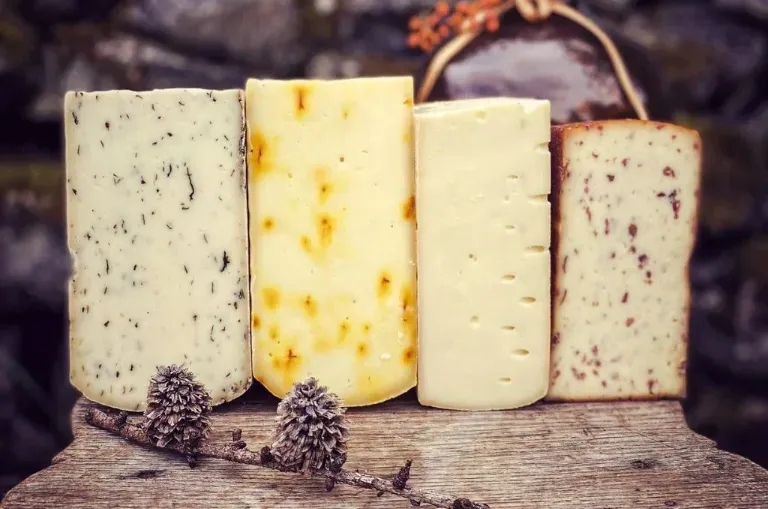
Pressed harder and aged for a few months, they slice cleanly with a bit of resistance and taste nuttier and more savoury. Some develop small, irregular holes as gas from the bacteria collects in the paste.
Aged and complex
After six months to well over a year, the paste becomes firm, slightly crumbly and sometimes crunchy with little crystals, which are a normal sign of age. Expect hazelnut, fruit and sometimes caramel or toffee, with a thick, well-tended rind.
By rind
Natural or brushed rinds
Dry, grey to golden, sometimes dusty with moulds from the cellar. These cheeses tend to taste of the milk and the cellar more than anything else.
Washed rinds
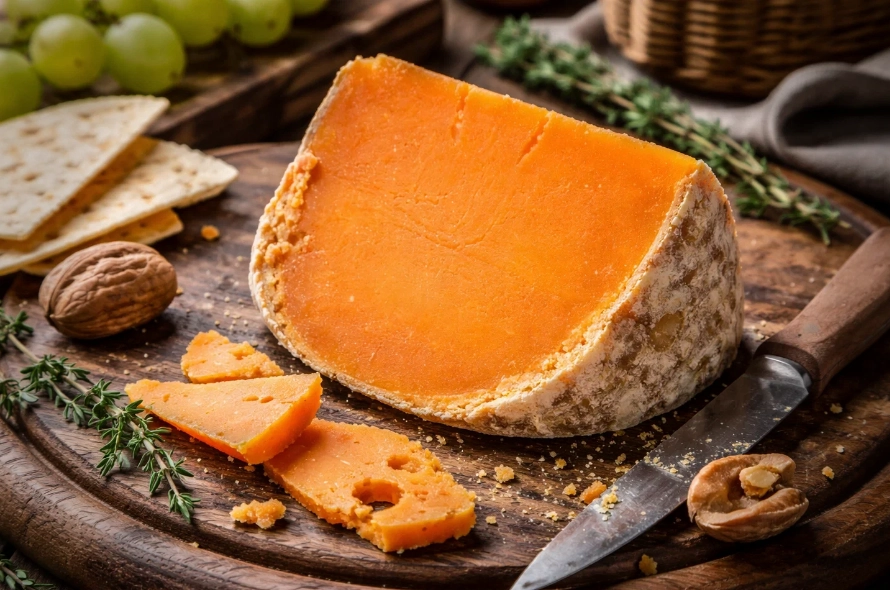
Orange to pinkish and slightly sticky, from being rubbed with brine during ageing. They smell stronger and taste more savoury and meaty.
Waxed or coated rinds
Mostly dairy-made cheeses coated to stop them drying out. They’re usually mild and the coating isn’t eaten.
How to buy French uncooked pressed cheese
Pressed cheeses are among the easiest to buy well, as long as you know what you want from them and what to look for.
What to look for
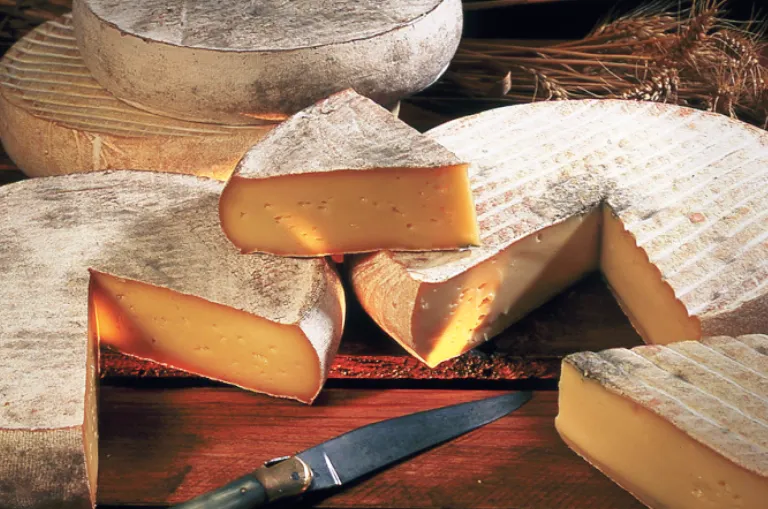
- The rind: A natural rind should look even, without deep cracks or patches of mould that don’t belong to the cheese, while a washed rind should be moist and slightly sticky but never slimy or grey. A waxed rind should be intact, with no splits.
- The inside: Ask to see a cut piece if you can. The paste should be even in colour, ivory to golden depending on the milk and its age, without dark patches, greying or dry, cracked edges. Small holes are fine if they’re typical of that cheese.
- The feel: Press gently with a finger. A young cheese should feel supple and spring back, an older one firm with only a little give, and neither should feel hard and dry at the edges or soft and sweaty.
- The smell: It should smell of milk, butter, nuts or the cellar. A sour, ammonia or musty smell means it’s been kept badly or for too long.
Reading the labels
AOP: The cheese is made in a defined area with milk from that area, following rules on the method and the minimum ageing time. It’s a guarantee of origin and method, not of how good this particular piece is.
Fermier or laitier: A fermier (farmhouse) cheese is made on the farm with the farm’s own milk, and often varies a little from season to season. Laitier means it was made in a dairy with milk from several farms, so it’s more consistent but usually less surprising.
Lait cru: Raw milk. Raw-milk pressed cheeses tend to have a more complex flavour than pasteurised ones. Raw-milk cheeses are generally advised against during pregnancy and for vulnerable people, so check your local health advice.
Age: Some cheeses are sold by age, with words like jeune (young), entre-deux or mi-vieux (in between), and vieux or extra-vieux (old, extra old). Each cheese uses its own terms and timings, but the idea is the same: the older it is, the firmer and stronger it gets.
Buying in the US and the UK: In the US, raw-milk cheeses aged under 60 days can’t be sold, so some young raw-milk French pressed cheeses only come in pasteurised versions there, or not at all. Anything aged longer is fine, and most older pressed cheeses are easy to find at good cheese counters in both countries.
How to store uncooked pressed cheese
Pressed cheeses are the most forgiving cheeses in the fridge, but they still do best with a little care. Keep them at about 4 to 8°C (39 to 46°F), ideally in the vegetable drawer, where it’s slightly more humid and the temperature is steadier.
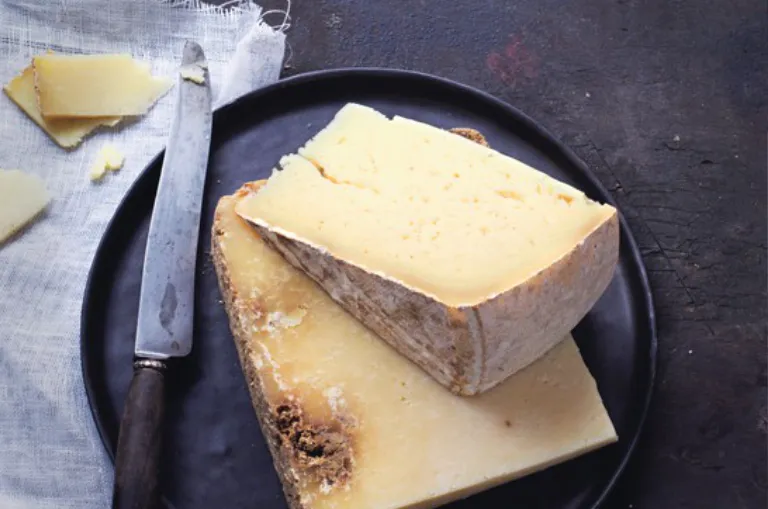
Wrap the cut piece in cheese paper, baking paper (parchment paper sheets) or waxed paper, then put it in a box or a loosely closed bag. The paper lets the cheese breathe while the box stops it drying out, which is the main thing that goes wrong with pressed cheeses. Avoid cling film (plastic wrap) pressed tight against the cheese, as it traps moisture and the surface can turn sweaty and sticky.
Change the paper whenever it gets damp or greasy, which won’t happen often with these cheeses since they hold far less moisture than soft ones.
How long do pressed cheeses keep?
Once cut, young, supple pressed cheeses are best eaten within two to three weeks, and older, firmer ones can last a month or more if you rewrap them well. Always go by the use-by date on the pack first.
If a small spot of mould appears on the surface of a firm pressed cheese, you can cut it away with a good margin, about 2.5 cm (1 inch) around and below the spot, and eat the rest. If the mould goes deep into the paste, the cheese turns slimy or it smells sour, throw it away. A piece that has dried out at the edges can be trimmed, and the rest grated into cooking.
Can you freeze pressed cheese?
Yes, and pressed cheeses take freezing better than most, though they still lose something. The texture becomes more crumbly once thawed and some of the flavour fades, so frozen pressed cheese is best kept for cooking.
Cut it into the portions you’ll use, or grate it first, wrap it well in a couple of layers and freeze it for up to about three months. Let it thaw slowly in the fridge, or add grated cheese straight from frozen to gratins and sauces. Older, firmer cheeses freeze better than young, supple ones because they hold less water.
How to serve uncooked pressed cheese
Take pressed cheeses out of the fridge 30 to 45 minutes before serving, and give the older, firmer ones the full 45 minutes. Cold, they taste of very little and feel rubbery, while at room temperature the fat softens and the flavour comes through properly.
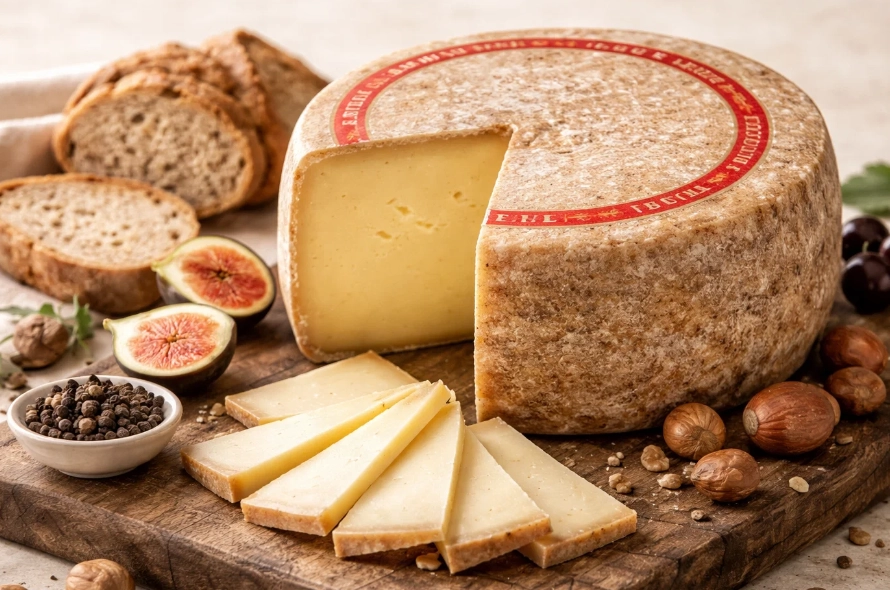
They’re also the easiest cheeses to cut neatly, so slice them into thin wedges from the centre of the wheel outwards, which gives everyone a bit of the paste near the rind and a bit from the heart. Sliced apple or pear, walnuts, grapes and a good country loaf all go well with them, and a dry white or a light, fruity red is a safe choice for most of the family.
If you’d like to go further with pairings, my cheese and wine tasting e-book walks you through it.
Can you eat the rind?
It depends on the rind. Natural and brushed rinds are edible but often tough and dry, so most people cut them off, while thin washed rinds are edible and some people like their stronger, savoury taste. Waxed and coated rinds should never be eaten. With thick, old rinds, cutting them off is perfectly normal, and you can drop a piece into a vegetable soup to add flavour as it simmers.
Cooking with uncooked pressed cheese
Uncooked pressed cheeses are the best melters in the French cheese world, which is why so many of the classic cheesy dishes from the mountains are built around them.
Raclette
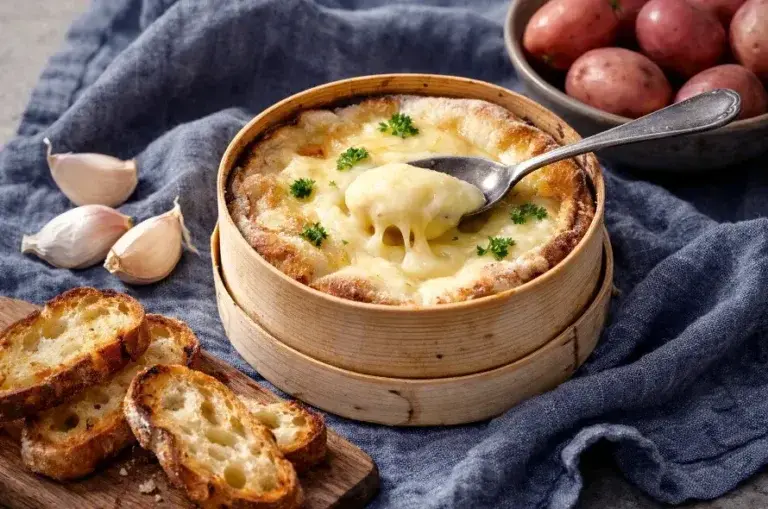
A raclette is a half wheel of cheese heated until the surface bubbles, then scraped onto boiled potatoes, with pickles and mushrooms on the side. These days most French homes use a tabletop grill with little pans, so everyone melts their own slice.
Aligot
This dish from the Aubrac, in the south of the Massif Central, is mashed potato beaten with butter, cream, garlic and tome fraîche, the young pressed curd that’s normally made into cheese. As you stir, it turns into a smooth, stretchy purée that pulls into long ribbons when you lift the spoon, and it’s surprisingly filling.
Gratins
Grated pressed cheese is what gives a French gratin its golden crust. Layer it between sliced potatoes, leeks, cauliflower or courgettes (zucchini) with cream or a béchamel, keep some for the top, and bake until bubbling. The cheese melts evenly into the sauce without going oily, and a mix of a young cheese for creaminess and an older one for flavour works best.
Tips for cooking with washed rind cheese
- Grate it cold: Pressed cheese grates more easily straight from the fridge, and finely grated cheese melts faster and more evenly.
- Go low and slow: These cheeses melt at fairly low temperatures, so gentle heat gives a smooth result, while fierce heat makes them oily and stringy.
- Add it off the heat: For sauces, take the pan off the heat and stir in the grated cheese a handful at a time, so the heat of the sauce melts it gently.
- Mix young and old: Young cheeses melt best, older ones bring the flavour, so a mixture of the two gives you both in a gratin or a sauce.
FAQ
What are uncooked pressed cheeses?
Uncooked pressed cheeses are cheeses whose curd is pressed into moulds to push out the whey, but is never heated to the high temperatures used for cooked cheeses. The pressing gives them a firm, dense paste that slices cleanly and keeps well, and the gentle treatment keeps the paste supple, so they melt beautifully. In France they’re called fromages à pâte pressée non cuite, and they make up one of the biggest families of French cheese.
What does fromage à pâte pressée non cuite mean?
Fromage à pâte pressée non cuite means “pressed, uncooked paste cheese”. The pâte is the inside of the cheese, pressée means the curd has been pressed into its mould to remove whey, and non cuite means it hasn’t been “cooked”, the cheesemakers’ term for heating the curd in the vat. It’s the official French name for this family of cheese.
What’s the difference between cooked and uncooked pressed cheese?
Both are pressed, but for cooked pressed cheeses the curd is heated in the vat to over 50°C (122°F) before moulding. This makes the curd shrink and lose more whey, so cooked cheeses are drier, harder, often much bigger, and can age for years. Uncooked pressed cheeses are only warmed gently, if at all, so they keep more moisture, stay more supple and are usually ready to eat sooner.
Can you eat the rind on pressed cheese?
It depends on the rind. Natural and brushed rinds are edible but often too tough and dry to enjoy, so most people cut them off. Thin washed rinds are edible and have a stronger, savoury taste that some people love. Wax and plastic-type coatings must never be eaten. Thick, old rinds can be dropped into a simmering soup to add flavour, then fished out.
Can you freeze pressed cheese?
Yes, pressed cheeses freeze better than most, though the texture becomes more crumbly and some flavour fades. Cut or grate the cheese into portions, wrap it well in a couple of layers and freeze it for up to about three months. Thaw it slowly in the fridge or use it straight from frozen in gratins and sauces, and buy fresh for the cheese board.
Explore all the cheese families
Final thoughts
Pressed cheeses don’t get as much attention as the smelly washed rinds or the dramatic blues, but they’re the cheeses you’ll find in a great many French fridges. If you’re new to the family, start with a young, supple cow’s milk cheese, let it come to room temperature and taste it on its own, then try the same type of cheese at an older age to see how much it changes.
After that, melt some into a gratin or a raclette, and you’ll understand why French families get through so much of it every winter.
Which pressed cheese do you always have in your fridge, and how do you like to eat it? Tell me in the comments!

A Complete Hosting Guide
This complete guide takes the intimidation out of French cheese and wine hosting, so you can create an impressive, memorable evening that feels effortless.
Just so you know, a few links here earn us a commission. Doesn’t cost you anything extra, and we only link to things that are actually worth your time.