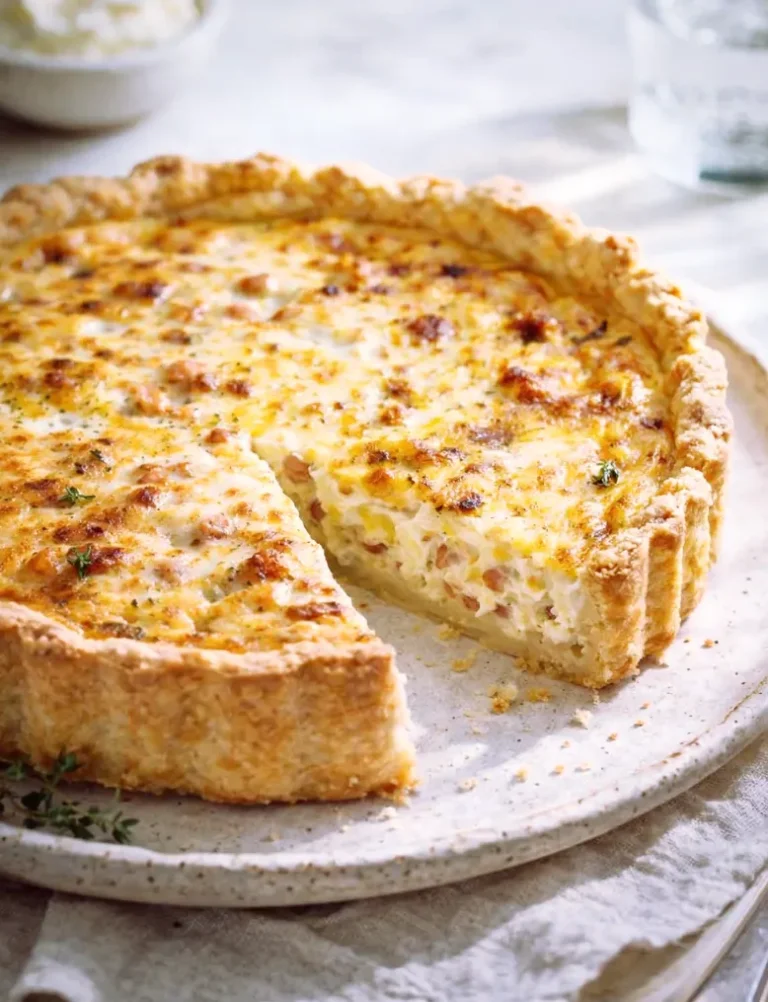
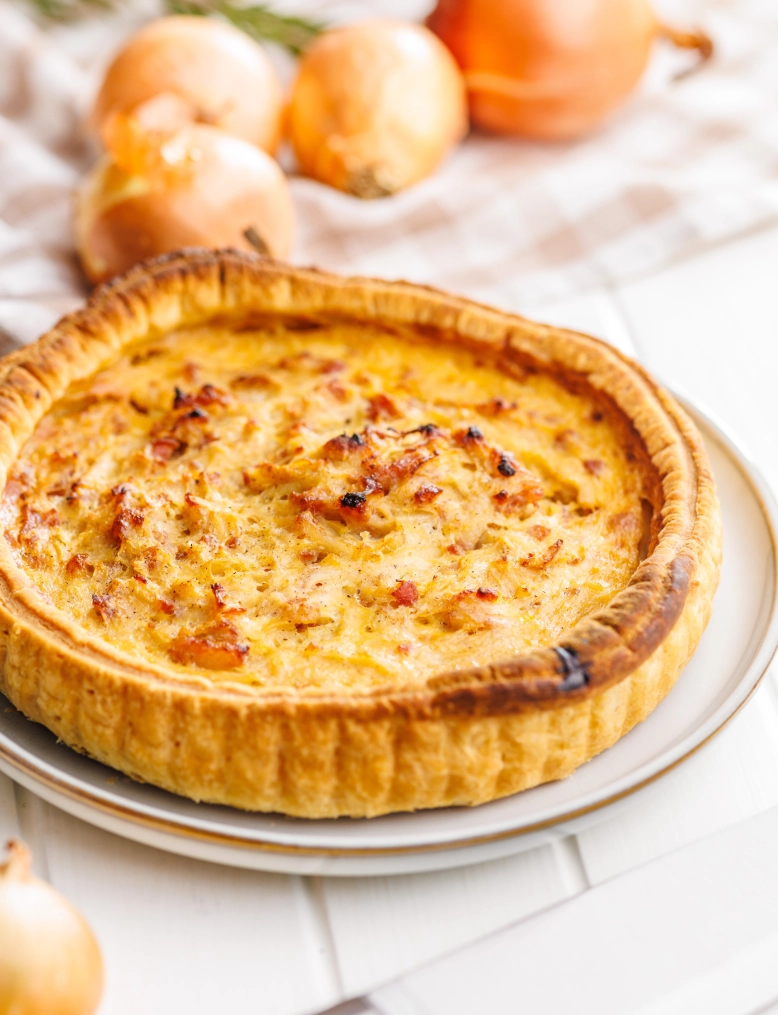
Quiche Lorraine
 Prep Time 20 minutes
  Cook Time 50 minutes
  Total Time 1 hour 40 minutes
  Servings 6
Ingredients
For the pastry (pâte brisée)
- 250 gr plain flour
- 125 gr unsalted butter cold
- 1 egg yolk
- 3 tbsp water cold
- 1 pinch salt
For the filling
- 200 gr vegetarian lardons smoked versions work best
- 2 onions
- 25 gr butter for frying
- 4 eggs
- 300 ml crème fraîche
- 100 ml whole milk
- 1 pinch nutmeg
- salt and black pepper
Equipment
Instructions
1. Make the pastry
- Rub the butter into the flour and salt until it looks like breadcrumbs. Add the egg yolk and enough cold water to bring it together, don't overwork it. Wrap in cling film and stick it in the fridge for 30 minutes.This rest is crucial. The gluten relaxes, the butter firms up, and you get a properly crisp base that won't shrink when you bake it.
2. Prepare the pastry case (optional partial blind bake)
- Roll out the pastry on a floured surface to about 3mm thick. Line your tart tin, leaving a bit of overhang. Prick the base with a fork.If you want extra insurance against soggy bottoms, line with baking parchment, fill with baking beans, and bake at 180°C (160°C fan) for just 10 minutes. Remove beans and parchment immediately, don't bake it any further. The pastry should still be pale, just slightly set.This partial blind bake gives the base a head start, but it's honestly optional. Most French cooks skip it entirely.
3. Cook the onions and lardons
- Melt the butter in a frying pan over medium-low heat. Add the sliced onions with a pinch of salt and cook for 15-20 minutes, stirring occasionally, until they're soft, sweet, and lightly golden. Don't rush this, slow-cooked onions are what make this quiche delicious.Push the onions to one side and add the lardons. Fry for 5-6 minutes until they've got a bit of colour and some crispy edges. Mix everything together, then drain on kitchen paper.Even vegetarian lardons need proper browning to get that smoky depth. The onions add sweetness that balances the salty, smoky lardons perfectly.
4. Make the custard
- Whisk together the eggs, crème fraîche, and milk. Season with salt, pepper, and a good grating of nutmeg. The mixture should be smooth but not frothy.The crème fraîche is what makes it properly French, don't substitute with cream if you can help it. That slight tang cuts through the richness.
5. Assemble and bake
- Scatter the cooked onions and lardons evenly over the pastry base. Pour the custard mixture over the top. Bake at 180°C (160°C fan) for 30-35 minutes until the filling is just set with a slight wobble in the centre.It'll continue cooking as it cools, so don't overbake it. You want creamy, not rubbery.
6. Rest and serve
- Let it cool for at least 10 minutes before slicing. Serve warm or at room temperature.Quiche Lorraine is genuinely better slightly warm rather than piping hot. The flavours settle and the texture's spot on.
Notes
- Traditional Quiche Lorraine has no cheese. The modern version sometimes adds 50g finely grated Gruyère scattered over the base before adding the custard. It’s your call.
- The pastry can be made a day ahead and kept in the fridge. The whole quiche can be assembled in the morning and baked before serving.
- The quiche is brilliant cold the next day. Reheats well in a low oven (150°C) for 15 minutes.
About this recipe
Quiche Lorraine is one of the most recognised French dishes in the world, and also one of the most misunderstood. Ask ten people what goes into a Quiche Lorraine and you’ll get ten different answers. Cheese. No cheese. Onions. No onions. Cream only. Cream and milk. Everyone is certain they’re right. Here’s the actual story.
Where Quiche Lorraine comes from
Quiche Lorraine comes from the Lorraine region in northeastern France, sitting on the border between French and German culture. The word “quiche” itself comes from the German “Kuchen,” meaning cake, which tells you something about the region’s history. The dish dates back to the 16th century, though the name only appeared in writing in the 1800s.
The original version was dead simple. Bacon, eggs, and cream in a pastry case. That’s it. No cheese. No onions. No vegetables. That minimalism is what made it brilliant. When you have only three main quiche lorraine ingredients, they had better be exceptional ones.
How the recipe evolved
Over time, particularly through the mid-20th century, the homemade quiche lorraine most people know today developed into something slightly different from the original. Onions became standard in most French homes and restaurants, adding sweetness and depth to balance the salty lardons. Gruyère crept in too, though French purists still argue about that one.
This version with caramelised onions is what most people now recognise as Quiche Lorraine, both in France and abroad. The onion-free version is technically more authentic, but the onions genuinely make it better. They add a sweet, caramelised richness that plays beautifully against the smoky lardons and silky egg custard. It’s one of those evolutions that stuck because it works.
The quiche lorraine ingredients that matter
A great quiche lorraine pie lives or dies by three things: the custard, the pastry, and the filling.
The custard needs to be properly silky. That means the right ratio of eggs to cream, and gentle heat in the oven. Too hot and it puffs up and cracks. Too cool and it never sets properly. The sweet spot is a low, steady bake until the centre has just a slight wobble when you shake the dish. It will finish setting as it cools.
The pastry needs to be properly blind baked before the filling goes in. Skipping this step is why homemade quiche lorraine so often has a soggy bottom. Ten minutes blind baked with weights, then another five without, and you have a crisp shell that holds up to the custard without going soft.
The filling needs balance. The lardons provide salt and smoke. The onions provide sweetness. The custard binds everything and adds richness. Each element is doing a specific job.
This vegetarian quiche lorraine recipe
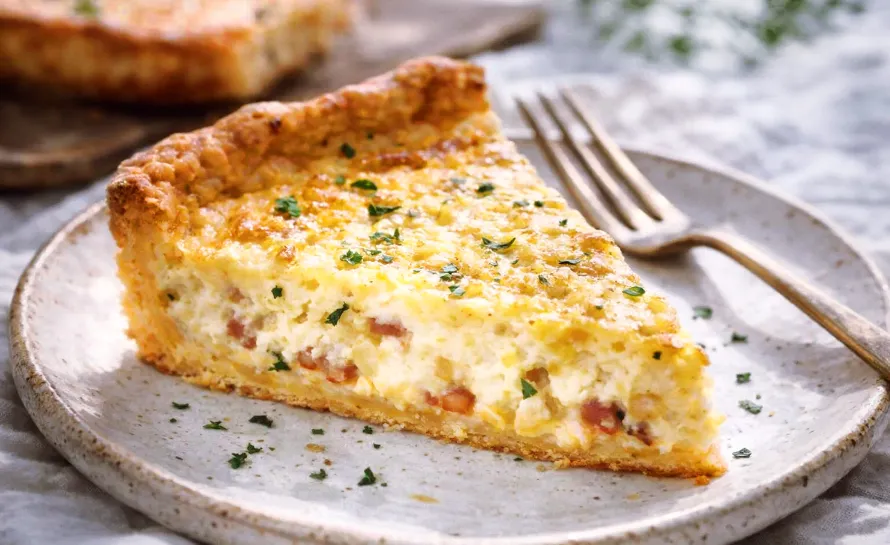
Vegetarian lardons are a recent innovation, but they work well here. The smoky, salty bite is what matters in a Quiche Lorraine, and good vegetarian versions deliver exactly that. You’re keeping the spirit of the dish intact whilst making it accessible to more people. It’s the same principle the French have always applied: use what you have, cook it properly, feed everyone at the table.
This vegetarian quiche lorraine recipe follows the same technique as the classic version. The only change is the lardons. Everything else, the custard, the caramelised onions, the pastry, remains exactly as it should be.
The right dish makes a difference
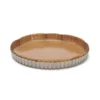
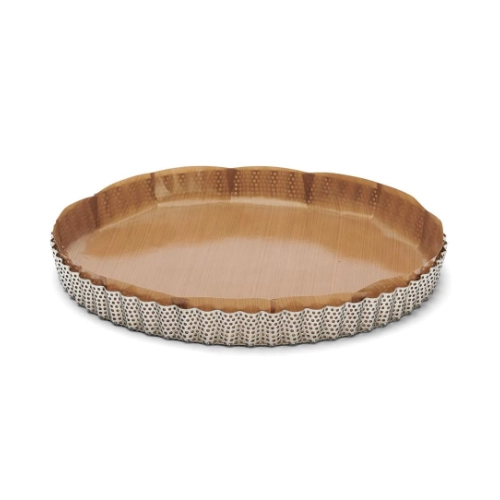
A quiche lorraine pie needs a dish that conducts heat evenly, releases cleanly, and goes from oven to table without looking out of place. I use the De Buyer fluted dish for this. The carbon steel conducts heat brilliantly, which gives you a properly crisp pastry base every time. The fluted edges give the pastry a clean, professional finish, and it’s attractive enough to serve from directly. For a dish this simple, presentation matters. A homemade quiche lorraine that looks as good as it tastes is the whole point.
How the French eat quiche
In France, quiche is everyday food. Sliced for lunch with a green salad and a glass of white wine. Served at apéro hour in smaller pieces alongside drinks. Packed into lunchboxes, eaten cold the next day, reheated for a quick dinner.
It’s not fancy. But when it’s made properly, with good quiche lorraine ingredients and a little patience, there’s not much better. That’s the French approach to cooking in a single dish: simple, honest, and worth doing right.
Share your feedback and spread the love!
If you try this recipe, I’d love to hear how it turns out! Leave a ★★★★★ rating and your thoughts in the comments, it helps fellow French foodies discover this recipe too. Snap a photo and tag me @obviously.french on Instagram if you’re sharing your bake or cooking online. Don’t forget to save this recipe to Pinterest so you’ll always have it handy for your next French-inspired meal!
Disclosure: Just so you know, this post contains sponsored content and/or affiliate links, If you make a purchase through these links, I may receive a small commission. Doesn’t cost you anything extra. I only link to things that are actually worth your time. All opinions are my own!