Raclette
 Prep Time 25 minutes
  Cook Time 20 minutes
  Total Time 45 minutes
  Servings 4
Ingredients
Fondue
- 1 kg Raclette cheese 250g per person
- 800 gr firm-fleshed potatoes
On the side
- 200 gr pickled gherkins cornichons
- 150 gr pickled onions
Equipment
Instructions
1. Prepare the potatoes
- Wash the firm-fleshed potatoes and boil whole in salted water until tender (about 20-25 minutes). Drain and let cool slightly.
2. Prepare the salad
- In a small bowl, whisk together Dijon mustard and vinegar. Slowly drizzle in the olive oil, whisking until the dressing emulsifies. Season with salt and pepper. Toss the dressing with the mixed lettuce leaves just before serving.
3. Slice the cheese
- Cut Raclette cheese into 5mm thick slices if not pre-sliced. Arrange on a plate ready for melting!
4. Heat the raclette grill
- Preheat your raclette grill.
5. Assemble and serve
- On each plate, arrange potatoes, pickled gherkins, and onions. Pour the melted cheese over the potatoes and accompaniments. Add a portion of dressed salad for freshness.
6. Melt the cheese
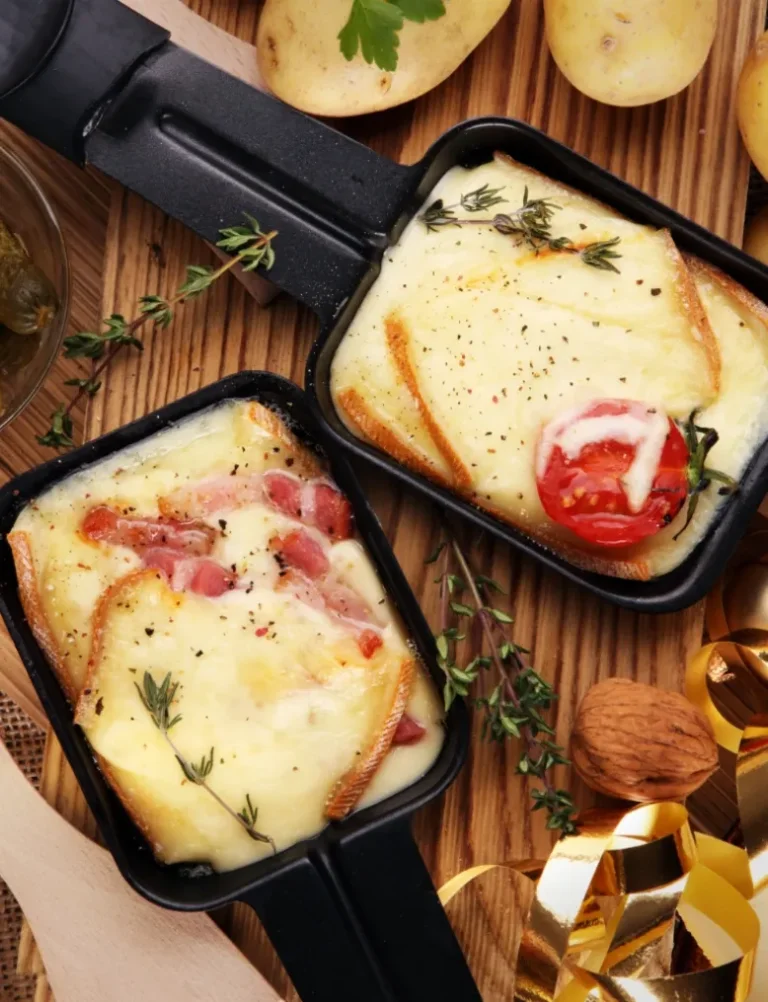
- Place a slice of cheese in the individual raclette tray and slide it under the heating element. Let it melt until bubbling and golden (about 3-5 minutes).
7. Repeat and enjoy
- Continue melting and scraping cheese, pairing with more potatoes and pickles throughout the meal. Share, chat, and enjoy!
Notes
- Raclette means “to scrape,” the traditional way to serve melted cheese over food.
- Firm or waxy potatoes hold up perfectly to the cheese, unlike floury ones which break down.
- The crisp salad with mustard dressing cuts through the cheese’s richness and refreshes the palate.
- Vegetarian friendly, simple, and endlessly satisfying!
About this recipe
Raclette is a dish with deep roots in the Swiss and French Alps (just like the cheese fondue Savoyarde), where it began as a simple shepherd’s meal designed to stave off the cold with melted cheese and basic staples. The name comes from the French verb “racler,” meaning to scrape, which describes the traditional method perfectly: a wheel of raclette cheese heated by the fire, the soft melted part scraped directly onto boiled potatoes, bread, and pickles. It grew from a humble Alpine meal into one of the great communal winter dishes of French and Swiss culture.
The raclette cheese
The french raclette cheese that defines this dish is a semi-hard, washed-rind cheese from the Alps, produced on both the French and Swiss sides of the border. French raclette comes primarily from Savoie and Franche-Comté. It has a pale yellow interior, a mild, slightly nutty flavour when cold, and a deeply savoury, intensely aromatic character once melted. The rind washes during ageing produce the characteristic smell that people either love immediately or come to love over time.
The quality of the raclette cheese matters more in this dish than in almost any recipe, because the cheese is the dish. There is nothing else to hide behind. A good french raclette cheese will melt smoothly, develop golden edges if left long enough, and coat the potatoes with something genuinely flavourful. A poor quality raclette cheese will melt, but the result will be flat and forgettable.
What makes raclette dinner special
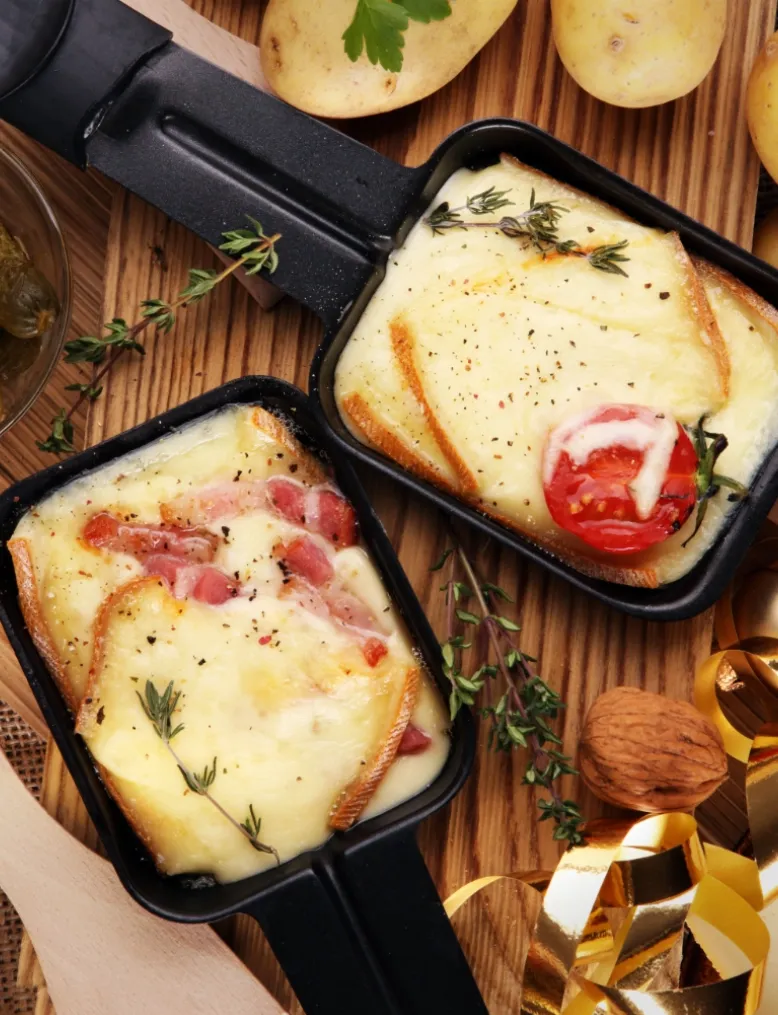
What makes a raclette dinner different from other cheese dishes is the interaction. Unlike fondue, where everyone dips into a shared pot, raclette is individual. Each person melts their own cheese in a small pan under the grill, to their own preferred degree of doneness. Some people pull it the moment it melts. Others, myself included, wait until the edges are golden and slightly crispy and the surface has developed a little colour. The longer the cheese cooks, the richer and more intense the flavour becomes.
This makes a raclette dinner naturally unhurried. Nobody is waiting for a single pot. Everyone is doing their own thing at the same pace, checking their pan, deciding whether to wait a little longer, scraping the cheese onto their plate and immediately loading up another portion. It is the kind of meal where an hour passes without anyone noticing.
This raclette recipe
This recipe is vegetarian, which strips the dish back to its essentials: the cheese, the potatoes, and the pickles. The potatoes need to be firm and well-cooked, small enough to eat whole or cut in half, and hot when they reach the table. The pickles, cornichons and small silver onions traditionally, provide the acidity that cuts through the richness of the melted cheese and makes it possible to eat considerably more than you planned to.
That said, this dish’s traditional roots are firmly tied to charcuterie. If you want to add ham, smoked sausage, or smoked bacon, all of them pair well with the melted cheese and bring a smoky depth to the table. The vegetarian version is not a compromise. It is the purist approach.
A crisp white Burgundy or an Alsace Riesling alongside is not optional. The acidity lifts the richness of the cheese and reflects the classic Alpine way of eating this dish. That pairing has been the right one for centuries.
The right equipment
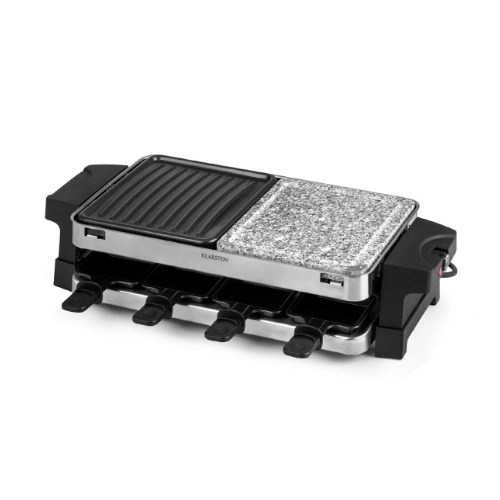
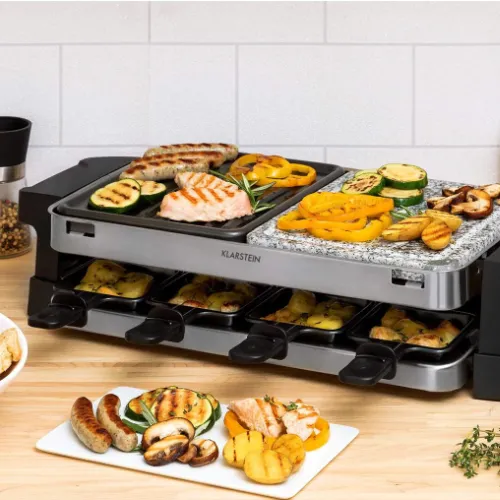
A raclette grill is what turns this from a fondue-adjacent dish into the proper interactive experience. I use the raclette grill for this. The individual pans underneath the grill element allow each person to melt their own cheese independently, controlling the timing and the degree of browning themselves. The flat top surface of the grill doubles as a hotplate for keeping the potatoes warm throughout the meal, which matters in a dish that goes on for a while. The right grill makes the raclette dinner work as a social experience rather than just a recipe.
Fair warning
This meal is completely addictive. The combination of melted french raclette cheese, hot potatoes, and sharp pickles is one of the most satisfying things you can put on a winter table, and the interactive format means the meal continues for as long as there is cheese left. Plan accordingly.
Share your feedback and spread the love!
If you try this recipe, I’d love to hear how it turns out! Leave a ★★★★★ rating and your thoughts in the comments, it helps fellow French foodies discover this recipe too. Snap a photo and tag me @obviously.french on Instagram if you’re sharing your bake or cooking online. Don’t forget to save this recipe to Pinterest so you’ll always have it handy for your next French-inspired meal!
Disclosure: Just so you know, this post contains sponsored content and/or affiliate links, If you make a purchase through these links, I may receive a small commission. Doesn’t cost you anything extra. I only link to things that are actually worth your time. All opinions are my own!