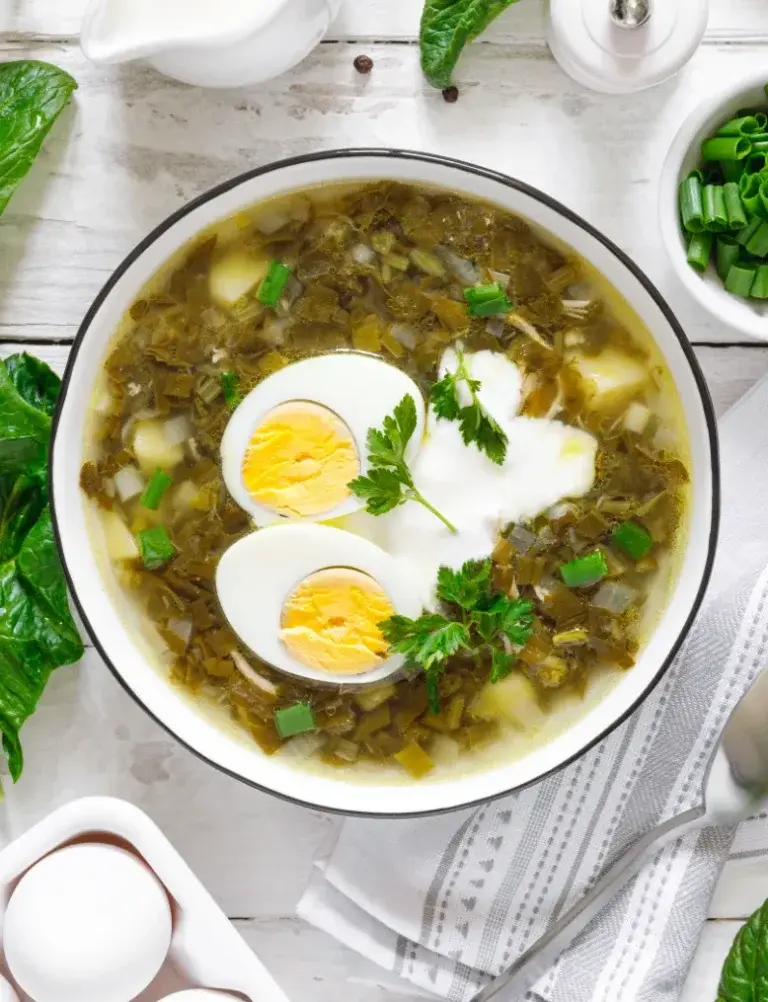
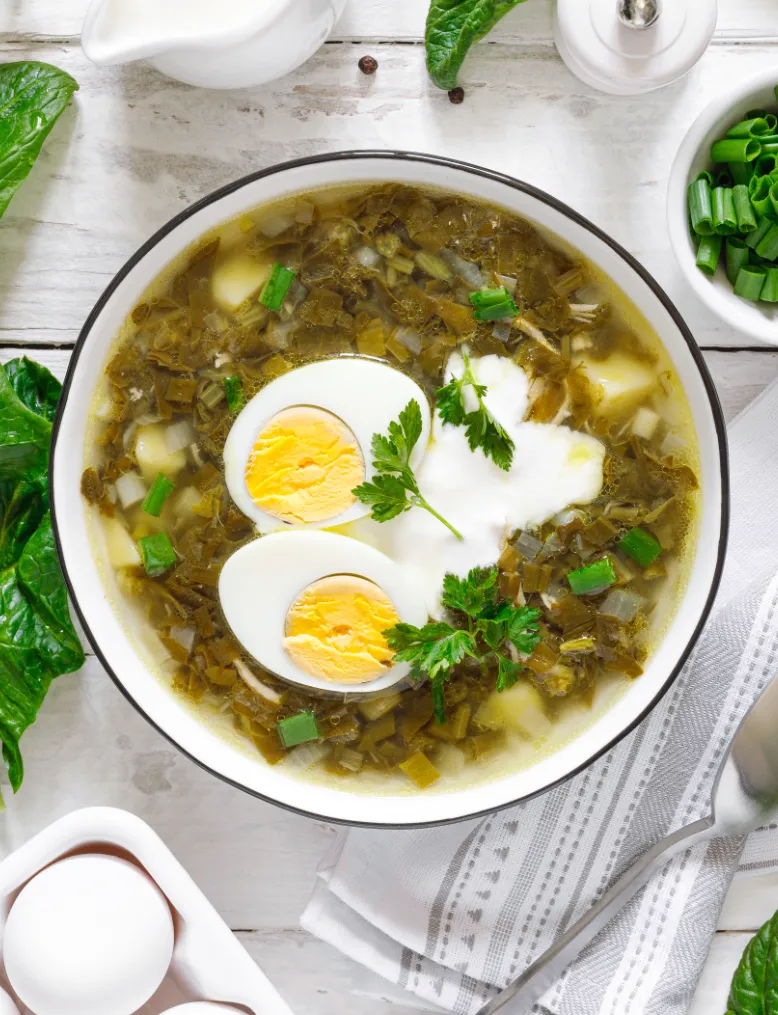
Sorrel Soup
 Prep Time 15 minutes
  Cook Time 30 minutes
  Total Time 45 minutes
  Servings 4
Ingredients
- 300 gr sorrel stalks removed
- 500 gr floury potatoes peeled and diced
- 2 shallots finely sliced
- 40 gr unsalted butter
- 1 l vegetable stock
- 150 ml crème fraîche plus extra to serve
- 4 eggs
- salt and black pepper
- small bunch flat-leaf parsley or chervil, to garnish
Equipment



Instructions
1. Prepare the sorrel
- Wash the sorrel thoroughly in cold water, then strip out the central stalks, hold each leaf and pull the stalk downwards, like you would with spinach. Roughly chop the leaves and set aside. Don't be alarmed by the quantity; sorrel collapses dramatically on contact with heat and 300g will reduce to almost nothing within minutes.
2. Sweat the shallots
- Melt the butter in a large saucepan over a low-medium heat. Add the shallots and cook gently for about 5 minutes, stirring occasionally, until completely soft and translucent. You want no colour here, just slow, gentle sweating to draw out their sweetness and build the base of the soup.
3. Wilt the sorrel
- Add the sorrel to the pan and stir well. It will collapse almost immediately, going from a generous pile of bright green leaves to a dark, olive-coloured paste within 2–3 minutes. This is normal, the oxalic acid in sorrel reacts with heat and the colour change. The flavour is entirely unaffected.
4. Add the potatoes and stock
- Add the diced potatoes to the pan and stir to coat them in the sorrel and butter. Pour in the vegetable stock, season generously with salt and pepper, and bring to a boil. Reduce to a steady simmer and cook for 20–25 minutes, until the potatoes are completely tender and break apart easily when pressed.
5. Hard-boil the eggs
- While the soup simmers, lower the eggs carefully into a saucepan of boiling water and cook for 10 minutes exactly. Transfer immediately to a bowl of cold water, leave for 5 minutes, then peel and slice in half lengthways. Set aside.
6. Finish the soup
- Remove the pan from the heat briefly and taste carefully for seasoning, sorrel is acidic, so you may need more salt than you expect. Return to a low heat, stir in the crème fraîche, and warm through gently for a few minutes. Do not let the soup boil once the crème fraîche is added. The potatoes will have softened and broken down slightly into the broth, giving the soup body without blending.
7. Serve
- Ladle into deep bowls. Place two egg halves cut-side up in each bowl, add a generous spoonful of crème fraîche, and scatter over the chopped parsley or chervil. Finish with a few turns of black pepper and serve immediately with good crusty bread.
Notes
- 300g of sorrel is the right amount for a well-balanced soup, enough acidity to be the point of the dish without being overwhelming. In early spring, when freshly cut sorrel is at its most pungent, you might even start with 250g and taste as you go.
- Fresh sorrel is available from farmers’ markets and some greengrocers from April through early summer. It’s also straightforward to grow, it’s a hardy perennial that returns every year with minimal effort.
- If you can only find frozen sorrel, it works reasonably well. Defrost fully before use and proceed as normal; expect the flavour to be a little less vivid than fresh.
- The hard-boiled egg is genuinely traditional in several French regions, particularly in Bordeaux and the Limousin. It adds substance and makes this a proper light meal rather than just a starter.
- Chervil is the more classically French garnish here, with its delicate anise flavour complementing the soup well. Flat-leaf parsley is a perfectly good substitute.
About this recipe
Sorrel soup exist because sorrel has been growing in French kitchen gardens for centuries, though it rarely gets much credit. The plant, Rumex acetosa, a hardy perennial that pushes up reliably every spring without much encouragement, was valued long before anyone thought to write recipes down. The ancient Romans used it for its digestive properties. By the Middle Ages it had become a staple of French monastic kitchens, where it served a purpose that is easy to overlook today: before citrus fruits reached northern France in any quantity, sorrel was one of the only reliable sources of acidity available to cooks. It did the work that lemon juice does now.
Where this sorrel soup comes from
This french sorrel soup did not come from grand kitchens. Soupe à l’oseille came from the potager, the kitchen garden, and from the French tradition of turning a handful of simple ingredients into something nourishing. Water, potatoes, a knob of butter, sorrel from the garden. That was essentially the whole recipe for most of its history. The crème fraîche, the proper stock, the careful blending came later. But the bones of this soup with sorrel are centuries old.
The recipe for sorrel soup is closely tied to spring, and it is no coincidence that it makes an excellent Easter dish. Sorrel is one of the first things to emerge in the French kitchen garden, often appearing in March or early April just as the season turns. In a country where Easter Sunday traditionally centres on roast lamb, a sharp, clean sorrel soup works beautifully as a starter: light enough not to compete with the main event, with enough acidity to wake the palate and clear the way.
The hard-boiled egg
The hard-boiled egg sitting in the bowl is not decoration. In the Bordeaux region, adding a hard-boiled egg to french sorrel soup at the table has been standard practice for generations. In the Limousin, a regional variant combines sorrel, shallots, and potatoes with a boiled or poached egg as an essential part of the dish. The egg softens the sharpness of the sorrel slightly and adds enough substance to turn what might otherwise be a very light starter into something more satisfying. It also makes the soup look considerably better.
Sorrel in French cooking
Sorrel’s reputation eventually climbed well beyond the farmhouse kitchen. The plant became fashionable at the French court in the 17th century, appearing in sauces alongside game. By the 20th century it had been absorbed into haute cuisine, most famously in 1962 when Pierre and Jean Troisgros created their escalope de saumon à l’oseille at their restaurant in Roanne: paper-thin salmon with a sorrel cream sauce that became one of the defining plates of nouvelle cuisine. The restaurant has held three Michelin stars since 1968, and the dish is still on the menu. The principle behind it, sorrel’s acidity cutting through rich, fatty ingredients, is exactly the same principle that makes this simple soup with sorrel work so well.
Using fresh sorrel
For this french sorrel soup recipe, fresh sorrel is considerably better than frozen, and spring sorrel from young plants is better still. The flavour is at its most vivid in the first weeks after the plants come up: bright, sharp, almost lemony, with a slight metallic edge that distinguishes it clearly from spinach. As the season progresses the leaves get larger and the flavour coarser. Later-season sorrel still works but produces a rougher, more aggressive result.
One thing worth knowing before you start: the soup will turn an unremarkable khaki-green the moment the sorrel hits the heat. There is nothing you can do about this. The oxalic acid in sorrel reacts with heat and the colour shifts immediately from bright green to olive-brown. It happens in every kitchen, to every cook, every time. What you get instead is flavour: tangy, slightly lemony, rounded by butter and crème fraîche into something rich and quietly brilliant. It tastes considerably better than it looks, which is possibly the most French thing about it.
The right pan
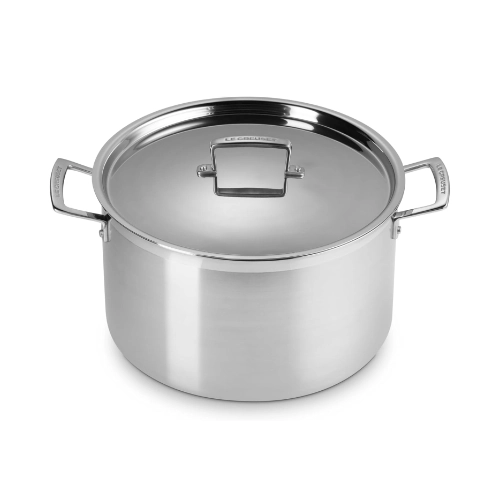
A good sorrel soup needs a pan that heats evenly and allows a gentle, steady simmer throughout the cooking. I use the Le Creuset 28cm saucepan for this recipe for sorrel soup. The wide base gives the sorrel enough room to wilt evenly rather than steaming in a pile, and the even heat distribution means the potato cooks at a consistent rate without catching on the base. It goes straight to the table for serving, which for a soup this simple is exactly the right approach.
Share your feedback and spread the love!
If you try this recipe, I’d love to hear how it turns out! Leave a ★★★★★ rating and your thoughts in the comments, it helps fellow French foodies discover this recipe too. Snap a photo and tag me @obviously.french on Instagram if you’re sharing your bake or cooking online. Don’t forget to save this recipe to Pinterest so you’ll always have it handy for your next French-inspired meal!
Disclosure: Just so you know, this post contains sponsored content and/or affiliate links, If you make a purchase through these links, I may receive a small commission. Doesn’t cost you anything extra. I only link to things that are actually worth your time. All opinions are my own!