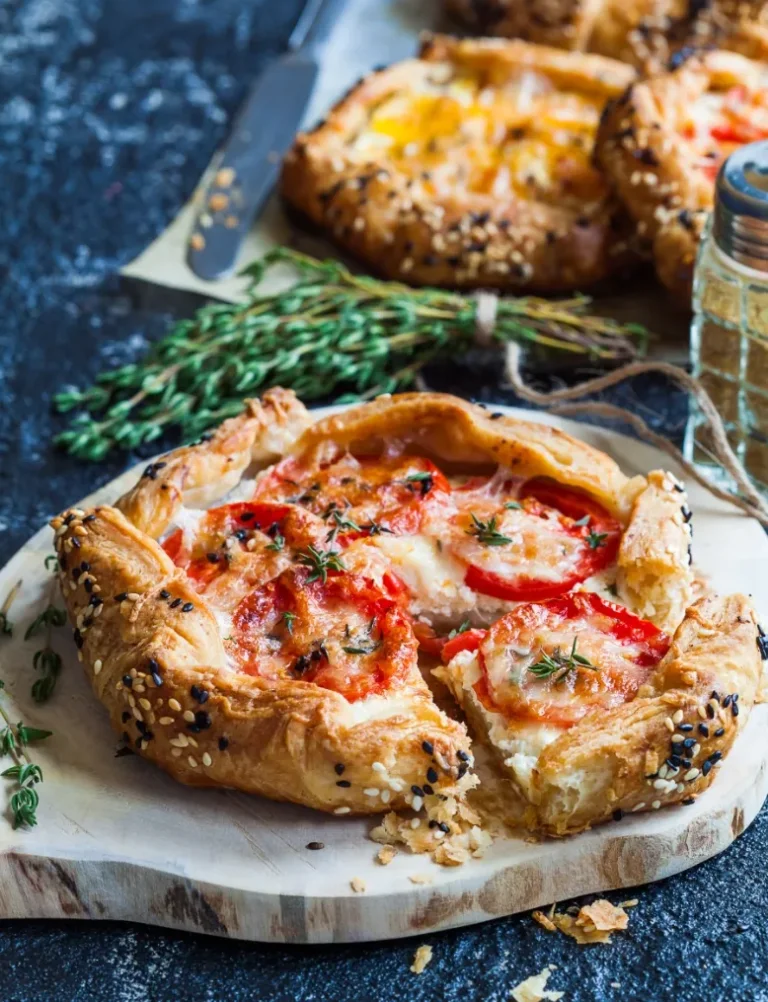
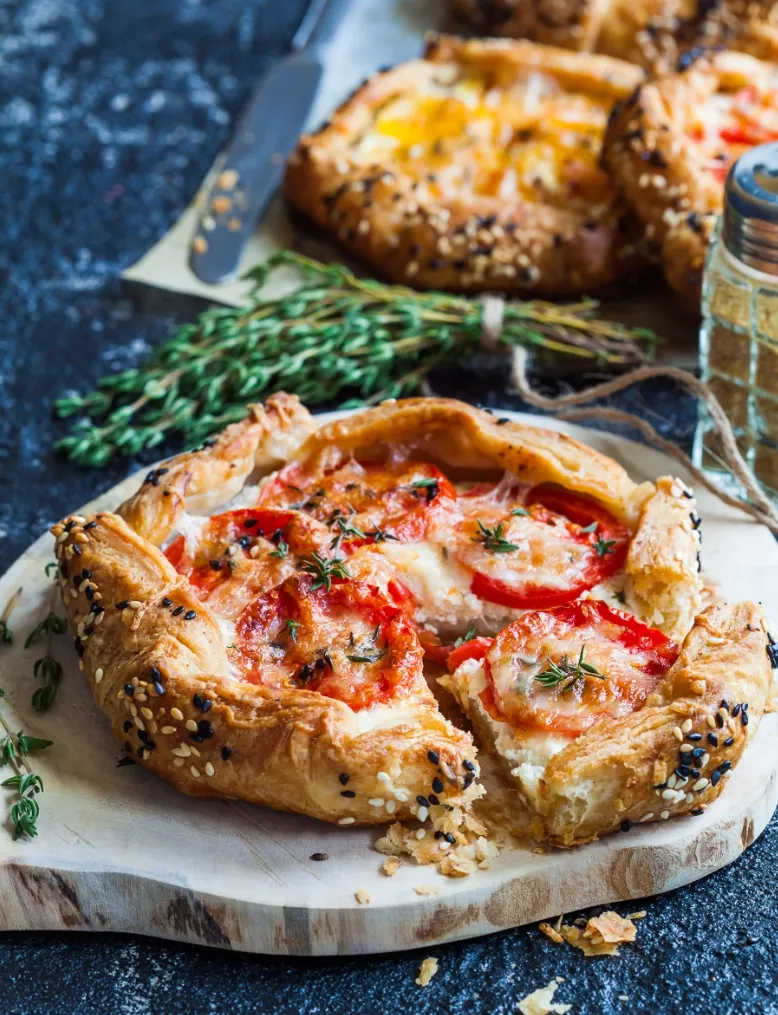
Tomato Tart
 Prep Time 20 minutes
  Cook Time 35 minutes
  Total Time 55 minutes
  Servings 6
Ingredients
- 1 all-butter puff pastry ready-rolled or homemade, about 250–300g
- 5 tomatoes ripe
- 2 tbsp mustard Dijon
- 200 gr Emmental cheese grated
- 2 tbsp olive oil
- thyme optional
- salt and black pepper
- 1 egg yolk for glazing
- sesame seeds black and white
Equipment

Instructions
1. Preheat and prepare
- Preheat the oven to 200°C (fan 180°C). Unroll the puff pastry on baking paper and transfer to your tart tin or lay directly on a baking tray for a free-form rustic tart. If using a tin, gently press around the edges. Prick the base all over with a fork.
2. Spread the mustard
- Spread a generous layer of Dijon mustard over the pastry base.
3. Add cheese and tomatoes
- Sprinkle most of the Emmental cheese over the mustard. Slice the tomatoes into neat rounds and arrange over the cheese.
4. Season and finish
- Season with salt and pepper, sprinkle on remaining cheese and a few thyme leaves. Brush pastry edges with egg yolk for a glossy finish and scatter the black and white sesame seeds around the crust (if you feel fancy!).
5. Bake
- Bake for 30–35 minutes, until the pastry is deeply golden, the edges crisp, and the tomatoes melting.
6. Serve
- Let cool for a few minutes so slices lift easily. Serve just warm or at room temperature with salad, or eat cold for a picnic.
About this recipe
This tomato tart recipe came from my neighbours when we lived in France. Summer meant tomatoes, serious quantities of them, grown in the garden and shared over the fence with the generosity that French village life does so well. Jacky’s tomatoes were the ones. Fleshy, sweet, and nothing like what you find in a supermarket. People in the village would bake tomato tarts by the batch and freeze them for winter. I always preferred them fresh, straight from the oven, eaten outside with a fork and a glass of rosé.
That’s the dish this recipe comes from.
The tomato tart in French cooking
The puff pastry and tomato tart is a fixture of French summer cooking, particularly in the south where tomatoes grow in abundance and the cooking philosophy is built around treating good produce minimally. Provence, Languedoc, the Berry region where we lived: every household has a version, every cook has an opinion about the right cheese, the right herb, the right tomato variety.
The tart itself is simple by design. Good puff pastry, ripe tomatoes, cheese, mustard, and heat. The mustard layer spread across the pastry base before the tomatoes go on is the French touch that most non-French versions miss. It adds depth, a slight sharpness, and stops the pastry going soggy from the tomato juice. It’s a small step that makes a significant difference.
Why puff pastry works
A cheese and tomato puff pastry tart works because puff pastry and tomatoes have complementary textures. The pastry puffs up around the edges whilst the tomatoes weigh down the centre, creating a natural border without any effort. The base stays crisp underneath the filling if the oven is hot enough and the tomatoes are properly dried before baking.
This is where most tomato tart using puff pastry goes wrong. Tomatoes hold a lot of water, and that water releases in the oven. If it has nowhere to go, it pools under the filling and steams the pastry from below. The solution is simple: slice the tomatoes, salt them, and leave them on a rack or kitchen paper for 20 to 30 minutes before baking. The salt draws out the excess moisture. The pastry stays crisp.
The cheese question
The classic French version uses Gruyère or Emmental, grated and spread over the mustard base before the tomatoes go on. The cheese melts during baking and fuses with the pastry and the tomato juices into something considerably better than its individual parts. Goat cheese works well too, particularly if you want something sharper. Some cooks add both.
Whatever cheese you use, grate or crumble it finely so it melts evenly rather than sitting in thick patches that don’t cook through properly.
The right equipment
A flat, even baking surface is what makes the difference between a recipe for a tomato tart that works and one that doesn’t. The pastry needs direct contact with a hot surface from the moment it goes into the oven.
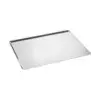
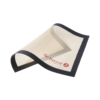
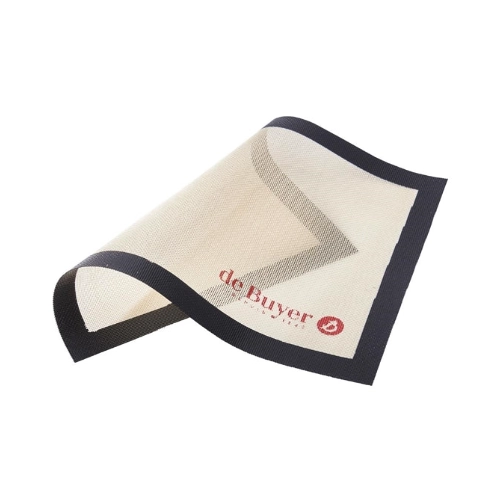
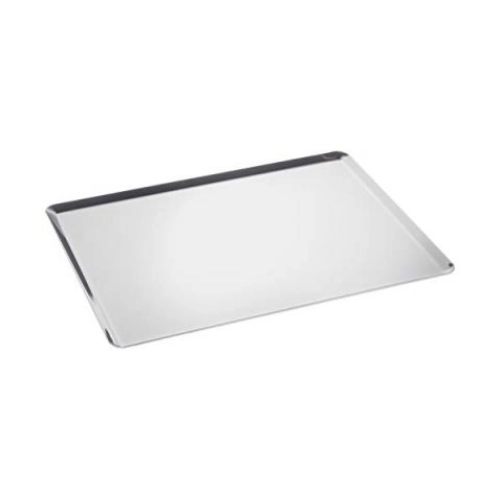
I use the De Buyer stainless steel baking tray with the De Buyer baking mat underneath the pastry. The heavy steel tray conducts heat directly to the base of the pastry, giving you that crisp bottom that puff pastry needs. The baking mat prevents sticking without needing additional fat, and the slight insulation it provides means the base doesn’t overbrown whilst the top finishes cooking. Both together give you consistent results every time.
Tomato variety matters
Any ripe, fleshy tomato works in this recipe. What doesn’t work is a watery, underripe tomato bought out of season. The tomato is the main ingredient, and it carries the flavour of the entire tart. In summer, use whatever is ripest at the market. In winter, cherry tomatoes roasted briefly before going on the pastry give you more concentrated flavour than large sliced tomatoes that have been stored cold.
Jacky’s tomatoes were the best I’ve ever had. Yours will be different, but the closer to the vine and the closer to ripe, the better the tart.
Share your feedback and spread the love!
If you try this recipe, I’d love to hear how it turns out! Leave a ★★★★★ rating and your thoughts in the comments, it helps fellow French foodies discover this recipe too. Snap a photo and tag me @obviously.french on Instagram if you’re sharing your bake or cooking online. Don’t forget to save this recipe to Pinterest so you’ll always have it handy for your next French-inspired meal!
Disclosure: Just so you know, this post contains sponsored content and/or affiliate links, If you make a purchase through these links, I may receive a small commission. Doesn’t cost you anything extra. I only link to things that are actually worth your time. All opinions are my own!