Blinis
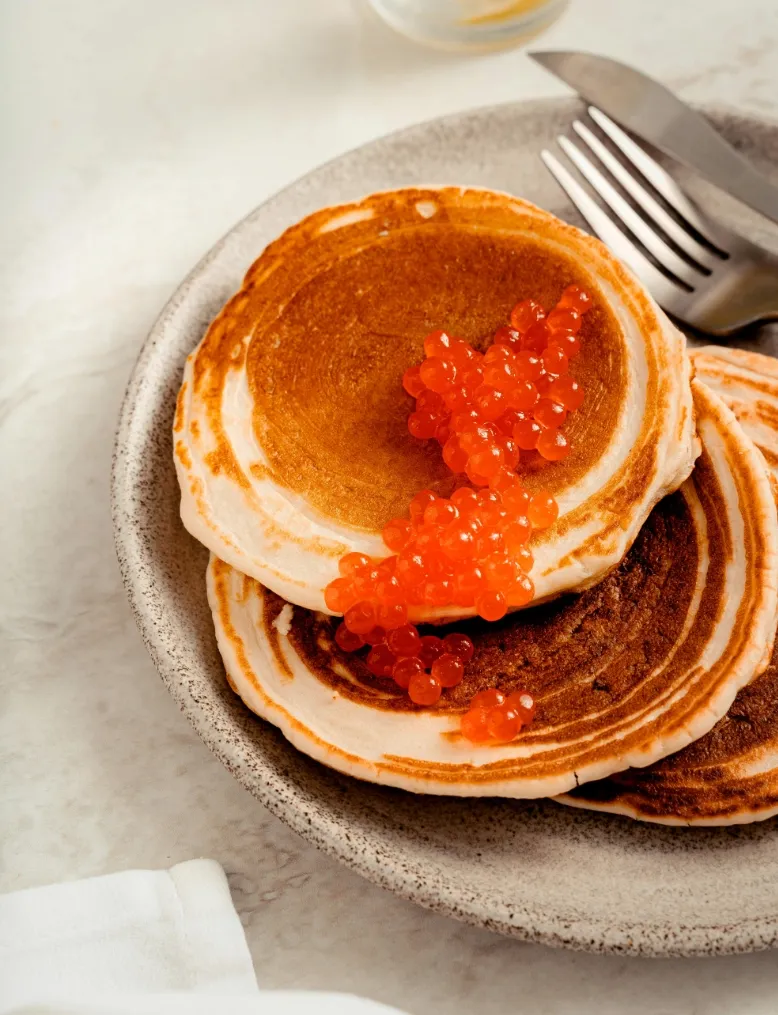
 Prep Time 20 minutes
  Cook Time 10 minutes
  Total Time 20 minutes
  Servings 4
Ingredients
- 50 gr plain flour
- 50 gr buckwheat flour
- 2 egg
- 150 ml whole milk
- ½ tsp salt
- 1 tsp fast-action yeast
- 2 tbsp crème fraîche
- 25 gr unsalted butter for cooking
Instructions
1. Make the batter
- Sift both flours and the salt into a large bowl. Sprinkle in the yeast and give it a quick stir.In a small saucepan, gently warm the milk and crème fraîche together, just until it's slightly warm to the touch, not hot. If it's too hot, you'll kill the yeast, which defeats the point.Whisk the egg yolks into the warm milk mixture, then pour the whole lot into the flour. Whisk until you've got a thick, smooth batter.
2. First rise
- Cover the bowl with a clean tea towel and leave it somewhere warmish for about an hour. If your kitchen's cold, stick the bowl inside a larger bowl filled with warm water, that'll do the trick.After an hour, the batter should look spongy and bubbly. That's the yeast doing its thing.
3. Add the egg whites
- Whisk the egg whites in a separate bowl until they form stiff peaks. Gently fold them into the batter, you want to keep as much air in there as possible.Cover again and leave for another hour. Yes, more waiting. Make yourself a cup of tea.
4. Cook the blinis
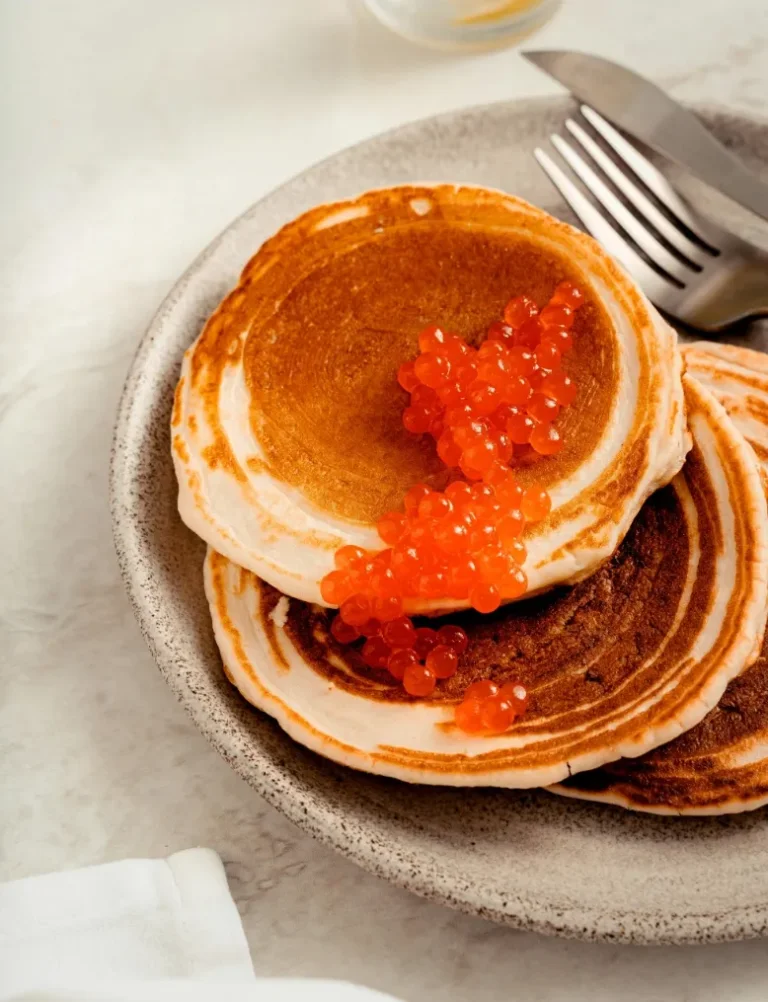
- Melt the butter in a frying pan, then tip it into a cup. Use some scrunched-up kitchen paper to brush a thin layer of butter onto the pan before each blini.Keep the heat at medium. Add 1½ tablespoons of batter to the pan, one tablespoon first, then another half on top. It won't spread much, which is fine. You're aiming for blinis about 10cm across.Cook for 40 seconds, no longer, then flip and give it 30 seconds on the other side. Transfer to a wire rack and repeat, brushing the pan with butter each time.
5. Keep warm or make ahead
- Once they're all cooked and cooled, wrap them in foil parcels (about 6 per parcel). When you're ready to serve, warm them in a low oven (140°C) for 10 minutes.
Notes
- Don’t skip the yeast. You could use baking powder instead, but you’ll lose the slightly tangy, fermented flavour that makes proper blinis special.
- Using buckwheat flour gives them that earthy, nutty taste. You can find it in most supermarkets or health food shops. Don’t use 100% buckwheat unless you really love that flavour, the mix with plain flour keeps them soft.
- Folding in whisked egg whites makes them light and fluffy rather than dense. Don’t skip this step.
- These are brilliant for parties because you can make them earlier in the day, then just warm them through before serving.
- They freeze well too. Layer them with baking paper, freeze in a container, and reheat from frozen in a low oven.
About this recipe
Homemade blinis are one of those things that seem like a lot of effort until you make them and realise they are just small, yeasted pancakes. The difference between homemade and the packets from the supermarket is significant. Softer, fluffier, and with an earthy buckwheat flavour that the mass-produced versions never quite capture. Once you have made them yourself, going back to the shop-bought kind feels like a step in the wrong direction.
Classic Toppings
This version uses a mix of buckwheat and plain flour, which gives you the earthy buckwheat flavour without being too intense. The yeast makes them light and adds a subtle tanginess. The whisked egg whites keep them fluffy.
Where blinis come from
The blini russian tradition goes back centuries. Blinis have been part of Russian food culture since at least the 9th century, originally made during Maslenitsa, the pre-Lenten Butter Week that marks the end of winter. The round shape was symbolic: blinis represented the sun, and eating them was a way of welcoming the return of warmth and light after the long cold months. They were made from buckwheat flour, the primary grain in northern Russia, and eaten in vast quantities over a week of celebration before the Lenten fast began.
The original blini pancake was a simple thing: buckwheat flour, water or milk, and leavening from natural fermentation. Over time yeast replaced the fermentation, eggs were added for richness, and the recipe evolved into something closer to what we make today.
How blinis arrived in French cooking
The French discovered blinis in the 19th century, partly through cultural exchange with Russia and partly through the Russian aristocrats and intellectuals who moved through Paris during that period. French chefs paired the russian pancake with caviar and crème fraîche, turning a peasant Lenten food into one of the most luxurious canapés in the French repertoire. That pairing became standard at elegant French gatherings, and blinis entered French culinary culture firmly enough that they now appear on apéro tables alongside dishes that have been French for centuries.
The small size of the blinis recipe served at French parties, typically about 5cm across, is a French adaptation of the original. Traditional Russian blinis are considerably larger, closer to a standard pancake. The miniature version is a practical invention for standing parties where food needs to be eaten in one or two bites without a plate.
The buckwheat question
This blinis recipe uses a mixture of buckwheat and plain flour, which gives you the characteristic earthy flavour of the blini pancake without the intensity of pure buckwheat, which can be overpowering for people unfamiliar with it. The buckwheat contributes the nutty depth that makes a homemade blini taste genuinely different from a plain yeasted pancake. The plain flour lightens the texture and gives you the softness and fluffiness that the blini russian tradition requires.
The yeast is what makes these different from crêpes or galettes. It gives the blinis a subtle tanginess and makes the batter airy and light during the resting period. The whisked egg whites folded in at the end reinforce that lightness, pushing more air through the batter just before it hits the pan. Both steps matter and neither should be skipped.
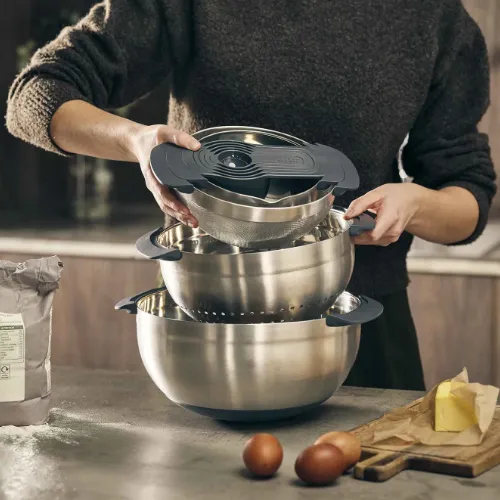
The right bowl for the batter
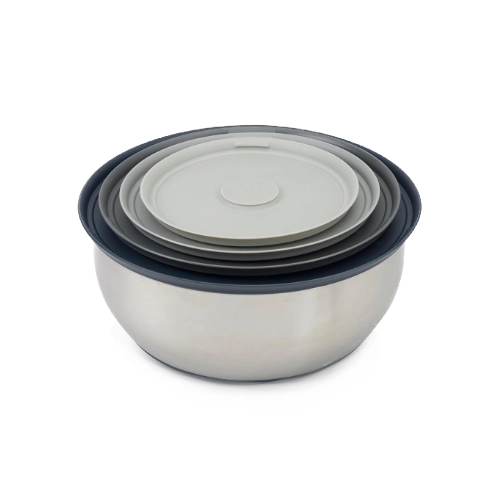
A blinis recipe involves several stages of mixing: the initial batter, the yeast activation, and the final folding in of whisked egg whites. For that last step in particular, you need a bowl wide enough to fold without deflating the whites, stable enough not to move around as you work, and large enough to hold the full batch without the batter coming over the sides.
I use the Joseph Joseph mixing bowl for this. The non-slip base keeps it steady while you are folding, which matters when you are trying to preserve the air in the egg whites rather than knocking it out through an unstable bowl. The size is right for a full batch of blini pancake batter, and the pour spout makes transferring the batter to the pan clean and controlled.
Classic Toppings
The traditional blini russian toppings are smoked salmon with crème fraîche and dill, or caviar with sour cream if the occasion calls for it. Cream cheese with cucumber and lemon zest is a lighter option. Beetroot blitzed with cream cheese and topped with fresh horseradish gives you something earthy and sharp that works particularly well with the buckwheat flavour in the blinis.
For something less formal, blinis with scrambled eggs and smoked salmon make one of the better breakfasts you can put together in under twenty minutes.
Make them for a proper occasion and the two hours they take are entirely worth it. Make a double batch and freeze half. They reheat well and having them in the freezer means a good apéro is always closer than you think.
Share your feedback and spread the love!
If you try this recipe, I’d love to hear how it turns out! Leave a ★★★★★ rating and your thoughts in the comments, it helps fellow French foodies discover this recipe too. Snap a photo and tag me @obviously.french on Instagram if you’re sharing your bake or cooking online. Don’t forget to save this recipe to Pinterest so you’ll always have it handy for your next French-inspired meal!
Disclosure: Just so you know, this post contains sponsored content and/or affiliate links, If you make a purchase through these links, I may receive a small commission. Doesn’t cost you anything extra. I only link to things that are actually worth your time. All opinions are my own!