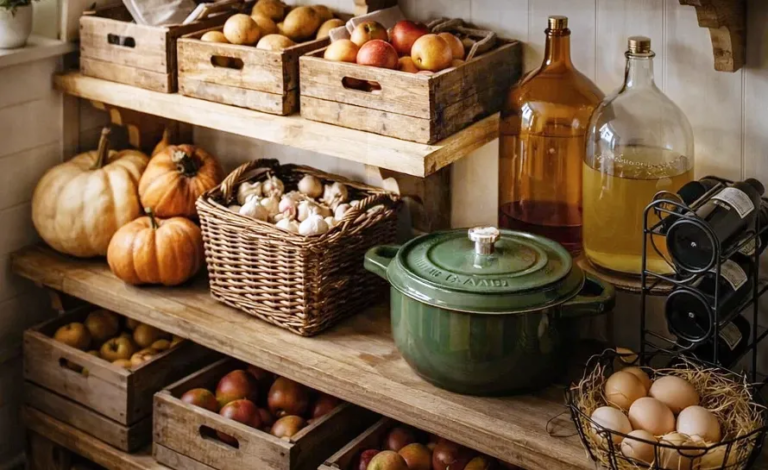
My neighbours all have a cave. Not a wine cellar (though there’s wine in it) but a proper French country pantry. You walk in and see shelves lined with preserved tomatoes in Le Parfait jars, demijohns of cider gently fermenting in a corner, and strings of garlic and thyme hanging from hooks overhead. All the root vegetables sit in old baskets and wooden crates, and the garlic lives in heavy stoneware. Every single thing in there is something they have grown, made, or put up for winter themselves.
It is a working country pantry that has grown slowly over years, filled with what they grow, make, preserve, and the pantry basics they actually use. And it just happens to be beautiful because it is real.
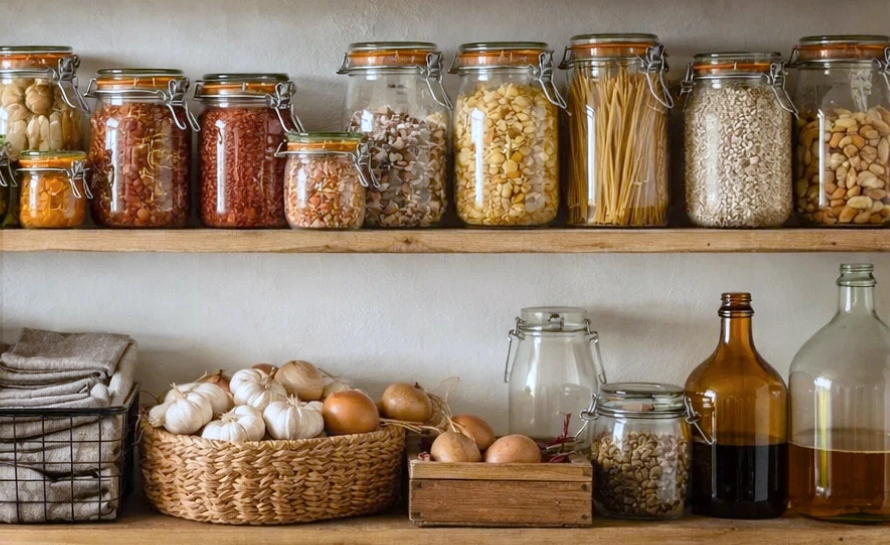
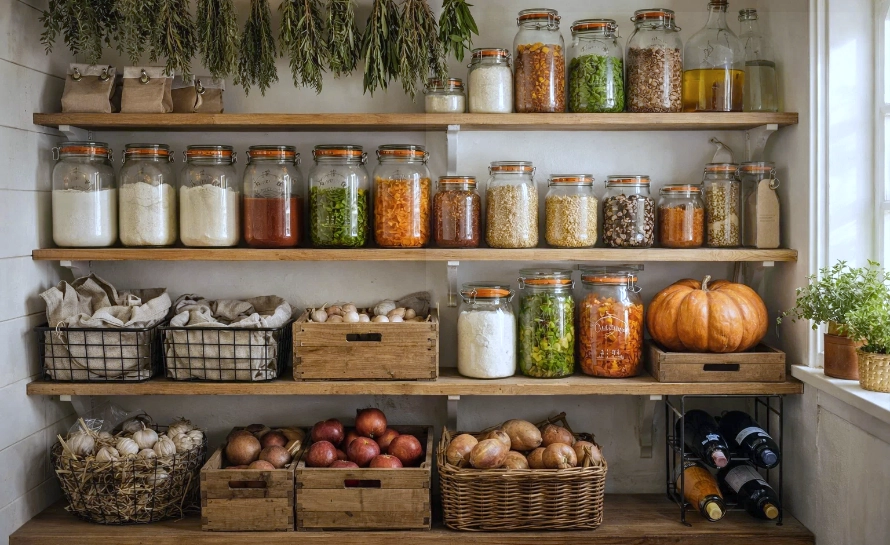
This is what a real country pantry looks like when everything has a job, lasts for decades, and actually gets used. Some stone-washed linen lies over the bread, wicker baskets are filled with vegetables that need a bit of air, glass jars line the shelves so you can see at a glance when something is running low, and in the corner there are demijohns of dandelion wine fermenting each year. It really is quite impressive how self-sustaining French rural families live.
If you want to build a French pantry that functions just like that to store seasonal food, keep preserves you made in the summer, and looks gorgeous whilst doing it, here’s how to do it French style with these pantry staples.
What makes a country pantry different
A country pantry is really about storing and preserving food the way people did before supermarkets, using methods that still, frankly, work better than most modern shortcuts.
It’s seasonal
The pantry fills up in summer and autumn when you are preserving tomatoes, making jam, and fermenting vegetables, then slowly empties through winter and spring as you work your way through what you put up. The contents rotate with what’s available, what you’re cooking, what food you’re preserving next.
It’s self-sufficient
Or at least as self-sufficient as you want it to be. Maybe you are growing your own vegetables and preserving them, or maybe you are buying from markets and learning how to put things up yourself. Either way, you are making the food rather than buying everything ready-made: jams, pickles, preserved fruit, fermented vegetables, homemade drinks, even confit if you are in the mood for a bigger project.
It uses traditional equipment that last
It uses traditional equipment that last not because it is pretty (although in my opinion it also looks the part), but because it works. Materials like glass, wicker, stoneware and linen do cost more upfront than plastic tubs and disposable packaging, but unlike them, you buy traditional equipment only once. A Le Parfait jar from the 1950s works just as well as one made today. It’s actually quite funny, if you buy an old house in France, you might be able to reuse all the equipment that is in the pantry, even if it’s covered with webs and dust. That’s how long lasting they are. Wicker baskets will keep going for decades if you take basic care of them, stoneware crocks stay in a family for generations and linen tea towels only get better the more you wash and use them.
Compare that to plastic storage containers that warp, stain, absorb smells, crack, and need replacing every few years. Disposable packaging goes straight in the bin which is a waste of your money and the planet too. Which means that the maths starts to favour traditional materials, and from then on you are just saving money while everything quietly gets nicer with age.
Essential equipment for a country pantry
A working country pantry starts with having the right equipment to work with. But don’t worry, you do not need everything on day one, instead you add pieces as you need them. If you start preserving new foods and start creating your own system, it will slowly but surely take shape over time. Here are some great basics that will make the whole pantry work smoothly.
Le Parfait jars
These glass jars really are the backbone of a country pantry. They are the classic French clip-top jars with glass lids, rubber seals, and metal clips, the ones you spot everywhere in France: at markets, in hardware shops and nurseries, and on the shelves of pretty much every pantry and kitchen. They have been made since 1930, and the design has barely changed because it does exactly what it needs to do.
The rubber seal and clip create a tight, airtight closure that is strong enough for food preserving, so you can process them in a water bath and trust they will seal properly. At the same time, they are easy to open and close for everyday use. Unlike screw-top jars, whose lids eventually rust or cross-thread, Le Parfait jars just keep going for decades. The glass is thick, the clips are solid, and replacement rubber seals cost almost nothing.
For a country pantry, you want a range of sizes
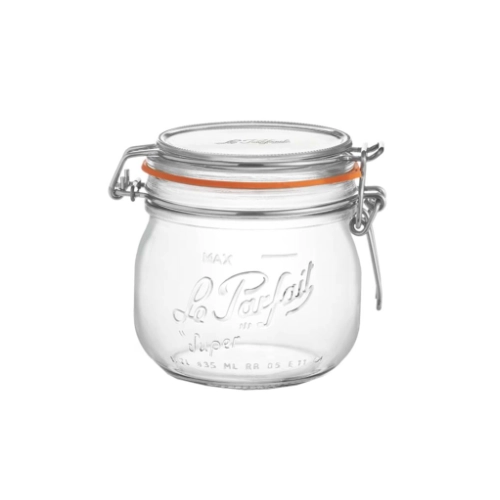
Build up your collection slowly as you start preserving different things. There is no need to kit out a whole pantry in one go. Begin with 500 ml jars for a ratatouille for example, then add litre jars when you start pickling vegetables. And bring in the big jars when you want to ferment or store bulk ingredients. The handy thing with Le Parfait is that the same rubber seals work across several sizes, the spare parts are easy to find, and the jars stack reasonably well when they are empty.
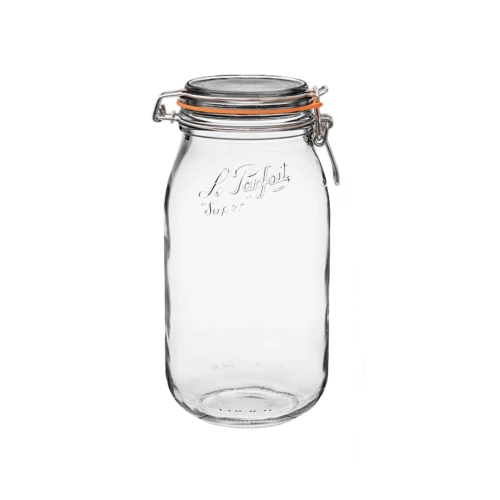
Le Parfait 500ml
This is the jar you will reach for all the time. A batch of jam from 2 kg of fruit usually gives you four or five 500 ml jars. They line up neatly on a shelf, you can see what is inside straight away, and they are small enough that you finish a jar before it has any chance to spoil in the fridge.
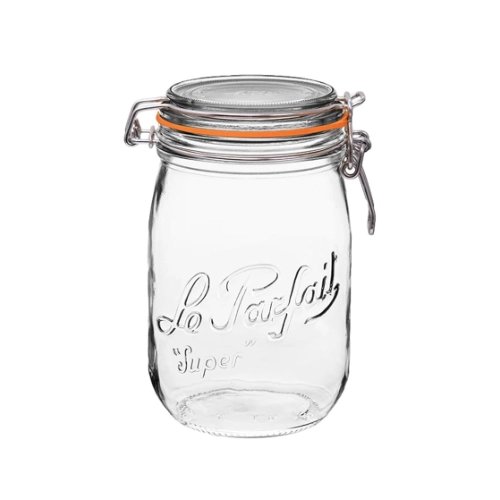
Le Parfait 1 liter jars
A one litre jar is perfect for things you want in slightly bigger quantities. It holds enough pickled cornichons or fermented carrots to last you a few weeks once opened. It is also a great size for whole tomatoes, peach halves, anything where you want the pieces to stay whole and look pretty in the jar.
Le Parfait 2 liter and 3 liter jars
A 3 litre jar is what you want for fermenting sauerkraut or pickled onions, it is big enough for a proper batch. These larger jars are also brilliant for dried beans, flour, sugar, and other bulk ingredients. The wide opening makes them easy to fill and just as easy to scoop from.
Demijohns for fermenting drinks
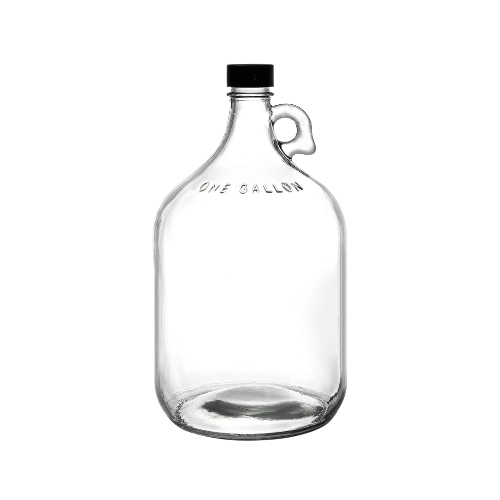
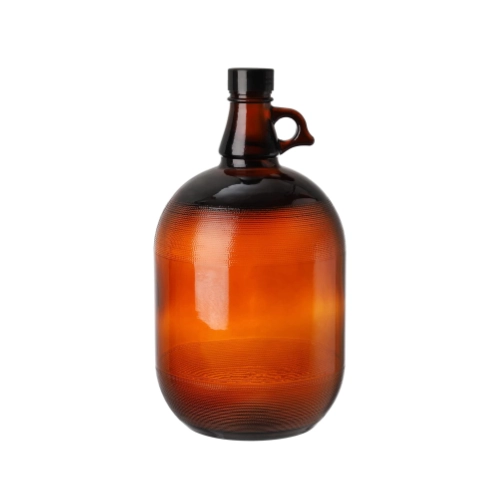
Demijohns are those big glass bottles with a narrow neck. They can hold anything from 3 to 50 litres, and they are what French country houses tend to use for cider, fruit wines, and dandelion wine, which sounds a bit mad until you taste it. The ones my neighbours use were bought by the previous owner of their house and they are still going strong.
They are perfect for fermenting because the narrow neck limits how much oxygen gets in while still letting carbon dioxide escape. You pop an airlock on top, a simple little water-filled piece that lets gas out but stops air coming back in, and that gives you the right conditions for a clean, controlled fermentation instead of something vinegary or mouldy. You can go for clear demijohns or amber demijohns, both do the job very well.
Fermentation crocks and weights
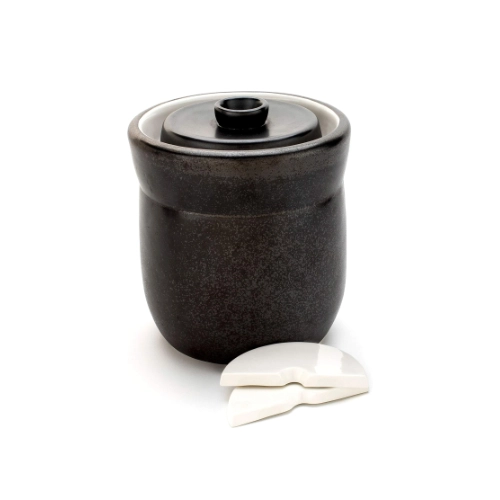
For sauerkraut, pickles, kimchi, or any vegetables in brine, it is worth having fermentation crocks or big jars with weights to keep everything under the liquid.
Traditional stoneware crocks
Ceramic crocks with weights and a lid are the classic setup. They are heavy glazed stoneware with a water-seal lid that lets gas escape but keeps oxygen out. They work beautifully and will last for generations. The only drawback is you cannot see what is going on inside, and they are quite heavy to move around.
Wicker and wire baskets
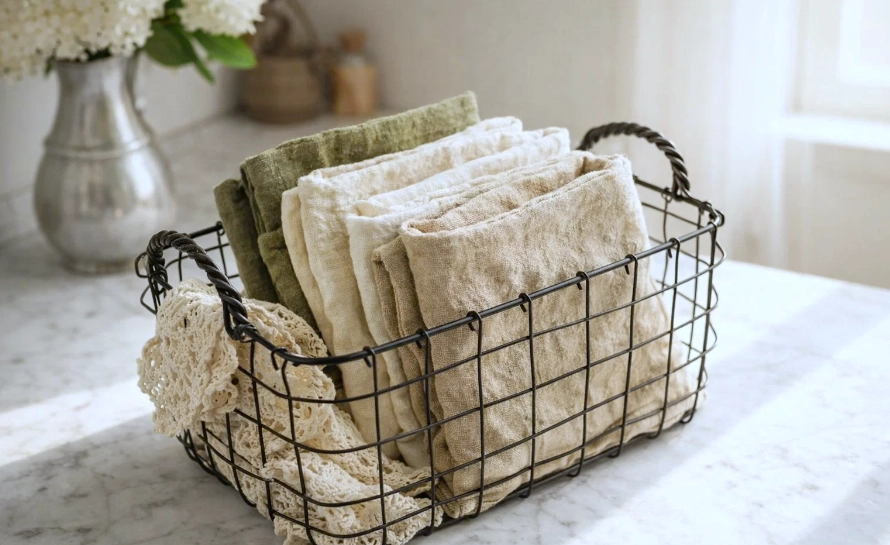
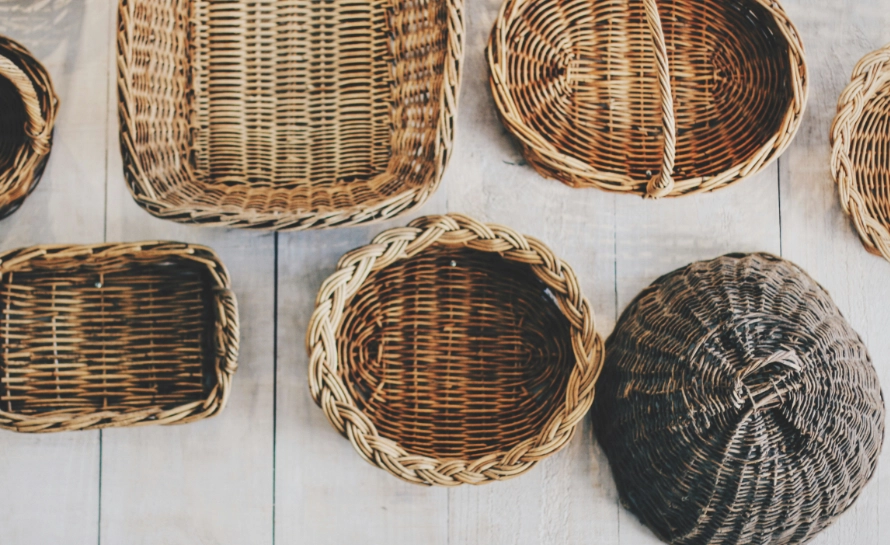
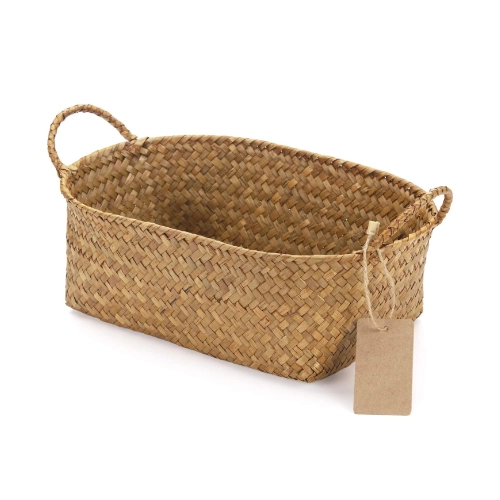
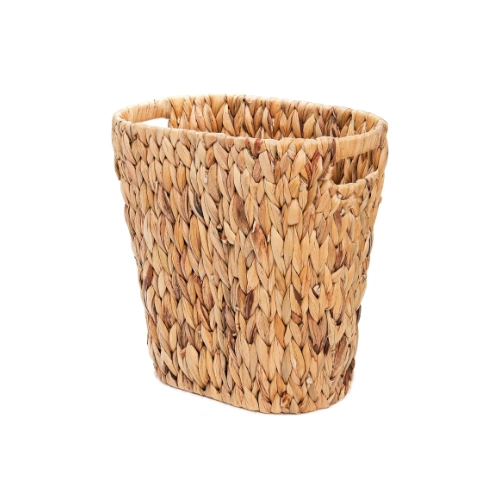
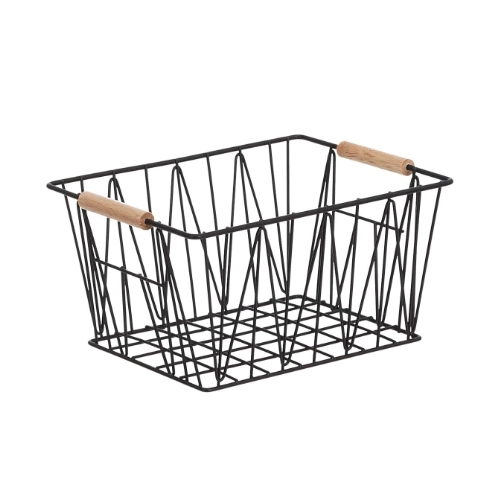
Country pantries use wicker baskets everywhere. It is not just for the rustic look, although I do seem to buy them at “brocante” when I see them just because they look amazing. But they are the practical choice for many things. My neighbours use them to pick the dandelions to make the wine, or take them to the forest to forage mushrooms. You need to look for wicker that is woven tightly enough to hold weight but still open enough for air to move through. Skip anything lacquered or heavily treated, you want natural wicker that can breathe and soak up a little moisture without rotting. You can also use wire baskets for tea towels, potatoes, or other bits and pieces, and they will last you for years.
A good wicker basket will last for ages, even decades, if you treat it kindly. When they are empty in summer, tuck them away somewhere dry. If you leave them sitting in damp corners all year, mildew will show up. For a working country pantry, they are pretty much perfect.
Wooden crates and shallow storage
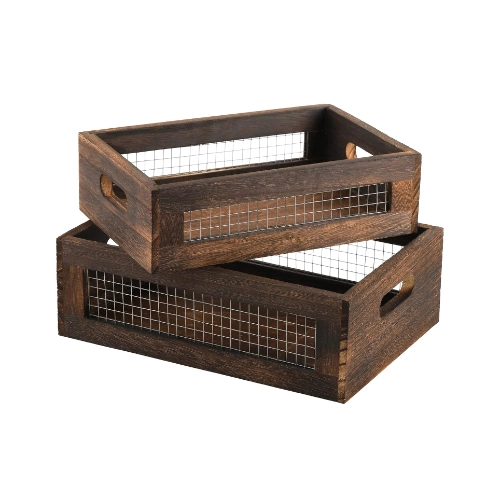
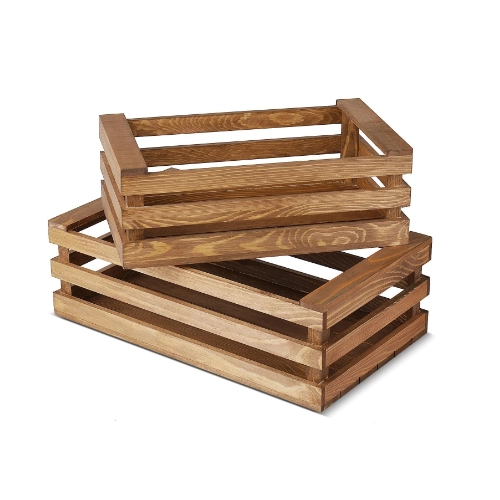
Wooden crates help you build up vertical storage in your pantry while still keeping everything easy to see and reach. They are great for rotating things with the seasons. In winter, fill them with preserving equipment when you are not using it. In autumn, load them up with root vegetables. You can move them around as your needs change through the year.
Wooden crates
Wooden crates are sturdy enough to hold heavy things, bottles, larger jars, and bulk dry goods in their original bags. Stack them against a wall or under shelves to make the most of the floor. Wood handles weight well, and unlike plastic crates, it actually looks better after thirty years of use, not worse.
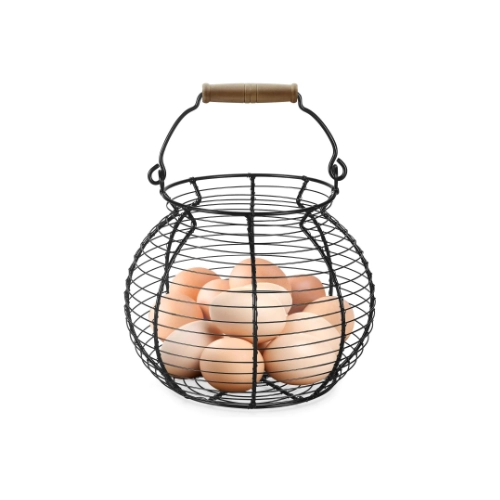
Egg wire baskets
Classic French egg baskets comfortably hold a dozen eggs, and the open wire lets air circulate around them. They are also perfect for garlic bulbs or small shallots. The handle makes them easy to grab when you are cleaning or shuffling things around on the shelves.
Linen cloths and storage bags
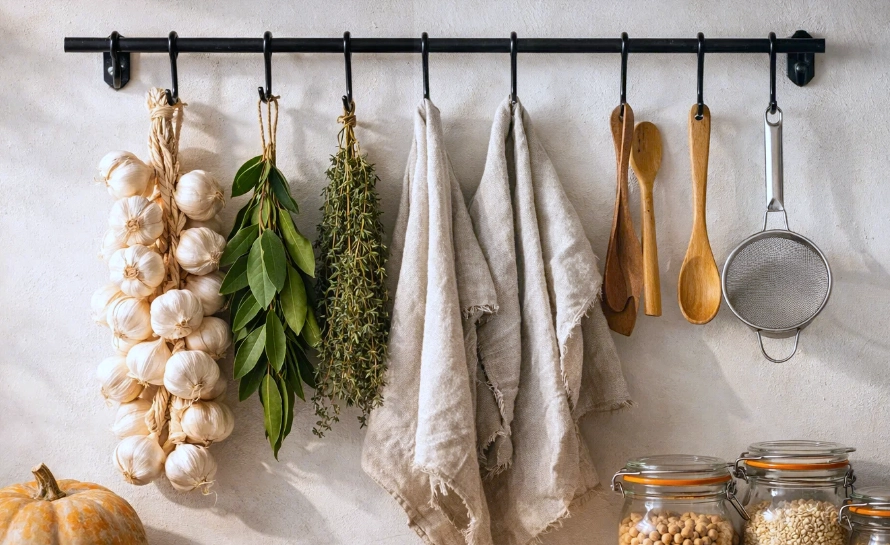
You see linen everywhere in French country pantries: bread bags, cloths over rising dough, wraps for cheese, little bags of dried herbs. It just works, because linen breathes, handles moisture well, and, if you look after it, will last for decades.
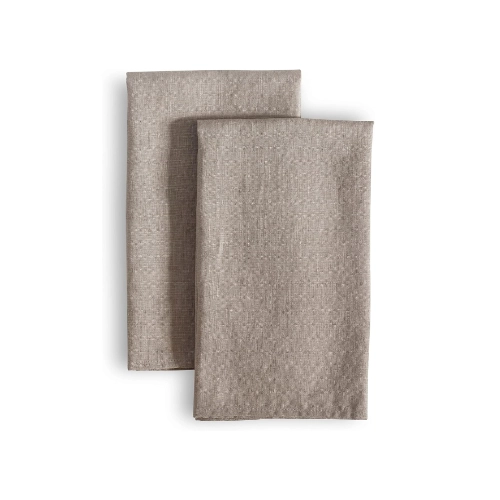
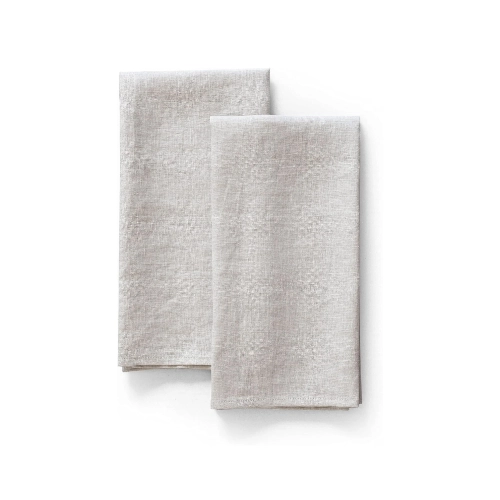
You should always go for unbleached or natural linen rather than bright white. It suits a country pantry better aesthetically, it hides stains, and has not been through harsh processing. Stone-washed linen arrives already soft and relaxed, so it feels useful from day one and only looks better as the years go by.
Stone-washed linen tea towels
These tea towels end up doing a bit of everything. Keep a small stack just for pantry use: one in the bread basket, a couple for covering bowls or dishes. They wash happily at 60°C, last for years, and do not develop that odd smell tea towels sometimes get when they are doing too many jobs at once.
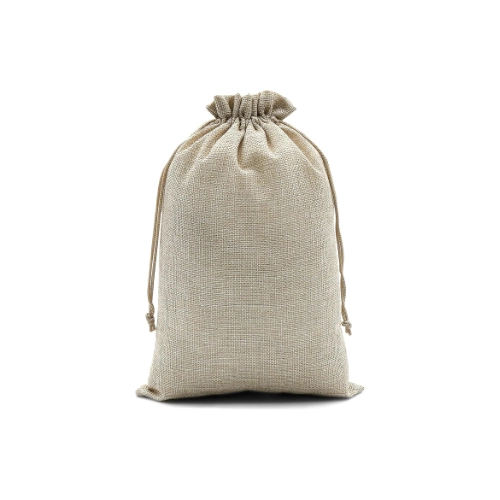
Jute drawstring bags
These are perfect for dried beans, lentils, grains, nuts, and dried fruit. The natural fibres let air move while still protecting from light and pests, which makes them a much better choice than sealed plastic bags for foods that need to breathe a little.
Organization tools
It is the small things that quietly keep a country pantry running well. They are the bits you barely think about until the day you are reaching for them all the time. They are not glamorous, but they are the difference between a pantry that feels effortless and one where you are always making do.
Bulldog clips
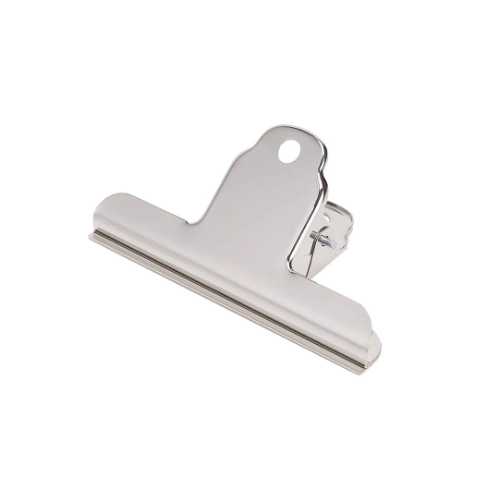
These will close any opened bag and are much better than elastic bands, and unlike elastic bands, they will last forever. Get a mix of medium and large, and with a dozen or so in a jar you will quickly wonder how you ever managed without them.
Spice jars
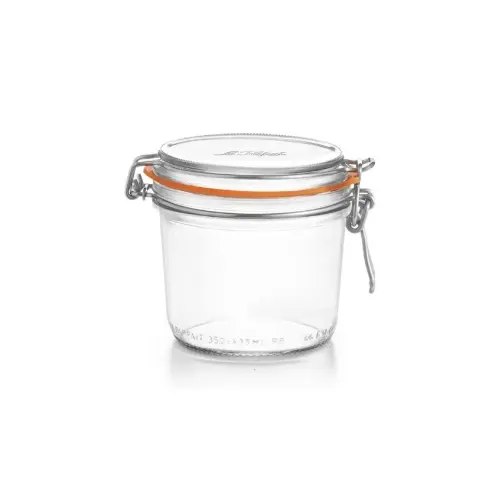
These smaller 350 ml Le Parfait jars are what I use to store all my spices. The airtight seal keeps them fresh far longer than supermarket tins and you can see exactly what you have and how much is left. Write the names on the lids with a permanent marker so you can read them easily when they are stacked.
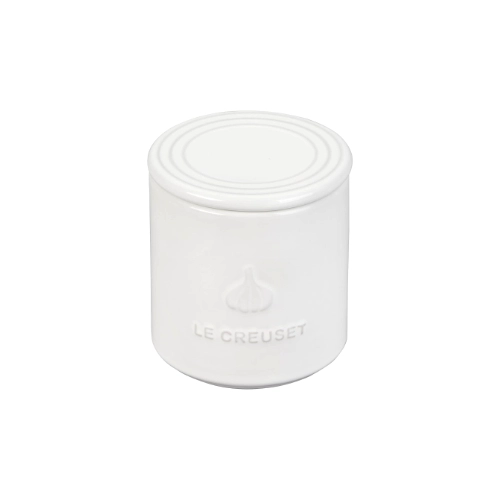
Garlic keeper
This is a small stoneware pot with little holes for ventilation. It keeps garlic fresh for weeks because the stoneware balances moisture and the holes let air circulate while the lid keeps the light off. The Le Creuset version is sturdy enough to last a lifetime, looks good on the shelf, and does its one job very well.
Smart storage
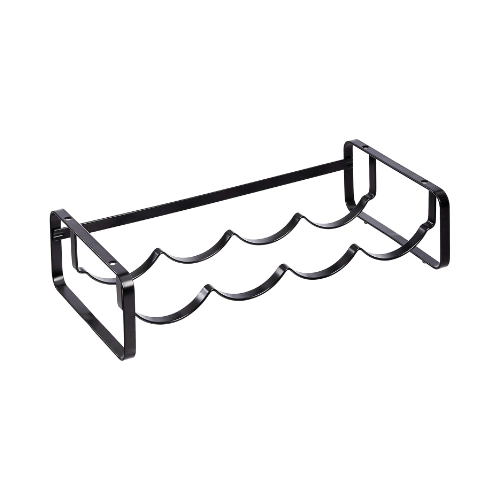
Stackable wine rack
And of course, when in France, you need somewhere to store wine. A stackable wine rack is your answer to keep the bottles on their side so they sit safely and the corks stay in good shape. You can build it as high as you like and slide it under shelves or into a corner. It keeps the bottles tidy and easy to grab without stealing shelf space.
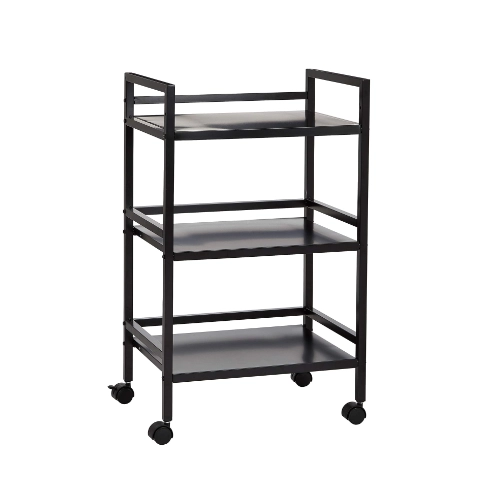
Kitchen cart
If your pantry has the room, a rolling kitchen cart makes life a lot easier. You park it under a shelf when you do not need it, then roll it out when you want to reach things at the back. The wheels also make cleaning underneath much simpler. Pick one with metal shelves if you are going to put anything damp or heavy on it.
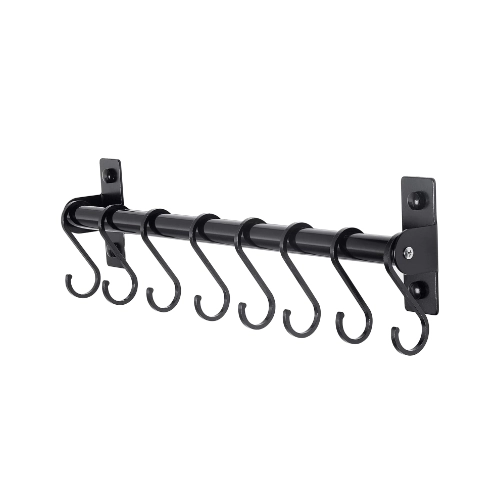
Herb drying racks
These are technically sold as a utensil rack, but they are perfect for drying herbs. Hang one where the air can move around it and load it with bay, thyme, rosemary, whatever you have. If you have ceiling space, use that, otherwise a wall-mounted rack does the job just as well.
The seasonal rhythm of a country pantry
A country pantry is always changing. It is not just a fixed wall of shelves, it behaves more like a living thing that shifts with the seasons, the harvest, and what you are cooking. That rhythm is what makes it work. It follows when food is available, what you are actually eating, and how much storage you need at each point in the year. You preserve in autumn when everything is abundant and cheap, then you live on those stores through winter when not much is growing.
Spring
In spring the pantry is at its barest. You are finishing the last of the winter jars, making elderflower cordial if the blossoms are out, and starting to plan what you will plant or buy for preserving this year. The demijohns may be emptying as you bottle the drinks that fermented over winter.
Summer
Summer is when preserving really starts. Strawberry jam in June, apricot jam in July, pickled vegetables as each crop comes into season. The shelves begin to fill again, the demijohns might be full of elderflower champagne fizzing away. You keep an eye on shelf space and pick up extra jars if you need them.
Autumn
Autumn is peak preserving time. Tomatoes come in huge waves and you’ll end up making tomato sauces and ratatouille in bulk. The cucumbers all seem to want to become pickles at once and all the apples get pressed for cider. The pantry fills fast and the shelves you emptied in spring are full again. The wicker baskets are stuffed with onions, garlic, squash, and potatoes, and the fermentation crocks come out for sauerkraut season.
Winter
In winter the pantry is at its fullest and you are really living on what you put away. Preserved tomatoes turn into pasta sauces, pickles go on the table, jams get opened, root vegetables come out of baskets, and cider pours from the demijohns. The preserving gear gets cleaned and stored, and you start making quiet notes about what worked and what you want to change next year.
Making it work in your space
You do not need a separate cave or room to have a country pantry. You just need a cool, dark place with decent air circulation, and you can usually create that with a bit of thought.
If you’ve got a basement or cellar
That is ideal. Put in strong shelves, group things by type, and make sure air can move. Keep the coldest areas, around 12 to 15°C, for root vegetables and fermenting drinks, and use slightly warmer spots, 15 to 18°C or so, for preserved foods.
If you’ve got a garage or outbuilding
This can work as long as it does not freeze in winter or bake in summer. Add insulation if you need to. Use metal shelving and keep everything off the floor in case of damp. Anything that might attract mice should go into rodent-proof containers.
If you’ve only got kitchen cupboards
Use what you have. Lower cupboards are good for root vegetables in baskets, upper cupboards for jars and preserved food. Demijohns can sit in a cool corner, under the stairs, in a spare room, anywhere that stays reasonably cool and dark.
If you’ve got a garden shed
A shed can handle some storage. You can keep vegetables in baskets out there and store empty jars and equipment. Demijohns might be fine too if the temperature stays fairly steady. It is not ideal for finished preserves though, because big swings in temperature are hard on them.
The key requirements are:
- Cool (12-18°C is ideal, up to 20°C acceptable for most things)
- Dark (light degrades preserved foods)
- Dry (but not desert-dry, some humidity is fine)
- Good air circulation (prevents mould, keeps root vegetables fresh)
You can usually get close to that in most spaces. Paint the walls white to bounce what light there is around. Add vents or a small fan if the air is heavy. Hang a curtain over a doorway to keep it darker without sealing it off completely. A little temperature monitoring helps if you want to keep an eye on how the space behaves through the year.
Conclusion
Start with what makes sense for your space and for what you are already storing. That might be a few Le Parfait jars and a seagrass basket for onions, or it might be finally getting some good linen tea towels and stopping using plastic bags. Maybe it is that wine rack you keep thinking about, or a rolling cart so you can reach the back of the shelves without crawling.
The nice thing about this kind of homestead pantry is that it grows with you. You can buy one piece at a time and only add equipment when you truly need it. Let it build itself slowly instead of trying to create the perfect pantry in a single weekend. My neighbours’ french pantry certainly did not appear in a year. It is the result of decades of picking up tools that work, keeping what earns its place, and building a system that fits the way they actually live.
Your pantry will not look like mine, and that is exactly how it should be. Different space, different climate, different cooking habits. The principles are the same, things that last, storage you can see into, equipment that simply does its job, but how you put that together is entirely your own
What is the first piece of equipment you are bringing into your pantry? Do you already have something that has been brilliant? Or have you found something I have not mentioned that works beautifully in a country pantry? Tell me in the comments, I would genuinely love to hear what you are building and what is working in your space.
This post may contain affiliate links. If you buy through them I earn a small commission at no extra cost to you, and it helps keep this blog running. Please read my disclosure policy for more information. I am grateful for your support.