Fougasse (Flatbread)
 April 10, 2026
Disclosure: This post may contain affiliate links which provide us a small commission when used for purchase. Please read my disclosure policy for more information. I am grateful for your support!
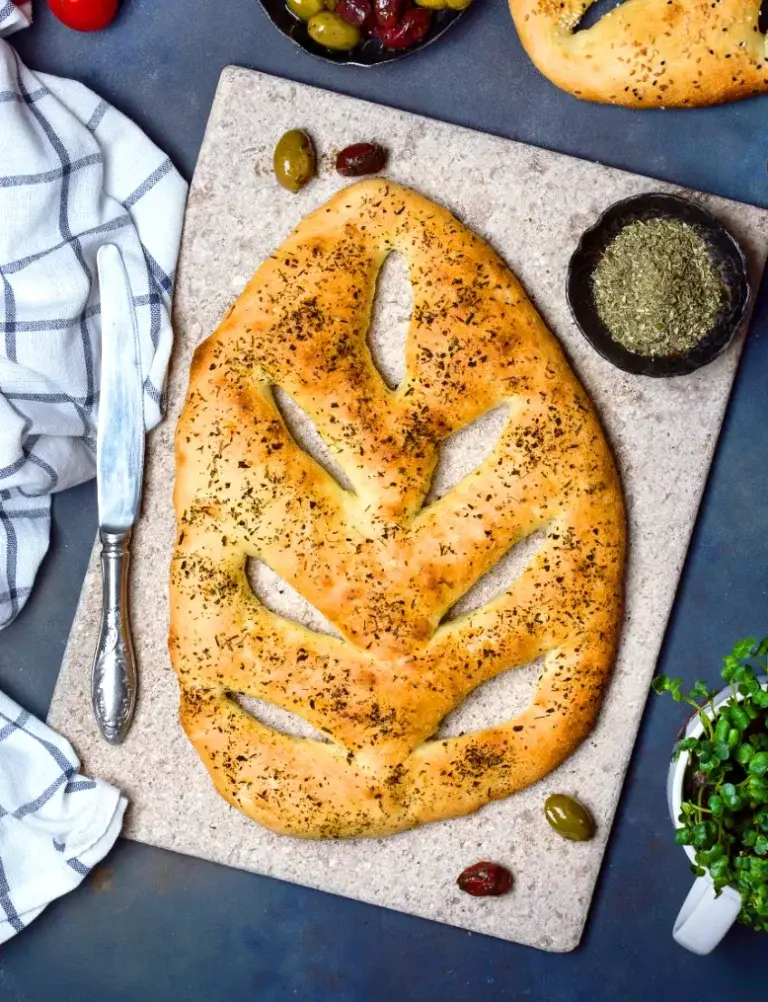
If you love focaccia, fougasse is going to make you very happy! They’re cousins, after all.
Yes, baguettes get all the attention and are a staple in France, but in the South where I grew up, fougasse was the other everyday bread to tear with a creamy anchoïade and some salty black olives! The crumb is dense and airy at the same time, almost cushiony, and because the dough’s already seasoned with olive oil and salt, I’ll happily make a whole flatbread disappear without anything on it.
It’s lovely with a fennel salad, too. The aniseed in the fennel plays off the salty olives just perfectly. So if you’re a bread person, this is one to make!
Table of Contents
Where fougasse comes from
Fougasse is very ancient. It goes all the way back to the Roman panis focacius, a flatbread baked in the ashes of the hearth, focus being the Latin for hearth. That single Roman bread is the ancestor of a whole Mediterranean family: Italian focaccia, Spanish hogaza, Catalan fogassa, and fougasse in Provence are all cousins, spread by the Romans as they settled the coast. So fougasse and focaccia aren’t copies of each other, they’re siblings from the same Roman parent.
Here’s my favourite bit of its history. Long ago, the fougasse was the bread the baker baked first, to test the temperature of the wood-fired oven before loading in the day’s loaves. It bakes fast, thanks to all those holes, so it told the baker whether the oven was ready. That’s where the old Provençal saying comes from: “il ne faut pas brûler la fougasse,” “don’t burn the fougasse,” which came to mean don’t spoil things right at the start.
And there’s a sweet side to it, too. A sweet, orange-blossom-scented version (the fougassette or pompe à l’huile) is one of the treize desserts, the thirteen desserts of a traditional Provençal Christmas. Tradition says you break it with your hands rather than cut it, to protect your wealth in the year ahead. Same bread, two lives.
Ingredients
- Strong white bread flour – The structure. Bread flour’s higher protein gives you the chew and the strength to hold that open shape.
- Yeast – Fougasse is a leavened, risen bread (not a true flatbread despite the name), so yeast is what gives it its airy, chewy crumb. Fast-action or fresh both work.
- Olive oil – Not optional here, it’s a Provençal bread through and through. It goes in the dough for softness and flavour, and gets brushed on top for a golden crust. Use a good one.
- Salt – For flavour and to control the yeast. Bread tastes flat without enough.
- Olives, herbs – The classic additions. Black olives, rosemary, herbes de Provence. Fold them in, scatter on top, or both.
- Flaky sea salt – A little scattered on top before baking, for crunch.
How to make fougasse
1. Make the dough
Mix the flour, yeast and salt, then add warm water and olive oil and bring it together into a dough. Knead until it’s smooth and elastic, about 10 minutes by hand or less in a standmixer. You want it soft and supple, a little tacky but not sticky. If you’re adding chopped olives or herbs into the dough, knead them through now. Well-kneaded dough is what gives you that lovely chew, so don’t cut it short.
2. First prove
Pop it in an oiled bowl, cover, and leave somewhere warm until doubled in size, roughly 1 to 1½ hours. It’s ready when it’s puffy and springs back slowly when you press it. Don’t rush this, the flavour and texture both come from a proper rise.
3. Shape and slash
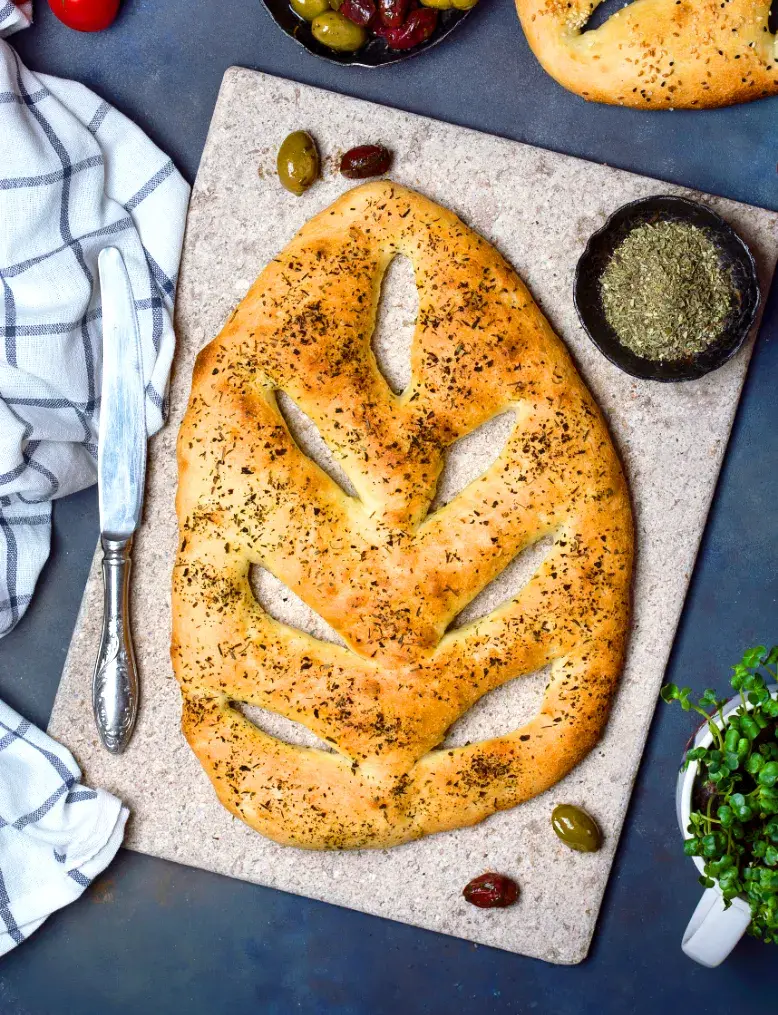
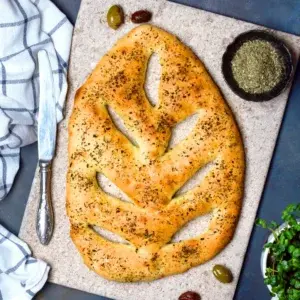
Tip the dough out, divide it if making two, and gently press and stretch each piece into a flattish oval or leaf shape, about 1.5cm thick. Now the fun bit: with a sharp knife or dough scraper, cut slashes through the dough, one down the centre and several angled off it like the veins of a leaf. Cut all the way through to the board, then hook your fingers into each slash and pull it wide open, much wider than you think, since they close up as it proves and bakes.
4. Prove again and bake
Let the shaped fougasse prove for another 20 to 30 minutes while the oven heats up good and hot. Brush with olive oil, scatter with flaky salt and any herbs or olives for the top, and bake until deep golden and crisp, and it sounds hollow when tapped underneath. Eat it warm, torn not cut, ideally the same day.
Tools for this recipe
Check out my favorite kitchen essentials and cookware!
- Mix and knead in a stand mixer with a dough hook, or by hand in a large mixing bowl.
- I use my sharp knife to slash the leaf pattern cleanly in the dough.
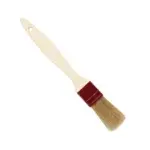
- Use a natural bristle pastry brush to brush the crust with olive oil.
Tips for success
- Cut the slashes wide open: cut right through to the board and stretch each hole much wider than feels right, since they shrink as the dough proves and bakes. Timid cuts close up and you lose the crust and the shape.
- Use good olive oil: it’s a lead flavour in a Provençal bread, not just grease. A decent extra virgin olive oil, in the dough and brushed on top will improve flavours.
- Don’t skimp on the kneading: ten minutes of proper kneading gives you the gluten that makes the chewy, open crumb. Under-kneaded dough will bake dense.
- Bake it hot: a hot oven is what gives you that crackly, deep-golden crust. If you’ve a baking stone, use it, it crisps the base beautifully.
- Eat it fresh. Fougasse is at its absolute best warm from the oven the same day, when the crust still shatters. It doesn’t keep well, so it’s a bake-and-eat bread.
How to store it
- Fougasse is really a same-day bread, best eaten warm within a few hours of baking, while the crust is still crisp and the middle soft. That’s just the nature of a crusty bread with no fat-rich enriched crumb to keep it, it stales fast.
- If you do have leftovers, keep them in a paper bag (not plastic, which softens the crust) at room temperature for a day. Refresh it in a hot oven for 5 minutes to bring the crust back. Don’t refrigerate it, that stales bread faster.
- It freezes well, though, which is the better make-ahead route. Cool it completely, wrap well, and freeze for up to a month. Reheat from frozen in a hot oven for 8 to 10 minutes and it comes back close to fresh.
More Southern recipes to try
Variations
- Cheese and lardons: grated Gruyère or Comté and crisp lardons folded in, for a richer, more substantial fougasse.
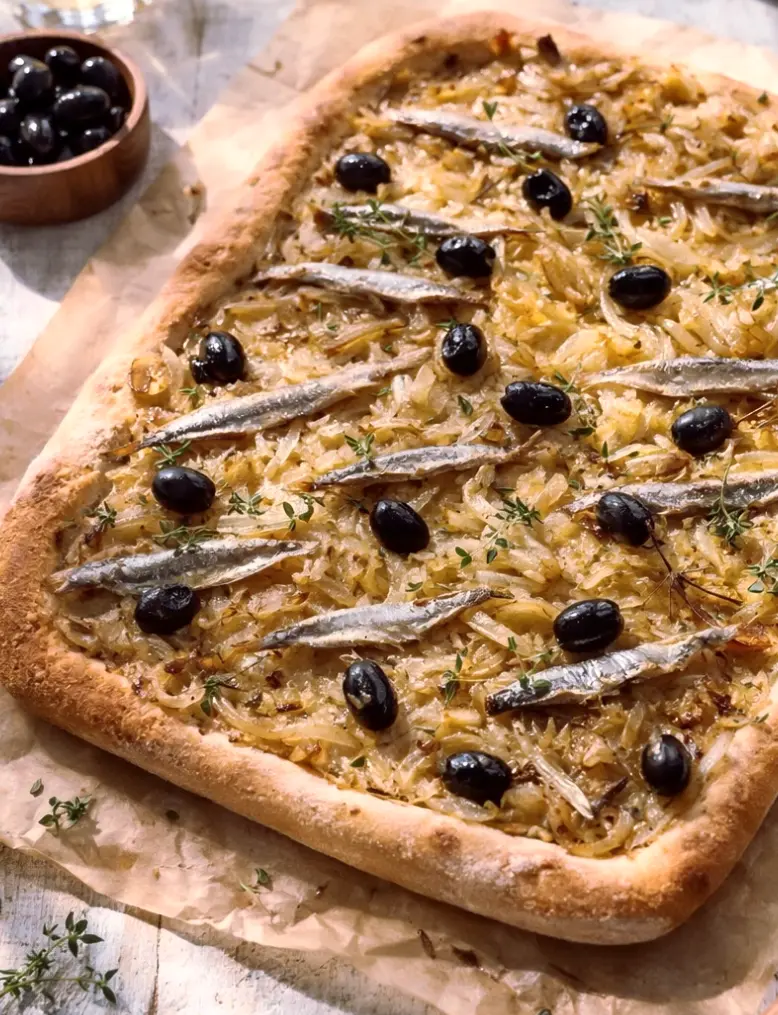
- Anchovy and onion: a more southern, savoury take, closer to a pissaladière in spirit.
- Sun-dried tomato and herbs: chopped sun-dried tomatoes through the dough with herbes de Provence, lovely and Mediterranean.
- Plain, with just salt and oil: You can also keep it as a plain fougasse with good olive oil and flaky salt if you don’t like olives.
How to serve fougasse
For me, fougasse is an apéro bread first and foremost. You put it down warm in the middle of the table, maybe with a bowl of tapenade, a dish of anchoïade, or some fresh goat cheese and a cold glass of Provencal rosé.
But it’s also excellent alongside soup like a soupe au pistou for example or a bowl of ratatouille, or just a simple vegetable soup, and works well with a salad for an easy lunch. Whatever the setting, serve it warm, fresh from the oven!
FAQ
What is fougasse?
Fougasse is a traditional Provençal bread, usually shaped and slashed to look like a leaf or ear of wheat. It has a crisp golden crust and a soft, chewy middle, and it’s flavoured with olive oil and often olives and herbs. It’s the French cousin of Italian focaccia.
What’s the difference between fougasse and focaccia?
They share the same Roman ancestor but turned out differently. Focaccia is baked flat in a pan and stays soft and moist; fougasse is slashed into a leaf shape with open holes, which makes it much crustier and crisper. Fougasse is the French, Provençal version; focaccia the Italian one.
Why do you slash fougasse into that leaf shape?
The open cuts massively increase the crust area, giving you more of that crisp, golden crust, and they help the bread bake quickly and evenly. Traditionally that fast, even bake is why bakers used fougasse to test their oven temperature. Cut the slashes right through and stretch them wide open.
Can I make fougasse ahead of time?
It’s best eaten the day it’s baked, while the crust is crisp. But it freezes really well once baked and cooled, reheat from frozen in a hot oven for 8 to 10 minutes. You can also make the dough ahead and prove it slowly in the fridge overnight for a deeper flavour.
Is fougasse a flatbread?
Sort of. It’s flat and slashed, but it’s a leavened, risen bread made with yeast, not a true unleavened flatbread. That yeast is what gives it its light, chewy crumb under the crisp crust.


 Prep Time 20 minutes
  Cook Time 20 minutes
  Total Time 2 hours 40 minutes
  Servings 2 loaves
Description
Ingredients
For the dough
- 500 gr plain flour
- 325 ml water lukewarm
- 7 gr instant dry yeast or 15g fresh yeast
- 10 gr salt
- 25 ml olive oil extra virgin
For the filling
- 100 gr black olives pitted and roughly chopped
- 1 tbsp Herbes de Provence
For finishing
- olive oil extra virgin, for brushing
- flaky salt
Instructions
1. Make the dough
- Mix the flour, yeast and salt in a bowl (keeping the salt and yeast apart at first). Add the warm water and olive oil and bring together into a dough. Knead for about 10 minutes, until smooth and elastic. Knead in the olives and herbs now if using.
2. First prove
- Place in an oiled bowl, cover, and leave somewhere warm until doubled in size, about 1 to 1½ hours.
3. Shape
- Tip out and divide in two. Gently stretch each piece into a flattish oval or leaf shape, about 1.5cm thick, on a lined baking tray.
4. Slash
- With a sharp knife or scraper, cut slashes through the dough: one down the centre, several angled off it like leaf veins. Cut all the way through, then pull each slash wide open with your fingers.
5. Second prove
- Cover loosely and prove for another 20 to 30 minutes. Meanwhile, heat the oven to 220°C fan (240°C conventional).
6. Bake
- Brush with olive oil and scatter with flaky salt (and extra herbs or olives if you like). Bake for 18 to 22 minutes, until deep golden and crisp, and hollow-sounding when tapped underneath.
7. Cool and serve
- Cool briefly on a rack. Serve warm, torn into pieces rather than cut.
Notes
- Cut the slashes wide open, right through to the tray, and stretch them, since they shrink back as the dough proves and bakes.
- Good olive oil matters in a Provençal bread, in the dough and brushed on top.
- Bake it hot for the crispest crust. A preheated baking stone crisps the base beautifully.
- Best eaten fresh the same day. Freezes well; reheat from frozen in a hot oven for 8 to 10 minutes.
- Make it a meal with a green salad, or tear it at apéro with a glass of rosé.
Share your feedback and spread the love!
If you try this recipe, I’d love to hear how it turns out! Leave a ★★★★★ rating and your thoughts in the comments, it helps fellow French foodies discover this recipe too. Snap a photo and tag @obviously.french on Instagram. Come talk about it in our Facebook group. And don’t forget to save this recipe to Pinterest so you’ll always have it handy for your next French-inspired meal!