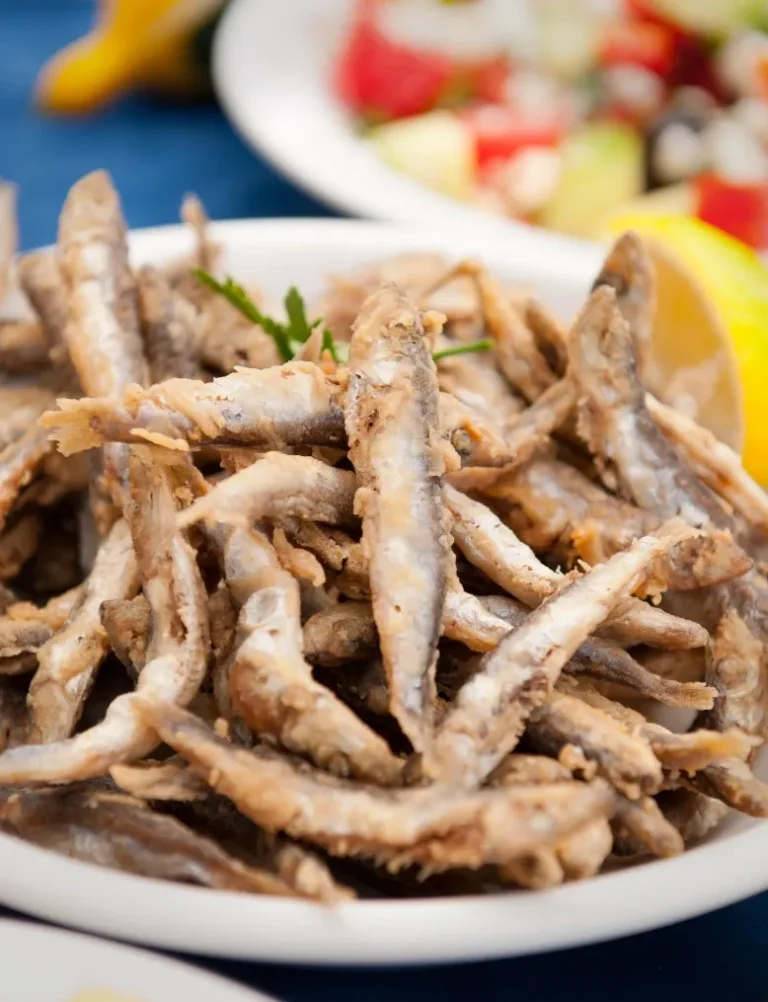
Fried Whitebait
 Prep Time 10 minutes
  Cook Time 30 minutes
  Total Time 40 minutes
  Servings 4
Ingredients
- 1 kg smelts small whitebait
- 200 gr plain flour
- 2 l rapeseed oil or sunflower oil
- 2 lemons to serve
- salt and black pepper
For the fries
- 800 gr firm-fleshed potatoes
- 30 ml olive oil
- 1 pinch salt
Equipment

Instructions
1. Prepare the fish
- Rinse the whitebait gently under cold water, then dry thoroughly with kitchen paper. Wet fish steams instead of fries. You will lose the crunch before you have even started.
2. Prepare the fries
- Peel the potatoes and cut into fries. Rinse under cold water to remove excess starch, then dry thoroughly with kitchen paper. Wet potatoes will not crisp properly.
3. Oven bake fries
- Preheat oven to 220°C (fan 200°C). Toss the fries in olive oil and a good pinch of salt. Spread in a single layer on a lined baking tray with no overlapping. Bake for 25 to 30 minutes , turning halfway through, until golden and properly crisp.
4. Coat the fish
- Tip the flour into a shallow bowl and season generously with salt and pepper. Add the whitebait in batches and toss until evenly coated. Shake off any excess. A heavy coating turns gluey in the oil.
5. Heat the fryer
- Fill your deep fryer with oil and heat to 180°C. If you do not have a built-in thermometer, drop a small piece of bread in. It should turn golden in about 5 minutes .
6. Fry the whitebait
- Lower the whitebait into the fryer basket in small batches. Overcrowding drops the oil temperature and kills the crunch. Fry for 2 to 3 minutes until golden and crisp. Lift the basket, drain briefly, then tip onto kitchen paper. Season with sea salt straight away while still hot. Repeat with the remaining fish.
7. Serve
- Pile the whitebait onto plates alongside the oven fries. Serve immediately with lemon wedges. These do not improve with sitting around.
Notes
- Whitebaits are eaten whole, heads, tails, bones and all. That is the point. The texture is part of it.
- Small batches in the fryer are non-negotiable. Too many fish at once and the oil temperature drops, leaving you with soggy whitebait.
- Dry the fish really well before coating. Moisture is the enemy here.
- Aioli or sauce gribiche alongside is never a bad idea.
- If you want proper frites rather than oven chips, double-fry them in the fryer: first at 160°C for 5 minutes, then at 180°C for 2 to 3 minutes. Worth the extra step.
About this recipe
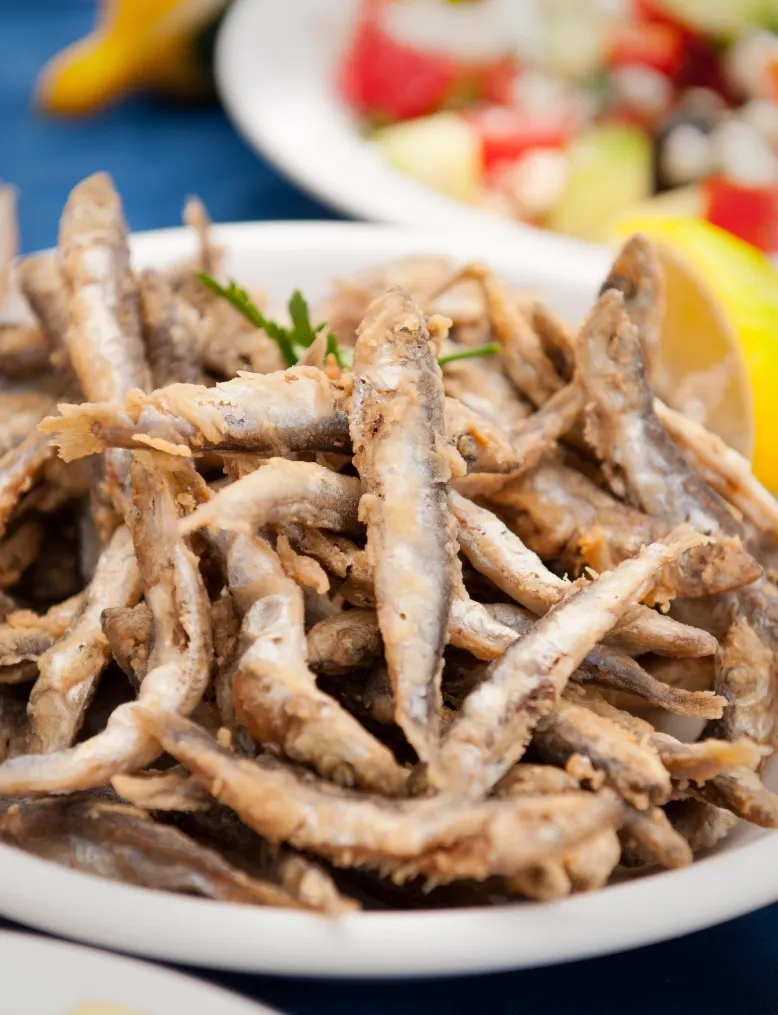
Fried whitebait are a summer tradition along the French coast, and once you’ve eaten them freshly fried at a beachside café with a cold drink and the sound of the sea nearby, no other version quite measures up. These tiny fish, fried whole until completely crispy, are one of those dishes that prove simplicity is almost always the right approach.
Growing up near the coast in Nice, I remember the excitement of spotting “éperlans” at the market. Delicate, shimmering, and smelling of the sea. The fishmonger would wrap them in paper and they’d be in the pan within the hour. There was nothing complicated about it then and there’s nothing complicated about it now.
What whitebait actually is
Whitebait is a catch-all term for very small, young fish, typically sprats, herrings, or smelt, caught and sold whole. In France, the éperlan is most commonly the European smelt, a silvery fish usually between 10 and 15 centimetres long with a faintly cucumber-like smell when fresh. They’re found along the northern and western coasts, in river estuaries, and in coastal markets from spring through summer.
They were once considered poor man’s food, cheap, abundant, and requiring almost no preparation. Today they hold a cherished place on bistro menus and beachside café chalkboards, celebrated precisely for their simplicity and their direct connection to the sea. The best things often follow that trajectory in French cooking.
Why fried whitebait works
The crispy whitebait tradition exists because these fish are perfectly suited to fast frying. Small enough to cook through completely in the time it takes the outside to turn golden, they need no filleting, no preparation beyond a quick rinse, and no complicated batter. A light dusting of seasoned flour is the classic French approach, giving you a thin, crispy coating that shatters when you bite through it.
The battered whitebait version uses a slightly thicker coating and produces a different result. The batter puffs up around the fish during frying, creating a cushion of crunch around the delicate flesh inside. Both versions are worth making. The flour-dusted version is more traditional and lighter. The battered whitebait version is more substantial and works better as a main course than a starter.
Getting the fry right
Deep fried whitebait needs oil at the right temperature. Too cool and the fish absorbs the oil rather than crisping in it, turning greasy and heavy. Too hot and the outside burns before the inside is cooked through. The target is 180C, and it needs to stay there throughout the frying.
The other mistake is overcrowding the pan. Too many fish at once drops the oil temperature immediately, and you end up with fish that steams rather than fries. Fry in small batches, giving each fish enough room to move in the oil and make contact with the heat on all sides.
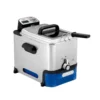
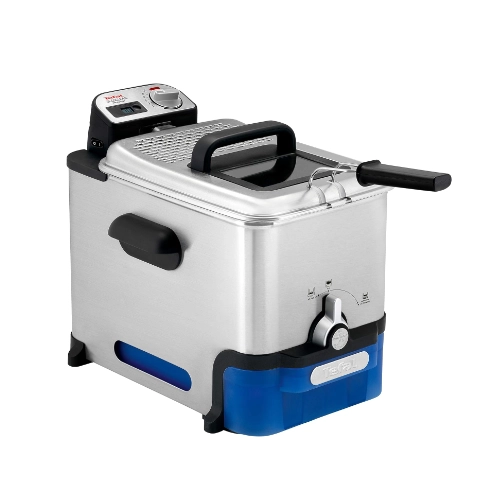
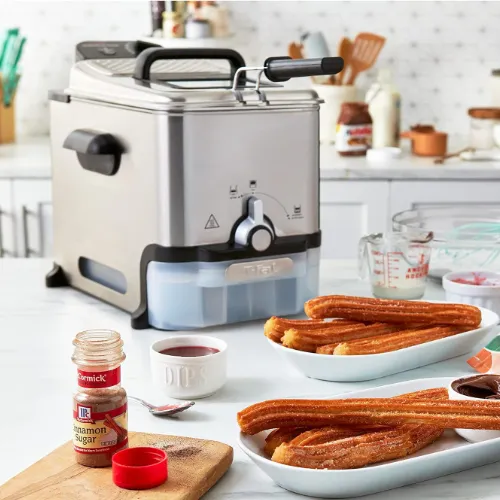
I use the Tefal fryer for this crispy fried whitebait recipe. The thermostat maintains the oil at a precise temperature throughout cooking, which is the single most important factor in getting consistent results. It also has a basket that lifts the fish out of the oil cleanly and lets the excess drain immediately, which keeps the coating crispy rather than letting it sit in oil and soften. For a recipe where the texture is everything, that control matters.
Serving it
Crispy fried whitebait is always served immediately, straight from the fryer whilst the coating is at its most shatteringly crispy. A squeeze of lemon, some flat-leaf parsley fried briefly in the same oil, and a small pot of homemade mayonnaise or aioli alongside. Good bread to mop up any juices.
In France, a portion of éperlans frits with a glass of cold Muscadet or a local dry white is a lunch that needs nothing else. As a starter, serve in a small bowl lined with paper. As a main course, a larger portion with a green salad and bread alongside is the right approach.
Eat them with your hands if you can. It’s the best way.
Share your feedback and spread the love!
If you try this recipe, I’d love to hear how it turns out! Leave a ★★★★★ rating and your thoughts in the comments, it helps fellow French foodies discover this recipe too. Snap a photo and tag me @obviously.french on Instagram if you’re sharing your bake or cooking online. Don’t forget to save this recipe to Pinterest so you’ll always have it handy for your next French-inspired meal!
Disclosure: Just so you know, this post contains sponsored content and/or affiliate links, If you make a purchase through these links, I may receive a small commission. Doesn’t cost you anything extra. I only link to things that are actually worth your time. All opinions are my own!