 October 7, 2025
Disclosure: This post may contain affiliate links which provide us a small commission when used for purchase. Please read my disclosure policy for more information. I am grateful for your support!
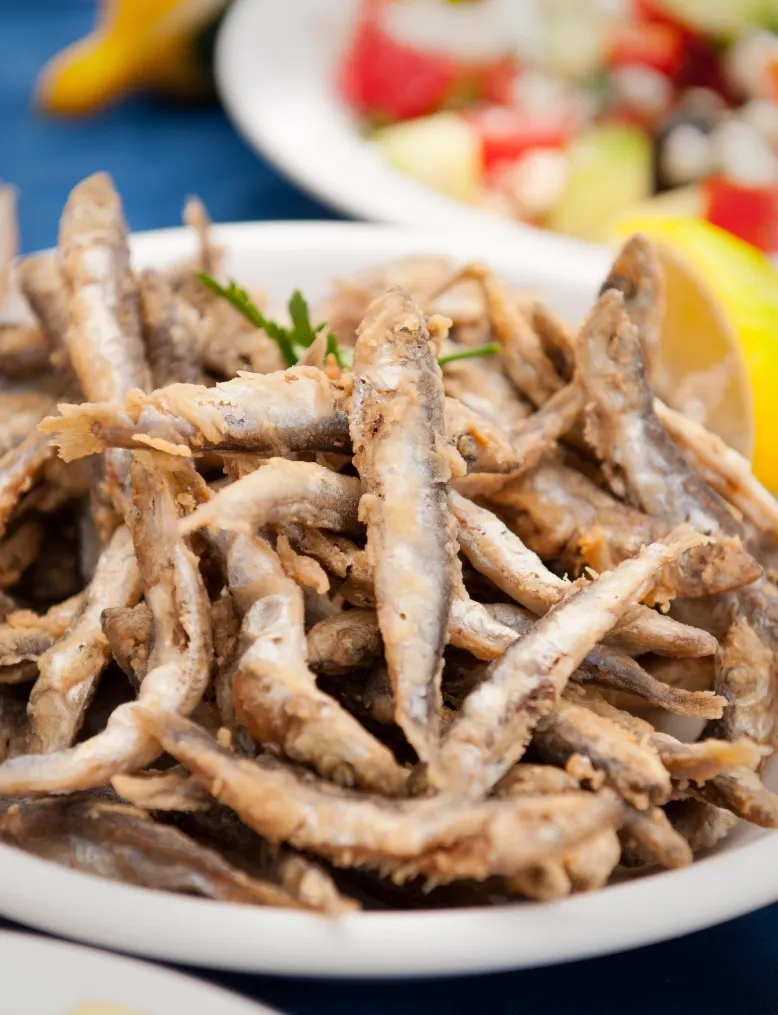
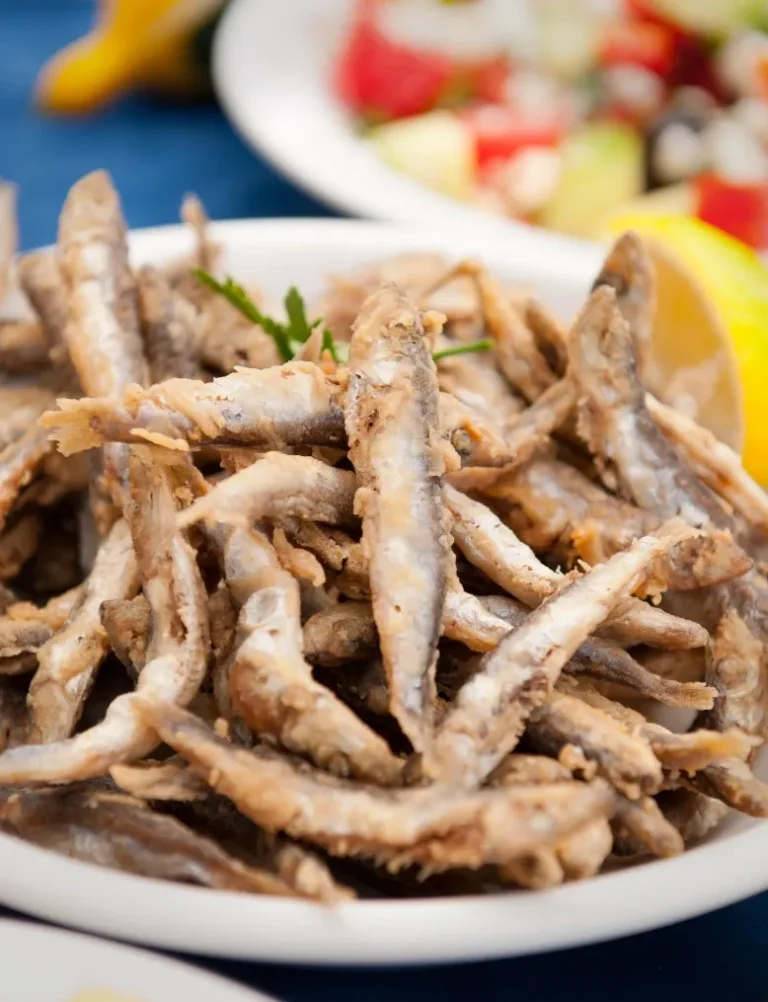
The last time I ordered fried whitebait was at the Rungis market near Paris. Rungis is technically a wholesale market reserved for food professionals, but I was lucky enough to have a friend take me. When my huge plate of crispy whitebait arrived, it took me straight back to my childhood in the south of France. The fish was so fresh, nothing like the frozen batches you find in the supermarket, and it was absolutely delicious. In my opinion, all you need with deep fried whitebait is a good squeeze of lemon and nothing else. And don’t squeeze the whole plate at once, or the fish will go soggy before you reach the end of it!
Table of Contents
Where fried whitebait comes from
Fried whitebait has no inventor, but it has a very specific home: the guinguette! Guinguettes appeared just outside the Paris walls in the late 17th and 18th centuries, for a reason that has nothing to do with romance and everything to do with tax. Wine entering the city was subject to the octroi, so drinking inside the walls cost more than drinking a few hundred metres beyond them. The name comes from guinguet, the light, cheap, slightly sharp white wine they served, grown on the Belleville hillside.
By the 19th century, once the railways made the riverbanks easy to reach, they’d become an institution. Workers and families escaped the city on Sundays to eat and drink at tables under the trees, dance to accordion, take a boat out, and eat small fried fish with their fingers. The friture, which is this fried whitebait recipe, was the dish of the guinguette. Renoir and Van Gogh both painted these riverbank scenes, which is partly why the image is so fixed in French memory. So the plate of crispy whitebait eaten outdoors by the water with a cold glass of white is not a coincidence!
What fish is whitebait?
Whitebait is a catch-all for very small whole fish, and in France the one you’ll most likely find is the éperlan, or smelt. It’s a slender silvery fish, usually 12 to 20cm, a distant relative of salmon and trout, caught in the coastal waters of the Channel and Atlantic. From February to April the shoals run up the Seine, Loire and Gironde to spawn, and that’s when they appear at markets in cities like Rouen and Orléans, which is as good a sign as any that winter is over.
One thing worth knowing at the fishmonger: a genuinely fresh éperlan smells faintly of cucumber. This isn’t folklore, it’s why the genus is called Osmerus, from the Greek for odour. A fish past its best smells of ammonia instead. Cucumber good, ammonia walk away.
Ingredients
- Whitebait or smelts — Look for bright, firm, silvery fish with clear eyes. Frozen will work but never crisps quite as well, since the fish carry more water.
- Plain flour — a light dusting only. This is a friture, not a battered whitebait, and the thin flour coat is what gives that delicate shatter rather than a thick jacket.
- Neutral oil — rapeseed or sunflower, something with a high smoke point and no flavour of its own. You need enough for a proper deep fry.
- Lemon — the only essential accompaniment. The acid cuts the richness of the frying and lifts the mild fish.
- Salt and pepper — seasoning for the flour.
- Potatoes (for the fries!) — firm-fleshed, so they hold their shape and crisp nicely. Optional, but friture with chips is the classic riverside plate.
How to make fried whitebait
1. Dry the fish properly
Rinse gently, then pat thoroughly dry with kitchen paper. Wet fish steams instead of frying and you lose the crunch before you’ve started. This is five minutes that decides the whole dish.
2. Dust, don’t coat
Season the flour well, toss the fish in batches, then shake off the excess properly. A thick flour layer goes gluey in the oil rather than crisp. You want them barely veiled.
3. Get the oil to 180°C and keep it there
Temperature is important here because too cool means the fish drinks the oil instead of crisping in it. If it’s too hot and the outside colours before the inside is done. If you haven’t a thermometer, a small cube of bread should turn golden in under a minute.
4. Fry the fish
Too many fish at once and the oil temperature crashes, and you get something soft and greasy instead of a friture. Give them room to move. Two to three minutes is usually enough, and they should be pale gold rather than deep brown.
5. Salt and serve
Out onto kitchen paper, sea salt straight away while the surface is hot enough to hold it, and to the table at once with lemon wedges!
Tools for this recipe
Check out my favorite kitchen essentials and cookware!
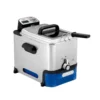
- Use a deep fryer with a thermostat to hold the oil steady at 180°C, which is the single biggest factor in whether the fish crisps or goes greasy.
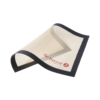
- Use a baking tray and a baking mat for the oven fries, so they crisp underneath rather than sticking and steaming.
Tips for success
- Do the cucumber test at the fishmonger: fresh smelt smell faintly of cucumber; anything with an ammonia edge is past it.
- If using frozen, thaw fully and dry twice: frozen fish releases a surprising amount of water. Thaw completely, pat dry, leave them on fresh kitchen paper for ten minutes, then pat again before flouring.
- Flour at the last second: coat only the batch about to go in the oil. Fish sitting in flour draws out moisture and turns the coating pasty before it ever hits the pan.
- Let the oil recover between batches: watch the thermometer climb back to 180°C before the next handful goes in. Rushing this is why batch three is always worse than batch one.
- Fry them pale: small fish cook through in a couple of minutes, and deep brown means dry inside. Pale gold is right.
- Keep the lemon on the side: squeeze over each mouthful rather than the whole plate, or the coating softens while you’re still eating.
- Don’t cover them to keep warm: trapped steam undoes the crunch instantly. If you must hold a batch, put it on a rack in a low oven, uncovered.
How to store it
- Freshly fried: These don’t keep. Within twenty minutes the coating softens, and no oven revives them properly. Fry only what you’ll eat.
- In the fridge: Raw whitebait is highly perishable, so use it the day you buy it, or the day after at the very outside, kept cold. Leftover cooked fish keeps a day and is fine cold in a salad, but it won’t be crisp.
- In the freezer: Raw whitebait freezes reasonably well if it’s very fresh, spread flat and bagged, for a couple of months. Cook from thawed and dried. Don’t freeze them cooked.
More fish recipes to try
Variations
- Persillade finish: toss the hot fish with finely chopped parsley and garlic the moment they leave the oil. This is the classic southern French treatment and takes thirty seconds.
- Spiced flour: add smoked paprika, cayenne or a little ground fennel to the seasoned flour. Fennel in particular is lovely against the sea flavour.
- Semolina or rice flour instead: fine semolina gives a sandier, more textured crust, and rice flour fries lighter and crisper than plain wheat flour. Both are worth trying if you like the coating more pronounced.
- With aioli or sauce tartare: a garlicky aioli or a sharp tartare alongside turns a snack into a proper starter, and the acidity plays well against the frying.
- As apéro rather than dinner: skip the chips, pile them into a paper cone with a lemon wedge and serve standing up with a cold glass of something dry!
- Different fish, same method: goujons were the other classic guinguette friture, and sprats, sand eels or very small anchovies all work identically. Pick whatever the fishmonger has small and whole that morning.
FAQ
Do you eat whitebait whole?
Yes, heads, tails, bones and all. That’s the point of them, and the texture is part of the pleasure. No gutting or preparation needed beyond rinsing and drying.
Is fried whitebait battered or floured?
The French version is floured, not battered. A light dusting of seasoned flour gives a delicate, crisp shatter, whereas a wet batter makes a much heavier coating that overwhelms such a small, mild fish.
What temperature should the oil be for deep fried whitebait?
180°C, held steady. Below that the fish absorbs oil and goes greasy; much above it and the outside colours before the inside cooks.
How do you know if whitebait is fresh?
Fresh smelt smell faintly of cucumber, which is where their scientific name comes from. If they smell of ammonia, don’t buy them. Look for bright silver skin and clear eyes too.
Can you use frozen whitebait?
Yes, though fresh crisps better. Thaw completely and dry very thoroughly, twice if needed, because the extra water is what stops frozen fish crisping properly.


 Prep Time 10 minutes
  Cook Time 30 minutes
  Total Time 40 minutes
  Servings 4
Description
Ingredients
- 1 kg smelts small whitebait
- 200 gr plain flour
- 2 l rapeseed oil or sunflower oil
- 2 lemons to serve
- salt and black pepper
For the fries
- 800 gr firm-fleshed potatoes
- 30 ml olive oil
- 1 pinch salt
Equipment

Instructions
1. Prepare the fish
- Rinse the whitebait gently under cold water, then dry thoroughly with kitchen paper. Wet fish steams instead of frying, and you'll lose the crunch before you've even started.
2. Prepare the fries
- Peel the potatoes and cut into fries. Rinse under cold water to remove excess starch, then dry thoroughly. Wet potatoes won't crisp properly.
3. Oven bake the fries
- Preheat the oven to 220°C (200°C fan). Toss the fries in olive oil and a good pinch of salt. Spread in a single layer on a lined baking tray with no overlapping. Bake for 25–30 minutes, turning halfway, until golden and properly crisp.
4. Coat the fish
- Tip the flour into a shallow bowl and season generously with salt and pepper. Add the whitebait in batches and toss until evenly coated. Shake off any excess. A heavy coating turns gluey in the oil.
5. Heat the oil
- Fill your deep fryer with oil and heat to 180°C. Without a built-in thermometer, drop in a small cube of bread: it should turn golden in under a minute.
6. Fry the whitebait
- Lower the fish into the fryer basket in small batches. Overcrowding drops the oil temperature and kills the crunch. Fry for 2–3 minutes until golden and crisp. Lift the basket, drain briefly, then tip onto kitchen paper. Season with sea salt straight away while still hot. Let the oil come back to temperature, then repeat.
7. Serve
- Pile the whitebait onto plates alongside the oven fries. Serve immediately with lemon wedges!
Notes
- Whitebaits are eaten whole, heads, tails, bones and all. That is the point. The texture is part of it.
- Small batches in the fryer are non-negotiable. Too many fish at once and the oil temperature drops, leaving you with soggy whitebait.
- Dry the fish really well before coating. Moisture is the enemy here.
- Aioli or sauce gribiche alongside is never a bad idea.
- If you want proper frites rather than oven chips, double-fry them in the fryer: first at 160°C for 5 minutes, then at 180°C for 2 to 3 minutes. Worth the extra step.
Share your feedback and spread the love!
If you try this recipe, I’d love to hear how it turns out! Leave a ★★★★★ rating and your thoughts in the comments, it helps fellow French foodies discover this recipe too. Snap a photo and tag @obviously.french on Instagram. Come talk about it in our Facebook group. And don’t forget to save this recipe to Pinterest so you’ll always have it handy for your next French-inspired meal!