Galette des Rois
 Prep Time 30 minutes
  Cook Time 40 minutes
  Servings 8
Ingredients
For the “frangipanne” (almond cream)
- 120 gr unsalted butter softened
- 120 gr caster sugar
- 2 egg
- 120 gr ground almonds
- 15 gr plain flour
- 2 drops almond extract optional
For the pastry
- 2 sheets all-butter puff pastry round, about 250g each
- 1 whole dry bean or a porcelain “fève”
For the glaze
- 1 egg yolk beaten with a splash of water
Equipment
Instructions
1. Make the frangipane
- Cream the softened butter and sugar together until pale and fluffy. Beat in the eggs, one at a time. Stir in the ground almonds, flour (or cornflour), rum, and almond extract if using. Mix until smooth.
2. Prepare the pastry
- Roll out your puff pastry sheets into two circles, about 24–26cm in diameter. Place one circle on a baking tray lined with baking paper.
3. Assemble the galette
- Spread the frangipane evenly onto the pastry, leaving a 2cm border all around. Slip the fève or almond into the filling, ideally near the edge (to avoid slicing into it later). Brush the edge with a little water.Lay the second pastry circle on top. Press the edges to seal, then use the back of a knife to scallop the edge for a decorative finish.
4. Decorate and chill
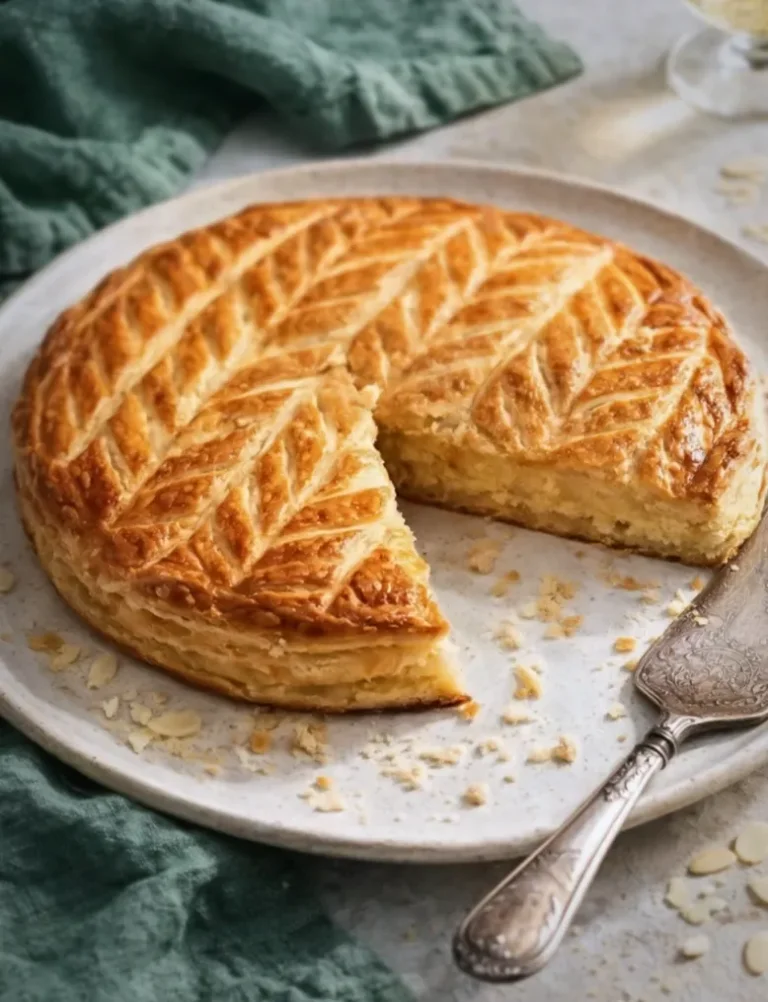
- Brush the top with the beaten egg yolk (avoid the sides, or the pastry won’t rise properly). With a sharp knife, score the top. If you want to keep it truly classic, go for the rosette pattern, it’s the one you’ll find in most French pâtisseries, and it’s a lovely nod to tradition.How to score the classic rosace:After glazing and chilling your galette, place the tip of a sharp knife at the centre.Draw a gentle arc from the centre out to the edge, curving slightly as you go.Repeat, spacing each arc evenly around the galette, so you end up with a flower-like pattern, usually 8, 10, or 12 “petals.”Take care not to cut through the pastry, just score the surface.Chill the assembled galette in the fridge for 30–60 minutes.
5. Bake
- Preheat your oven to 175°C (fan 160°C). Bake the galette for 40–45 minutes, until puffed and golden brown.
6. Finish (optional)
- For a patisserie-style shine, brush the hot galette with a little sugar syrup as soon as it comes out of the oven.
7. Serve
- Let it cool slightly, then serve just warm or at room temperature. Don’t forget the crown for whoever finds the fève!
Notes
- Use all-butter puff pastry for the best flavour and rise, avoid anything labelled “vegetable fat” or “margarine”, that is not the French way!
- Chilling the assembled galette before baking helps the pastry puff up and hold its shape.
- Leftovers keep well for a day or two, but the pastry is at its crispiest on the day it’s baked.
About this recipe
From the end of December through most of January, France goes galette-mad. Every bakery, from the humblest village boulangerie to the grandest Parisian patisserie, displays stacks of galettes in the window. Supermarkets join in too, offering everything from mass-produced versions to surprisingly good own-brand pastries. This is the Galette des Rois, a tradition so beloved that for a few weeks each year it takes over the country entirely.
Everyone is talking about la fève and who will be crowned king or queen. Children and grown adults alike getting genuinely excited about a slice of cake and a tiny trinket hidden inside. That is the beauty of this french king cake. Simple, joyful, and bringing people together in a way that feels uniquely French.
What Galette des Rois actually is
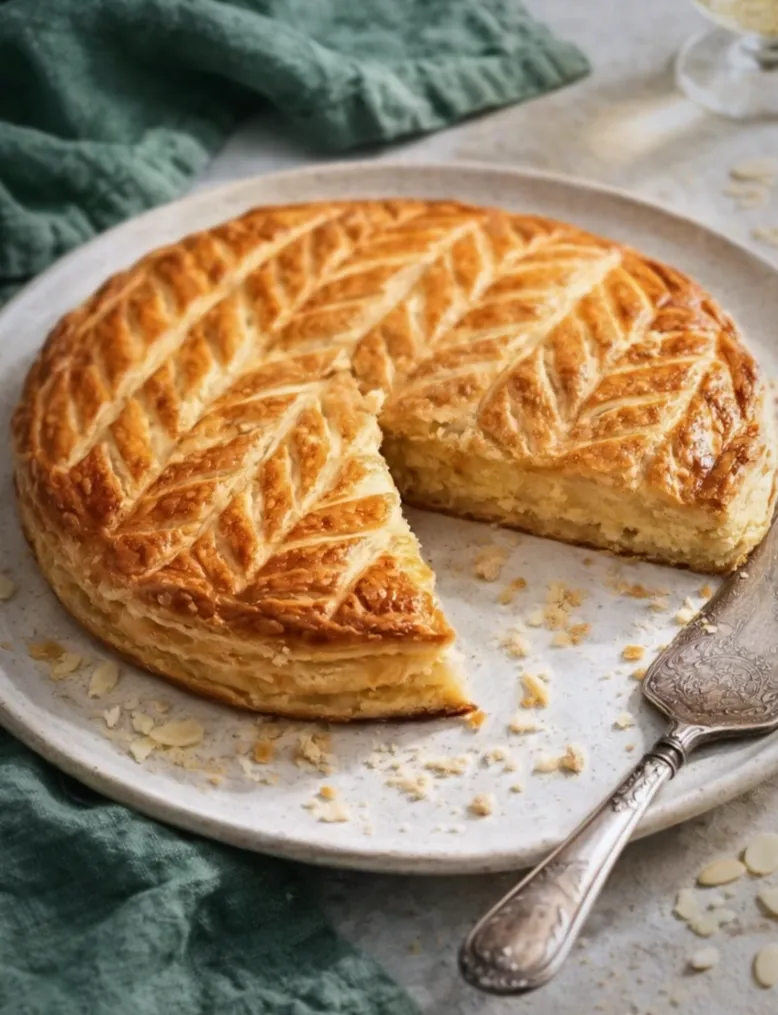
The Galette des Rois is a king cake made from two layers of puff pastry filled with frangipane, a rich almond cream made from butter, sugar, eggs, and ground almonds. A fève, originally a dried bean and now typically a small ceramic figurine, is hidden inside the filling before baking. Whoever finds it in their slice is crowned king or queen for the day, usually with a paper crown that comes with every galette from every bakery in France.
The french galette version eaten in Paris and most of northern France is this puff pastry and frangipane version. In the south, particularly in Provence and Languedoc, the Epiphany cake takes a completely different form: a brioche-style ring studded with candied fruit and flavoured with orange flower water. Same tradition, completely different cake. The north and south have been arguing about which version is correct for centuries. Both are right.
The history behind the king’s cake
The Galette des Rois is eaten on or around January 6th, the Feast of the Epiphany, which commemorates the arrival of the Three Kings at the nativity. The tradition of hiding something inside a cake to determine a king for the day predates Christianity, with roots in Roman Saturnalia celebrations where a bean hidden in bread determined who would be treated as king during the festival.
The Church absorbed the tradition and attached it to Epiphany, and French bakers have been making this french king cake in one form or another ever since. The frangipane filling became standard in Paris in the 17th century, when almond cream became fashionable in French patisserie. The decorative scoring on the top, the distinctive leaf or spiral pattern that marks every Galette des Rois, developed as a way for bakers to identify their own work and has become part of the cake’s visual identity.
Making a proper french galette at home
The key to a good Galette des Rois is the frangipane. It needs to be properly made with good ground almonds, real butter, and enough egg to bind it without making it too dense. The filling should be rich and moist after baking, not dry or grainy. If it’s dry, the butter ratio was off or the galette overbaked.
The puff pastry needs to be properly chilled before it goes into the oven. Warm pastry loses its layers during baking and produces a dense, heavy result rather than the light, shatteringly crispy layers that make this king cake worth making. Keep everything cold until the last possible moment.
The fève goes in before the second layer of pastry goes on top, pressed gently into the frangipane away from the centre of the cake. In the centre means it’s likely to end up in the first slice cut. Away from the centre means it could be anywhere, which is the point.
The right equipment
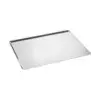
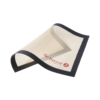
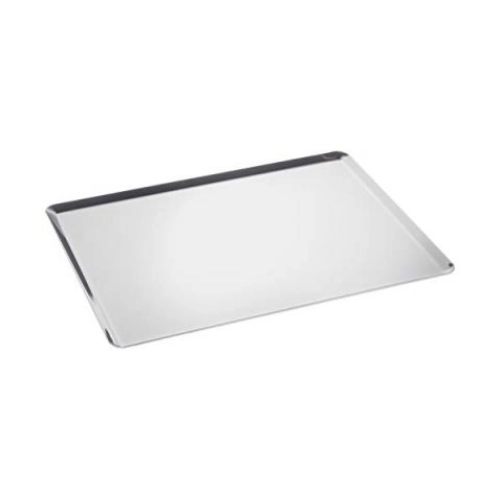
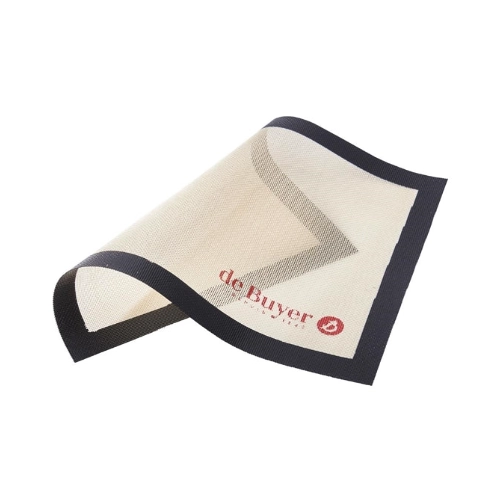
A flat, even baking surface is what gives the Galette des Rois its characteristic crisp base and even rise. I use the De Buyer stainless steel baking tray with the De Buyer baking mat for this. The heavy steel tray conducts heat directly and evenly to the base of the pastry from the moment it goes into the oven, which is what creates that crisp, golden underside. The baking mat prevents the pastry from sticking and distributes the heat evenly across the base, meaning no uneven browning or soft patches. Together they give you a consistent result every time, which matters for a king’s cake that needs to look as good as it tastes.
The crowning ceremony
In French families, the youngest child traditionally goes under the table during the cutting and calls out who each slice goes to, so nobody can see where the fève might be and choose accordingly. The person who finds it wears the paper crown and chooses their king or queen if they wish. It is one of those small rituals that sounds slightly absurd described in writing and feels completely natural at the table.
Make this Galette des Rois in January, hide the fève well, and let the tradition do the rest.
More about the tradition of this recipe in this article >
Share your feedback and spread the love!
If you try this recipe, I’d love to hear how it turns out! Leave a ★★★★★ rating and your thoughts in the comments, it helps fellow French foodies discover this recipe too. Snap a photo and tag me @obviously.french on Instagram if you’re sharing your bake or cooking online. Don’t forget to save this recipe to Pinterest so you’ll always have it handy for your next French-inspired meal!
Disclosure: Just so you know, this post contains sponsored content and/or affiliate links, If you make a purchase through these links, I may receive a small commission. Doesn’t cost you anything extra. I only link to things that are actually worth your time. All opinions are my own!