 November 24, 2025
Disclosure: This post may contain affiliate links which provide us a small commission when used for purchase. Please read my disclosure policy for more information. I am grateful for your support!


About this recipe
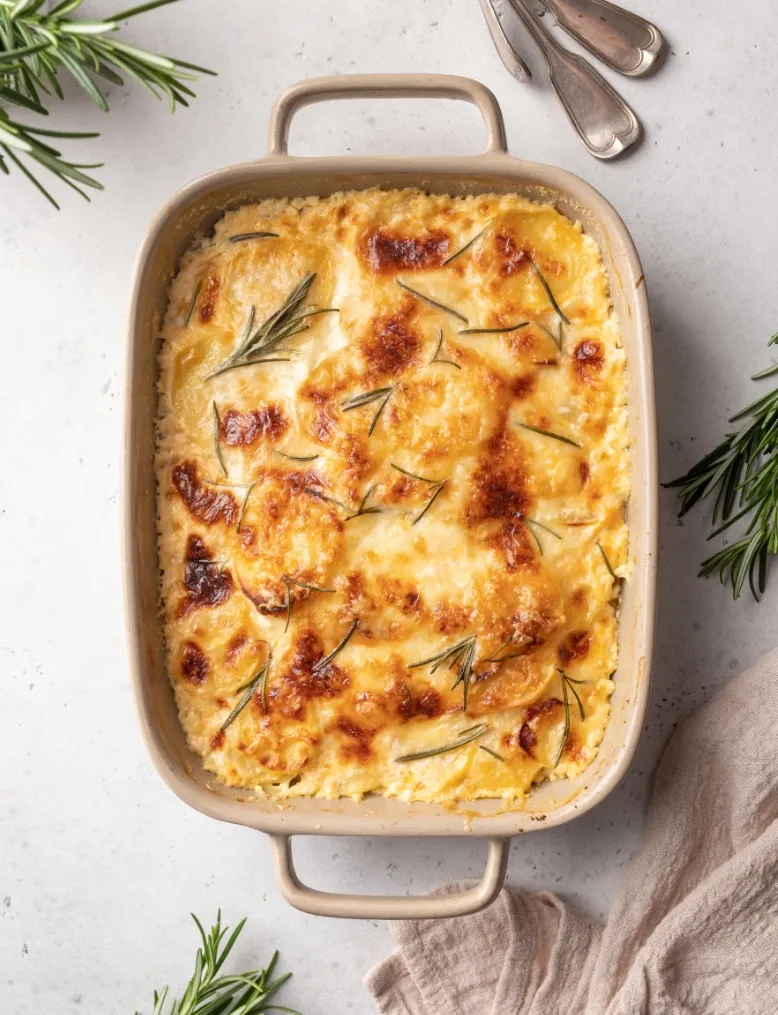
Gratin dauphinois is a potato dishe that explains a whole region. It comes from the Dauphiné, the mountainous area around Grenoble that covers Isère, Drôme, and Hautes‑Alpes. It is also one of the most hotly debated dishes in French cooking, which tells you the fierce local pride of the people who have been making it for a very long time.
The first recorded gratin dauphinois
The first time it shows up is in writing in July 1788, it was on the menu for a formal dinner in the town of Gap. The local duke had invited officials just weeks after a violent uprising in Grenoble that helped light the fuse of the French Revolution. Somewhere between the politics and the speeches, gratin dauphinois appeared at the table alongside tiny roasted “ortolans”. I like the idea that this very simple dish of potatoes and cream was already being used to keep people talking rather than fighting.
From there, it spread through inns in the southeast before making its way to Paris, where a restaurant called Le Gratin Dauphinois opened in 1930. By that point, cooks had already started improvising: some versions had eggs, some added cheese, others swapped cream for stock. The debates over what counts as “real” have not really stopped since.
The cheese question
If you ask someone from the Dauphiné, they will usually give you a very clear answer. The true gratin dauphinois has no cheese, no eggs, no onions. Just potatoes, cream, milk, garlic, French butter, salt, and pepper. Nothing else. There is even an Académie du Gratin Dauphinois in Grenoble that takes this seriously enough to organise competitions and codify the rules. Confusion often comes from its neighbour, the gratin savoyard, which uses stock and Beaufort cheese and is wonderful in its own right, but it is a different dish. In a gratin au dauphinois, the starch of the potatoes and the cream are what create that silky, clingy texture. Cheese would change the whole character.

The technique
The secret to a proper gratin dauphinoise is patience. This is not a quick, high‑heat bake. A low oven, around 150 °C, gives the potatoes time to soften slowly and soak up the cream. If you rush it, the cream can split, the top can brown before the inside is ready, and you end up with something grainy instead of smooth.
Little details matter. Rubbing a cut clove of garlic around the inside of the dish before you add anything else seems like an old‑fashioned step, but it makes a difference. The flavour is gentle rather than garlicky; you would miss it if it were not there. The potatoes need to be sliced thinly and evenly, ideally with a mandoline, so they cook at the same pace and press into neat, compact layers rather than turning into a mixed pile of overcooked and undercooked pieces. Around 3 mm is about right.
The right dish for gratin dauphinois
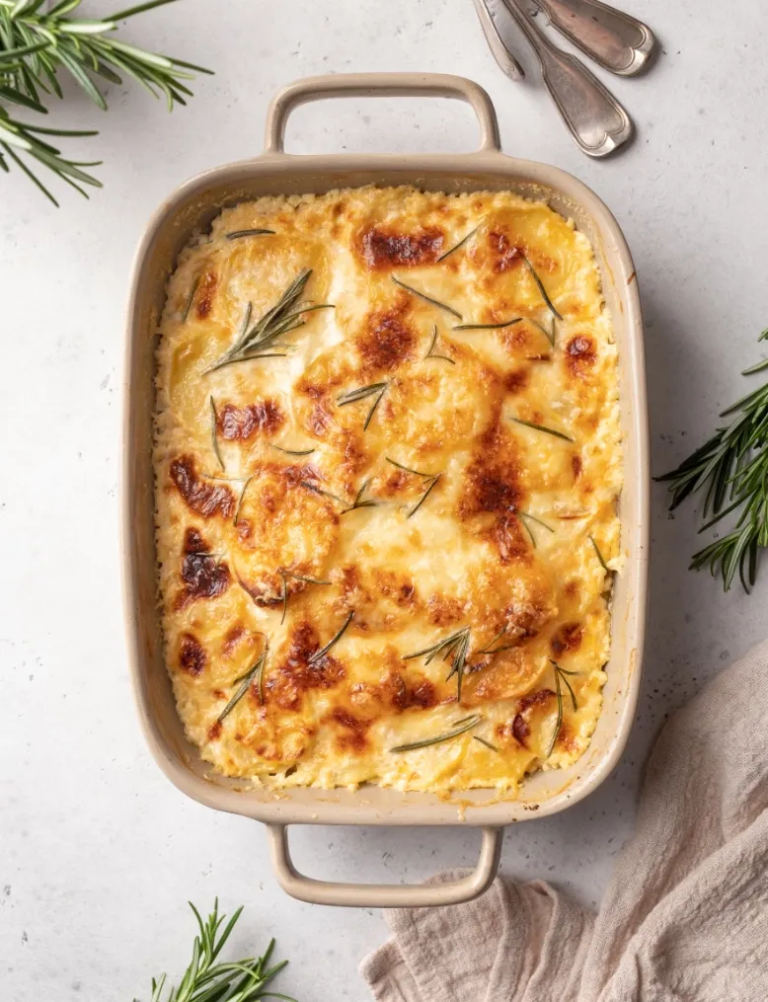
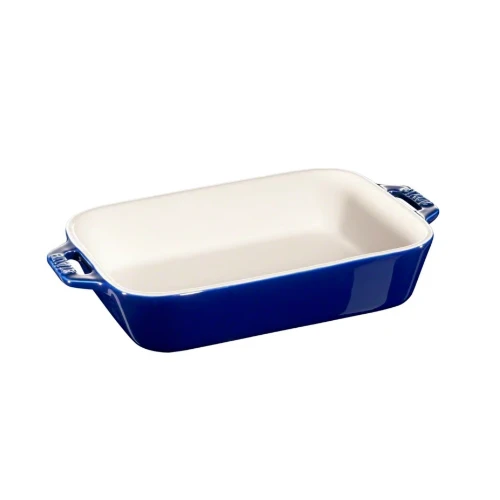
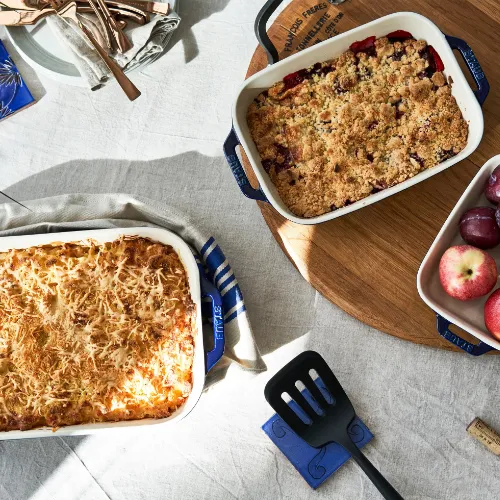
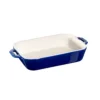
The dish you use plays a role too. A good gratin dish should spread the heat evenly, hold it steady for the whole long bake, and look nice enough that you can bring it straight to the table. A heavy, enamelled cast‑iron or stoneware baking dish works beautifully here. I often reach for a Staub‑style baking dish: it is deep enough for proper layers, holds the heat so the cream never boils angrily, and when you set it down, the gratin looks exactly as it should. The top is softly golden, the edges are bubbling, and the smell of cream and garlic has a way of making everyone sit up a little straighter and reach for their plates.
 Prep Time 20 minutes
  Cook Time 1 hour 30 minutes
  Total Time 1 hour 50 minutes
  Servings 6
Description
Ingredients
- 1.2 kg potatoes
- 200 ml whole milk
- 300 ml Double cream
- 2 cloves garlic
- 30 gr unsalted butter
- ¼ tsp nutmeg
- salt and black pepper

Instructions
1. Prep the potatoes
- Peel the potatoes and slice them into thin rounds, about 3mm thick. A mandoline makes this quick work, but a sharp knife and patience will get you there. The key is consistency: uneven slices mean uneven cooking.Important note: do not rinse the potatoes. That starchy coating is what gives the gratin its silky texture and helps bind everything together. Set them aside on kitchen paper but don't wash them.
2. Prepare the dish
- Preheat your oven to 150°C (130°C fan). Cut one of the garlic cloves in half and rub it vigorously all over the inside of your oven dish, bottom and sides. The heat of the oven will release that garlic flavour into the cream as it cooks. Butter the dish generously.
3. Infuse the cream
- Pour the milk and cream into a saucepan. Crush the remaining garlic clove with the flat of a knife and add it to the pan along with the nutmeg, a good pinch of salt and a few grinds of pepper. Heat gently until steaming and just starting to simmer, don't let it boil. Take off the heat and leave to infuse for 10 minutes, then fish out the garlic.
4. Layer the potatoes
- Arrange a layer of potato slices in the dish, overlapping them slightly like roof tiles. Season lightly with salt and pepper. Add another layer, season again. Continue until you've used all the potatoes, you're aiming for about 3-4 layers depending on your dish size.Pour over the infused cream mixture. It should come just to the top of the potatoes without completely submerging them. Give the dish a gentle shake to help the liquid settle between the layers.
5. Bake low and slow
- Dot the top with small pieces of butter and slide into the oven. Bake for 1 hour 15 minutes to 1 hour 30 minutes, until the top is deep golden and the potatoes are completely tender when pierced with a knife. The cream will have reduced and thickened, absorbed by the potatoes into something gloriously rich.If the top is browning too quickly, cover loosely with foil for part of the cooking time, removing it for the last 20 minutes to let it colour.
6. Rest before serving
- Let the gratin sit for 10-15 minutes before serving. This isn't just about not burning your mouth, the resting time allows everything to set slightly, making it easier to cut into portions that hold together rather than collapsing into a delicious heap.
Notes
- You want a variety of potatoes that’s waxy enough to hold its shape but starchy enough to absorb the cream. Maris Piper is the best all-rounder available in UK supermarkets. Charlotte works well too. Avoid anything too floury (like King Edwards) which can fall apart, or too waxy (like new potatoes) which won’t absorb the cream properly.
- Don’t rinse the potatoes: This is the single biggest mistake people make. The surface starch is essential, it combines with the cream to create that silky, unctuous texture. Rinsing it away gives you watery, separated gratin.
- Low and slow is essential: High heat makes the cream split and the top burn before the potatoes are cooked through. Keep it gentle; the long cook time is what creates the magic.
- No cheese, really: The authentic gratin dauphinois contains no cheese. If you add cheese, you’ve made gratin savoyard – delicious, but a different dish entirely.
- Make ahead: You can assemble the gratin, cover and refrigerate for up to 24 hours before baking. It’s also excellent reheated, many say it’s even better the next day.
Share your feedback and spread the love!
If you try this recipe, I’d love to hear how it turns out! Leave a ★★★★★ rating and your thoughts in the comments, it helps fellow French foodies discover this recipe too. Snap a photo and tag @obviously.french on Instagram. Come talk about it in our Facebook group. And don’t forget to save this recipe to Pinterest so you’ll always have it handy for your next French-inspired meal!