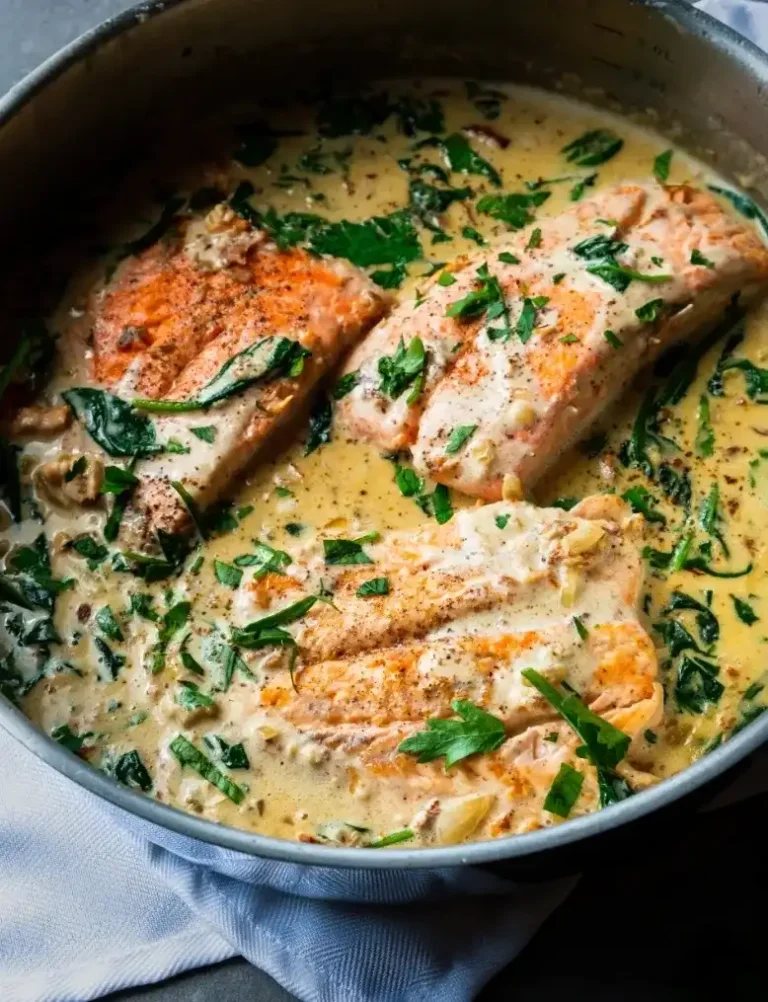
Salmon Florentine
 Prep Time 10 minutes
  Cook Time 20 minutes
  Total Time 30 minutes
  Servings 4
Ingredients
For the sauce
- 30 gr unsalted butter
- 2 shallots
- 3 cloves garlic
- 100 ml dry white wine
- 250 ml Double cream
- 200 gr baby spinach
- ¼ tsp nutmeg
- 1 squeeze lemon juice
- 1 handful flat-leaf parsley
- salt and black pepper
Equipment
Instructions
1. Season and sear the salmon
- Take the salmon out of the fridge about 15 minutes before cooking, room temperature fish cooks more evenly. Pat the fillets dry with kitchen paper and season generously with salt and pepper on both sides.Heat the olive oil in a shallow dutch oven over medium-high heat. When the oil shimmers, lay the salmon fillets in skin-side down. Don't touch them. Let them sizzle undisturbed for 3-4 minutes until the skin is crispy and golden, and you can see the flesh has turned opaque about two-thirds of the way up the sides. Flip briefly to sear the top (just 30 seconds or so) then transfer to a plate. The salmon won't be cooked through at this point, and that's fine. It'll finish in the sauce.
2. Build the sauce base
- Turn the heat down to medium and add the butter to the same pan. Once it's foaming, add the shallots and cook gently for 3-4 minutes until soft and translucent. Don't let them colour. Add the garlic and cook for another minute until fragrant.Pour in the white wine and let it bubble away for a couple of minutes, scraping up any golden bits stuck to the bottom of the pan. This is where a lot of the flavour lives, so don't skip the scraping.
3. Add the cream and spinach
- Pour in the double cream, stir well, and let it come to a gentle simmer. Add the spinach in handfuls, stirring each addition until wilted before adding more. It looks like a ridiculous amount at first, but it collapses down to almost nothing within seconds.Season with the nutmeg, a squeeze of lemon juice, and salt and pepper to taste. The nutmeg is traditional with spinach in French cooking, it lifts everything without being identifiable. Go easy though; you want a hint, not a Christmas candle.
4. Finish the salmon in the sauce
- Nestle the salmon fillets back into the sauce, skin-side up this time to keep it crispy. Spoon some of the creamy spinach mixture over the tops of the fillets. Cover the pan with a lid and cook over low heat for 5-7 minutes, until the salmon is just cooked through. It should flake easily but still be slightly translucent in the very centre, it'll carry on cooking from residual heat.
5. Serve
- Scatter over the parsley and bring the whole pan to the table. Serve straight from the pan with crusty bread to mop up the sauce, or alongside new potatoes or rice.
Notes
- Use wine for the sauce you’d actually drink, a dry white like Muscadet, Sauvignon Blanc, or an inexpensive Chablis. Avoid anything too oaky or it’ll overpower the delicate sauce.
- Baby spinach wilts fastest and has the mildest flavour. You can use regular spinach but remove the tough stems first. Frozen spinach works in a pinch, thaw and squeeze out excess water before adding.
- Stir in a tablespoon of Dijon mustard with the cream for a sauce moutarde variation, or add a handful of grated Gruyère at the end for a proper gratin finish.
- Skin on or off? Skin-on salmon gives you that gorgeous crispy texture contrast. If your fishmonger has skinned them already, sear the fish for slightly less time on the first side.
- Don’t overcook the salmon: The biggest mistake people make with salmon is cooking it to death. It should still have a blush of pink in the centre when you take it off the heat.
About this recipe
In French cooking, anything “à la Florentine” means spinach is involved. It is one of those culinary terms that sounds Italian but is actually thoroughly French, named not after the city of Florence but after a person.
Where the Florentine name comes from
The term dates back to 1533, when Catherine de Medici of Florence married Henry II of France. She supposedly brought a staff of chefs, kitchen equipment, and a love of spinach to Paris, popularising Florentine-style dishes at the French court. Whether she single-handedly transformed French cuisine is debatable. Food historians have largely debunked this story, and Italian influence on French cooking long predates this marriage. The truth is more nuanced: Catherine arrived in a country that was already absorbing Italian Renaissance culture broadly, and the French court was already receptive to new ingredients and techniques. The spinach connection may have been amplified over time into something more dramatic than it actually was.
But the name stuck, and now any dish served on a bed of spinach, often with a cream sauce, carries the Florentine designation. Eggs Florentine, sole Florentine, chicken Florentine. The term has been part of French culinary vocabulary for nearly five centuries.
Auguste Escoffier included a recipe for sole Florentine in his 1903 Le Guide Culinaire. His version called for poaching the fish, cooking spinach separately in butter, covering everything in Mornay sauce, and finishing under a grill until the top is golden. It is a more elaborate affair than this salmon florentine recipe, but the bones are the same: fish, spinach, cream, and a bit of heat to finish. Escoffier’s version requires three separate preparations. This one uses one pan.
This creamy salmon florentine
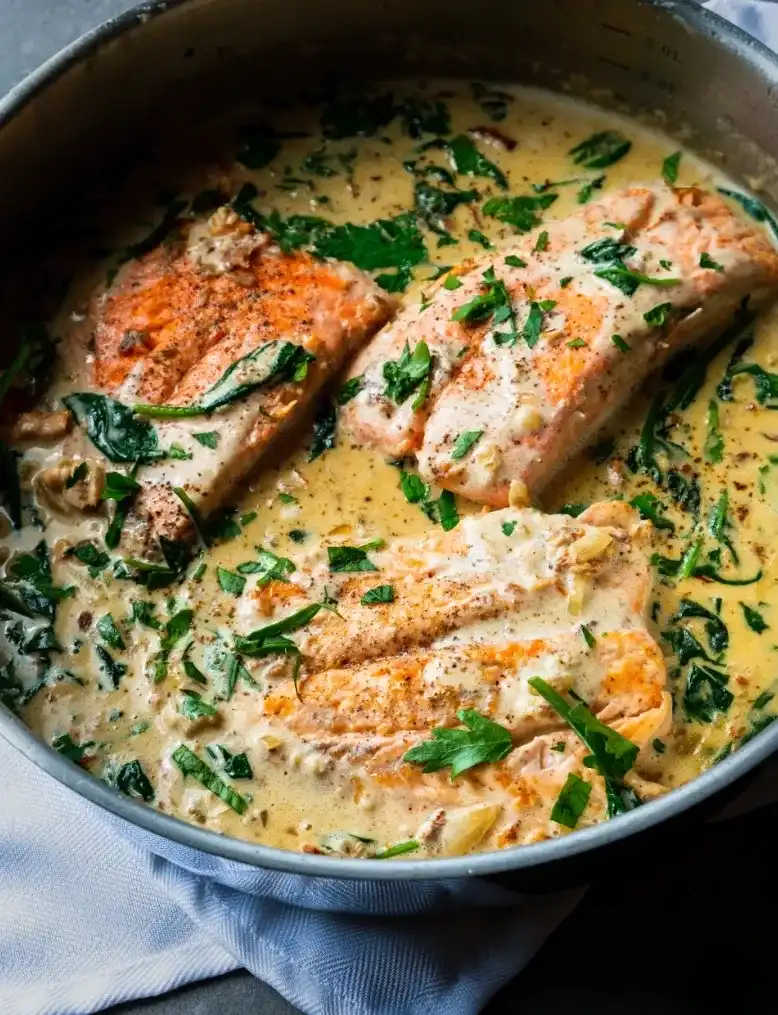
This recipe takes the traditional approach and simplifies it for a weeknight dinner without losing what makes the dish worth making. The salmon is seared first for colour and texture, developing a golden crust that adds flavour to the finished dish and stops the flesh from poaching into something pale and soft. It then finishes gently in the florentine sauce for salmon so the inside stays silky rather than rubbery.
The spinach wilts directly into the sauce, no separate pan required. It is the kind of easy salmon florentine that French home cooks have been making for generations, even if the restaurant versions involve more equipment and more time.
The addition of nutmeg to spinach is classic French technique. It appears in everything from gratin dauphinois to béchamel sauce, and it lifts the flavour of leafy greens without announcing itself. A small grating is all you need. Too much and it takes over. The right amount makes the spinach taste more like itself, which is the whole point.
The florentine sauce for salmon
A good florentine sauce for salmon is a cream reduction with shallots, white wine, and enough seasoning to stand up to the richness of both the salmon and the cream. It is not a béchamel. It is not a velouté. It is simpler than both: a direct reduction that concentrates flavour quickly and coats the fish without becoming heavy.
The shallots go in first, cooked gently in butter until completely soft. Then the white wine, reduced by half. Then the cream, simmered until it coats the back of a spoon. That is the entire sauce construction. Three ingredients and patience.
The key is not letting the sauce reduce too far before the salmon goes back in. Overreduced cream sauce breaks as it continues to heat, splitting into fat and liquid and losing the silky texture that makes this recipe for salmon florentine worth making. Pull it off the heat the moment it looks glossy and thick enough to coat a spoon. The residual heat from the pan and the salmon will carry it the rest of the way.
The right pan
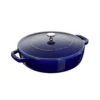
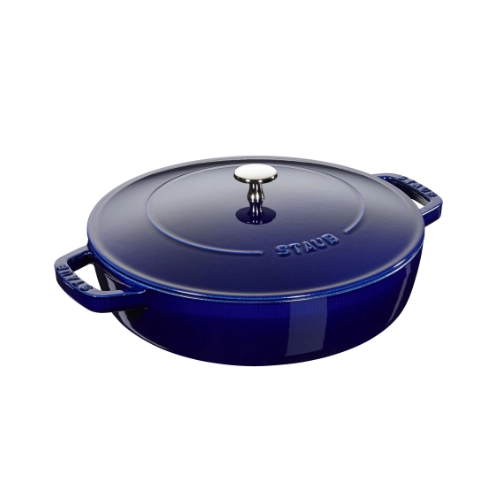
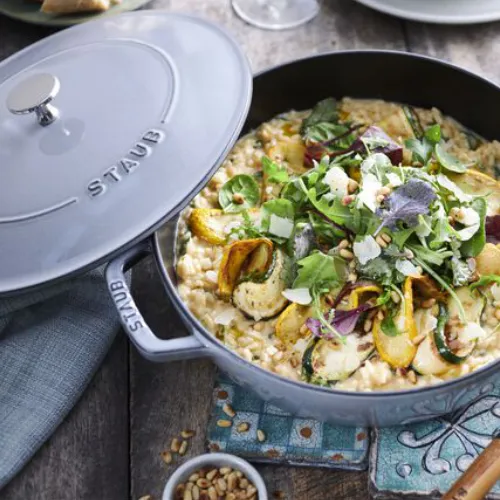
This easy salmon florentine works best in a wide, shallow pan that holds an even heat and allows the spinach to wilt evenly into the sauce. I use the Staub cast iron shallow braiser for this. The wide base gives the salmon enough room to sear properly without steaming, the even heat distribution across the cast iron means the sauce reduces at a consistent rate rather than catching in one spot, and the shallow depth makes it easy to fold the spinach through the sauce without it spilling over. It goes straight from hob to table, which for a creamy salmon florentine this good is the right way to serve it.
Choosing the right salmon
The quality of the salmon matters here because the sauce is clean and simple. There is nowhere for a poor piece of fish to hide. Centre-cut fillets are the right choice: even thickness means they cook at the same rate across the whole piece, and the fat content is higher in the centre cut than in tail pieces, which gives you a richer result in the finished dish.
Skin on or off is a matter of preference. Skin on gives you a crispier sear on the first side, which adds texture. Skin off means the flesh is in direct contact with the sauce on both sides, which gives you more flavour absorption. Both work. The important thing is that the salmon goes into a properly hot pan, not a warm one.
Share your feedback and spread the love!
If you try this recipe, I’d love to hear how it turns out! Leave a ★★★★★ rating and your thoughts in the comments, it helps fellow French foodies discover this recipe too. Snap a photo and tag me @obviously.french on Instagram if you’re sharing your bake or cooking online. Don’t forget to save this recipe to Pinterest so you’ll always have it handy for your next French-inspired meal!
Disclosure: Just so you know, this post contains sponsored content and/or affiliate links, If you make a purchase through these links, I may receive a small commission. Doesn’t cost you anything extra. I only link to things that are actually worth your time. All opinions are my own!