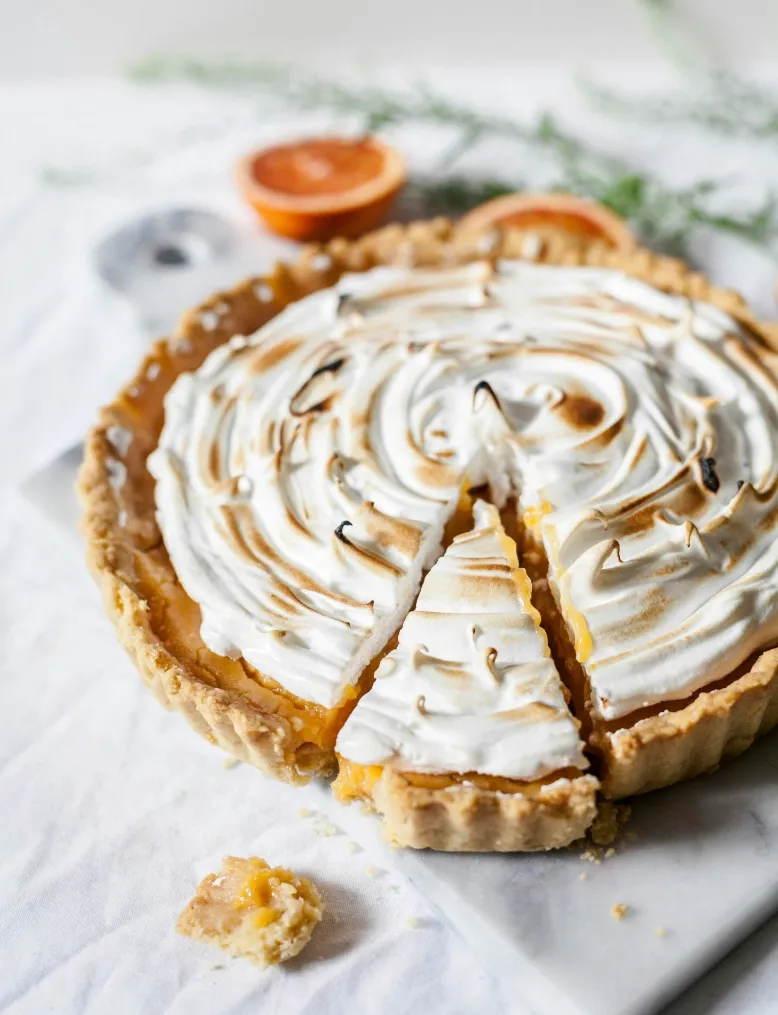
Tarte au Citron
 Prep Time 40 minutes
  Cook Time 55 minutes
  Total Time 2 hours 35 minutes
  Servings 8
Ingredients
For the pâte sucrée (sweet pastry)
- 250 gr plain flour
- 125 gr unsalted butter cubed
- 100 gr icing sugar
- 1 egg
- 1 pinch salt
For the lemon curd filling
- 4 egg
- 200 gr caster sugar
- 150 ml lemon juice about 4-5 lemons
- 2 lemons for the zest
- 100 gr unsalted butter
For the Swiss meringue
- 4 egg
- 200 gr caster sugar
- 1 pinch salt
Equipment



Instructions
1. Make the pastry
- Put the flour, butter, icing sugar, and salt in a food processor. Pulse until it looks like breadcrumbs. Add the egg (and vanilla if using) and pulse again until it just comes together. Don't overwork it.Turn it out, bring it together into a disc, wrap in cling film, and chill for at least an hour.
2. Roll and line the tin
- Roll the pastry out on a lightly floured surface to about 3mm thick. Line your fluted flan dish, pressing it gently into the corners without stretching. Trim the edges, prick the base with a fork, and chill for another 30 minutes.
3. Blind bake the pastry
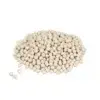
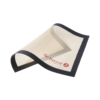
- Heat your oven to 180°C (160°C fan). Line the pastry with baking paper, fill with baking beans, and bake for 20 minutes. Remove the beans and paper, then bake for another 8-10 minutes until pale golden and dry. Patch any cracks with leftover raw pastry while it's hot. Let it cool.
4. Make the lemon curd
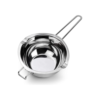
- Whisk the eggs and sugar together in a double boiler. Add the lemon juice and zest. Set the bowl over a pan of barely simmering water "au bain marie" (don't let the bowl touch the water).Stir constantly with a wooden spoon for 10-15 minutes until it thickens enough to coat the back of the spoon. You're looking for a custard-like consistency. Take it off the heat, add the butter cubes, and stir until melted and glossy.Pour the curd into the cooled pastry case while it's still warm. Smooth the top. Let it cool to room temperature, then chill for at least 2 hours until properly set.
5. Make the Swiss meringue
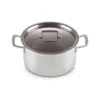
- Put the egg whites, sugar, and salt in a heatproof bowl. Set it over a pan of simmering water (au bain marie again) and whisk constantly until the sugar dissolves completely, about 3-5 minutes. You can test by rubbing a bit between your fingers; it shouldn't feel grainy. The mixture should reach about 70°C if you've got a thermometer.Take it off the heat and whisk with an electric mixer on high speed for 5-7 minutes until you've got stiff, glossy peaks and the bowl has cooled to room temperature. The meringue should be thick enough to hold its shape.
6. Top and torch
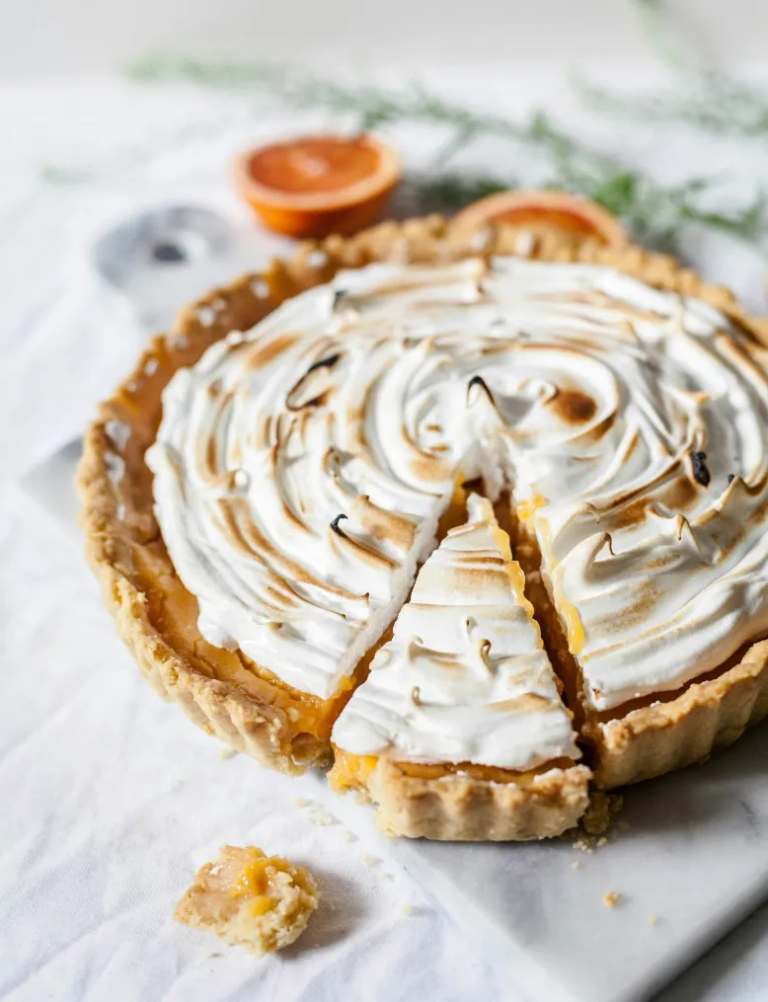
- Spoon or pipe the meringue over the chilled lemon filling. You can go rustic with peaks and swirls, or pipe it neatly if you're feeling fancy. Make sure the meringue touches the pastry edge all the way around, this stops it shrinking.Use a blowtorch to caramelise the meringue until golden brown in spots. Keep it moving so you don't burn it. No blowtorch? Stick it under a hot grill for 1-2 minutes, watching it like a hawk.Let it sit for 10 minutes before slicing. Use a sharp knife dipped in hot water between cuts for clean slices.
Notes
- Swiss meringue vs Italian vs French: Swiss is the most stable for this. Italian meringue (with hot sugar syrup) is fancier but fussier. French meringue (just whipped whites and sugar) weeps and doesn’t hold as well.
- The curd needs to be properly set before you add the meringue, or it’ll slide around when you try to spread it.
- Meringue weeping: If liquid pools under your meringue, the curd was too warm when you topped it, or the meringue wasn’t cooked enough over the bain-marie.
- Make ahead: You can make the tart base and lemon curd a day ahead. Add the meringue a few hours before serving for the best texture.
- 485No blowtorch? The grill works, but watch it carefully. It can go from perfect to burnt in seconds.
About this recipe
The tarte au citron has been a fixture of French pâtisserie since at least the early 19th century, though citrus tarts in various forms go back much further. Lemons were a luxury ingredient in France for centuries, imported from Italy or the far south, which made lemon desserts a sign of sophistication and wealth. A proper french tarte au citron on the table was a statement.
Where the citron meringue tart comes from
The classic combination of lemon curd and meringue likely emerged in the mid-1800s, around the same time meringue itself was being refined by French pastry chefs. Swiss meringue, the kind used in a proper tart citron, was developed as a more stable alternative to simpler French meringue and has been the professional standard ever since. By the late 19th century, tarte au citron meringuée had become a staple in Parisian pâtisseries and boulangeries, elegant enough for formal dinners but accessible enough for everyday eating.
Menton: France’s lemon capital
To understand the French obsession with this lemon tart au citron, you need to know about Menton. This small town on the Côte d’Azur, right on the Italian border, has been growing lemons since the 15th century. The microclimate there is exceptional and Menton lemons are considered the finest in France.
They are not like standard supermarket lemons. Menton lemons are sweeter, more aromatic, with a thinner skin and more juice. They carry Protected Geographical Indication status, the same category as Champagne or Roquefort. Every February, Menton throws the Fête du Citron, where they build massive sculptures from lemons and oranges. We are talking 145 tonnes of citrus turned into elaborate displays. It has been running since 1934 and it is properly wonderful.
Traditional French pâtissiers use Menton lemons for their tartes au citron when they can get them, though they are expensive and seasonal. The season runs from February to May, which is when you will find the best lemon tarts in France.
Regional variations
Whilst the citron meringue tart is the classic version you will find everywhere, there are regional twists worth knowing about.
In the south of France, particularly around Nice and Menton, you will sometimes find tarte au citron made without meringue. Just the lemon curd in a pastry case, finished with a dusting of icing sugar. It is simpler and more rustic, and it lets the lemon flavour dominate completely. Some versions include candied lemon peel on top. The Provence variation sometimes includes a touch of lavender or thyme in the pastry or curd. It sounds unlikely but works well, the floral notes complementing the citrus without overwhelming it.
In Alsace, some versions mix a little crème fraîche into the lemon filling, giving it a slightly tangy, less sweet character. Less common but worth trying if you come across it.
The technique
A good tarte au citron comes down to two things: the curd and the pastry. The lemon curd needs to be properly set, smooth, and intensely flavoured without tipping into sourness. Too little lemon and it tastes sweet but flat. Too much and it becomes harsh. The balance is everything.
The pastry needs to be blind baked properly before the curd goes in. An unbaked shell filled with lemon curd will stay soft and pale at the base, which is not the right contrast for the sharp, silky filling above it. Ten minutes with baking weights, then five without, gives you the crisp base the french tarte au citron needs.
The right dish
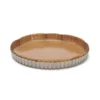
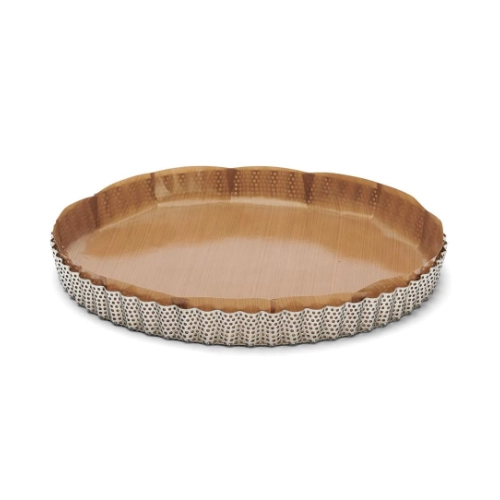
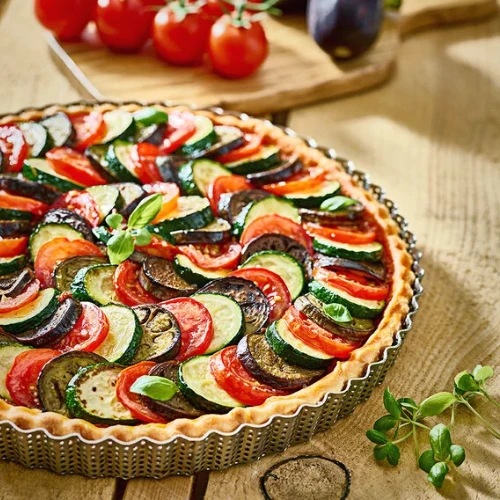
I use the De Buyer fluted dish for this tart citron. The carbon steel conducts heat directly and evenly, giving you a properly crisp base every time. The fluted edges give the pastry the characteristic wavy border that makes a French tart look like a French tart, and the sharp edges of the De Buyer cut cleanly through the pastry without distorting the shape. It releases cleanly once cooled, which matters because a tarte au citron that tears on unmoulding loses the clean, elegant finish the dish deserves.
Share your feedback and spread the love!
If you try this recipe, I’d love to hear how it turns out! Leave a ★★★★★ rating and your thoughts in the comments, it helps fellow French foodies discover this recipe too. Snap a photo and tag me @obviously.french on Instagram if you’re sharing your bake or cooking online. Don’t forget to save this recipe to Pinterest so you’ll always have it handy for your next French-inspired meal!
Disclosure: Just so you know, this post contains sponsored content and/or affiliate links, If you make a purchase through these links, I may receive a small commission. Doesn’t cost you anything extra. I only link to things that are actually worth your time. All opinions are my own!