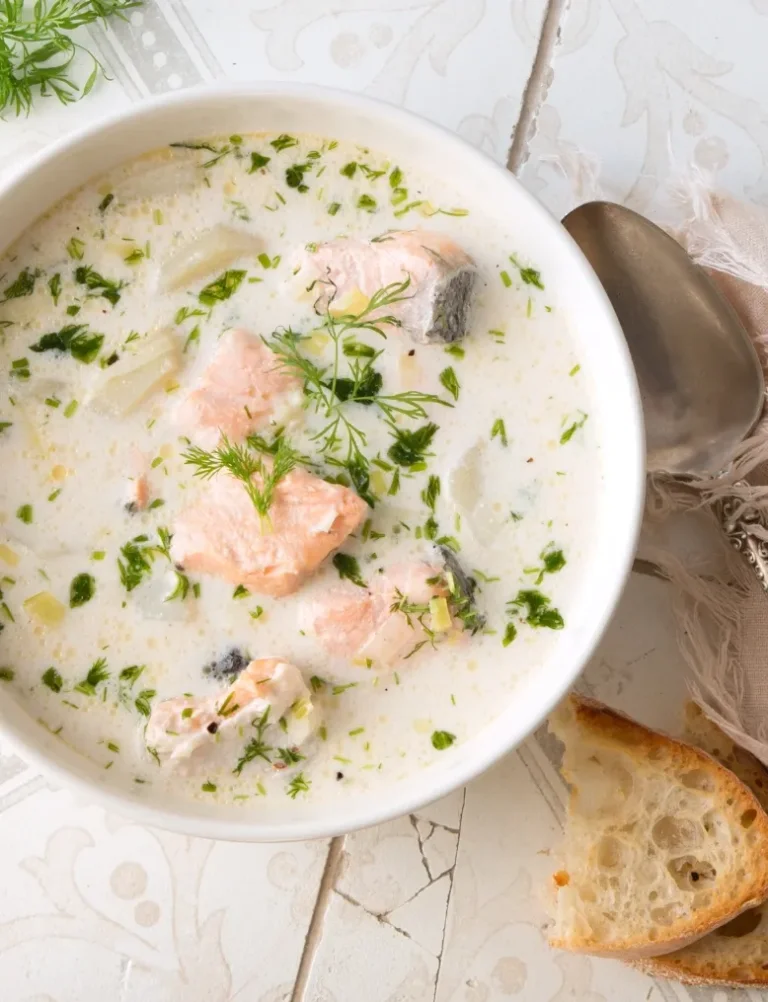
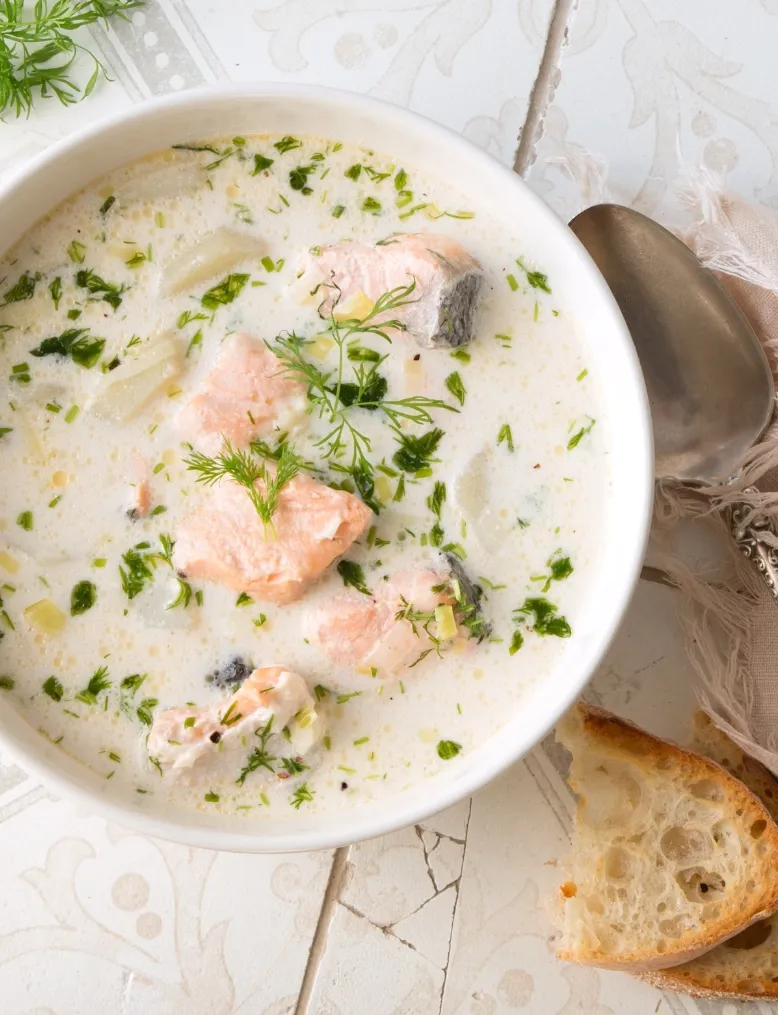
Blanquette de Poisson
 Prep Time 20 minutes
  Cook Time 45 minutes
  Total Time 1 hour 5 minutes
  Servings 4
Ingredients
For the Fish and Vegetables
For the Sauce
- 60 gr unsalted butter
- 60 gr plain flour
- 200 ml dry white wine
- 500 ml fish stock
- 200 ml Double cream
- 2 egg yolks
- 20 ml lemon juice
- 1 handful parsley
- salt and black pepper
Equipment
Instructions
1. Prepare the aromatic base
- Melt half the butter in your casserole dish over medium heat. Chuck in the carrots and baby onions, give them a light seasoning with salt and white pepper. Cook gently for 5-6 minutes until they start to soften, don't let them colour though. This step is to coax out sweet flavours. They should look glossy and smell lovely. Add the bay leaves, thyme, and parsley stalks.
2. Add the mushrooms and wine
- Add in the mushrooms and cook for another 3-4 minutes until they start weeping their juices. Pour in the white wine and let it bubble away for 2 minutes, you want to cook off the harsh alcohol but keep the wine's brightness. The smell should be properly divine at this point! Add the fish stock and bring to a gentle simmer. Not a rolling boil, more like barely bubbling.The mushrooms are doing their thing here, releasing all those earthy flavours. And that wine? Choose something you'd actually drink. Life's too short for cooking wine that tastes like disappointment.
3. Gently poach the fish
- Season both the cod and salmon chunks with salt and white pepper. Add the cod first and poach for 3-4 minutes, then add in the salmon pieces. Cod needs slightly longer than salmon, which can go from perfect to overcooked in moments. Cover and continue poaching very gently for another 6-7 minutes until both fish flake easily but still hold their shape. When done, carefully lift everything out with a slotted spoon and keep it warm in a serving dish.Right, this is where people usually panic. Don't. The fish will tell you when it's ready, it'll flake easily but still look like fish, not fish paste. Salmon is particularly delicate, so treat it accordingly.
4. Make the roux
- Strain that cooking liquid through a fine sieve. Wipe out your casserole dish and melt the remaining butter over medium heat. Whisk in the flour and cook for 2-3 minutes, whisking constantly. You're making a white roux. Don't let it brown or you'll lose that clean flavour that makes blanquette special.The roux is the foundation of your sauce.
5. Build the sauce
- Gradually whisk in that strained liquid, bit by bit, whisking like your life depends on it to prevent lumps. It'll look worryingly thin at first, then suddenly thicken. This is the French technique, the transformation from liquid to sauce happens almost instantly.If you get lumps, don't despair. Pass it through a sieve and carry on. Even French grandmothers have lumpy days.
6. The liaison
- Whisk the egg yolks with the double cream in a small bowl until smooth. This is the liaison, the bit that transforms good sauce into sublime sauce. Gradually whisk a few spoonfuls of the warm sauce into the egg mixture to warm it up (stops the eggs scrambling), then whisk this back into the main sauce. Heat gently for 2-3 minutes, stirring constantly. The sauce should thicken to coat the back of a spoon.This is the moment of truth. Take your time, warm those eggs gradually, and whatever you do, don't let it boil or you'll have very expensive scrambled eggs.
7. Bring it together
- Add the lemon juice and taste for seasoning. Gently return the fish and vegetables to the sauce, being extra careful not to break up the delicate pieces. The salmon will be particularly fragile now. Warm through very gently for 2-3 minutes, just long enough to heat everything without overcooking. Stir in the fresh parsley and serve immediately.And there you have it! You have made your own French blanquette!
Notes
- Use centre-cut salmon fillets rather than tail pieces, which can be thin and overcook easily. The natural oils in salmon will enrich the sauce beautifully.
- The combination of cod and salmon creates an incredibly rich cooking liquid. If anything, you might want to use slightly less cream than you would with a single fish to let the natural fish flavours shine.
- This reheats brilliantly the next day, though be even more gentle with the heat to prevent the fish breaking up further.
About this recipe
Blanquette de Poisson didn’t start with fish at all. It started with veal. Walk into any neighbourhood bistro from Lille to Marseille and you’ll find Blanquette de Veau on the menu, the dish that this french fish stew is built on. Same technique, different protein, and arguably better results.
Where blanquette comes from
The technique dates back to medieval monastery kitchens, where monks perfected gentle white sauce cooking during Lent. No browning, no roasting, no aggressive heat. Just patient, careful cooking that coaxes flavour rather than forcing it. By the 18th century, blanquette de veau had become the signature dish of French bourgeois cooking, refined enough for special occasions but homely enough for family dinners.
The name comes from “blanc,” meaning white, referring to that pristine pale sauce that defines the dish. Everything about blanquette is gentle. The cooking, the colour, the flavour. It is the opposite of the bold, caramelised French braises that get all the attention.
From aristocratic tables to bistro staples
Originally, blanquette was expensive food. Veal cost money, French butter and cream were luxury ingredients, and the liaison technique demanded skill and attention. But French cooking has always had a democratic spirit, and blanquette gradually moved from aristocratic kitchens to middle-class tables, then into the bistros and brasseries that fed working France.
By the 19th century, every decent French cook knew how to make a proper blanquette, and it became a benchmark of culinary competence. The dish survived both world wars, adapted to rationing, and emerged stronger. Post-war France embraced it as a symbol of returning comfort and domestic normality.
The coastal version: fish blanquette
French fishing families along the Atlantic coast looked at what their inland relatives were doing with veal and applied the same logic to what the boats brought home. They had the technique already. The gentle poaching, the white roux, the careful liaison of egg yolks and cream. Swapping veal for fish was a natural step, and the results were extraordinary.
This fish blanquette works so well because the white sauce complements rather than masks seafood flavours. Strong braises and tomato-based sauces can overpower delicate fish. The blanquette sauce does the opposite. It lifts the fish, carries its flavour, and adds richness without competing with it.
Why cod works so well here
This cod stew uses cod and salmon together, which creates a more interesting result than either fish alone. Cod brings firm, flaky texture and a clean, mild flavour that absorbs the sauce beautifully. Salmon brings richness and natural oils that enrich the cooking liquid from the inside out. The combination gives you a cod stew with far more depth than a single-fish version.
The key with cod is not to rush it. Cod poached gently stays in clean, distinct flakes. Cod cooked too fast or too hot falls apart into the sauce and loses that satisfying texture. Treat it carefully and it rewards you.
The right pot for this fish stew
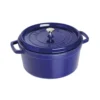
A proper french fish stew like this needs a pot that holds steady, gentle heat throughout the cooking process. Cast iron is ideal. I make this Blanquette de Poisson in the Staub cocotte 28cm, which is the right size for four generous portions and maintains an even, consistent temperature that is exactly what this dish needs. The enamelled interior means no metallic taste in the delicate white sauce, and it goes from hob to table without looking out of place. For a dish this elegant, that matters.
As pescatarians, this is our version
We don’t eat meat at home, which means Blanquette de Veau was never on our table. When we discovered this fish blanquette version, it immediately became a regular. The gentle poaching preserves the texture of the fish in a way that few other cooking methods manage. The white sauce is silky, rich, and deeply comforting. And the liaison, that final addition of egg yolks and cream that transforms good sauce into something extraordinary, works just as beautifully here as it does in the original.
This is proper French comfort food. It takes a little patience and attention, but nothing about it is difficult. And the result is a french fish stew that tastes like it took far more effort than it did.
Share your feedback and spread the love!
If you try this recipe, I’d love to hear how it turns out! Leave a ★★★★★ rating and your thoughts in the comments, it helps fellow French foodies discover this recipe too. Snap a photo and tag me @obviously.french on Instagram if you’re sharing your bake or cooking online. Don’t forget to save this recipe to Pinterest so you’ll always have it handy for your next French-inspired meal!
Disclosure: Just so you know, this post contains sponsored content and/or affiliate links, If you make a purchase through these links, I may receive a small commission. Doesn’t cost you anything extra. I only link to things that are actually worth your time. All opinions are my own!