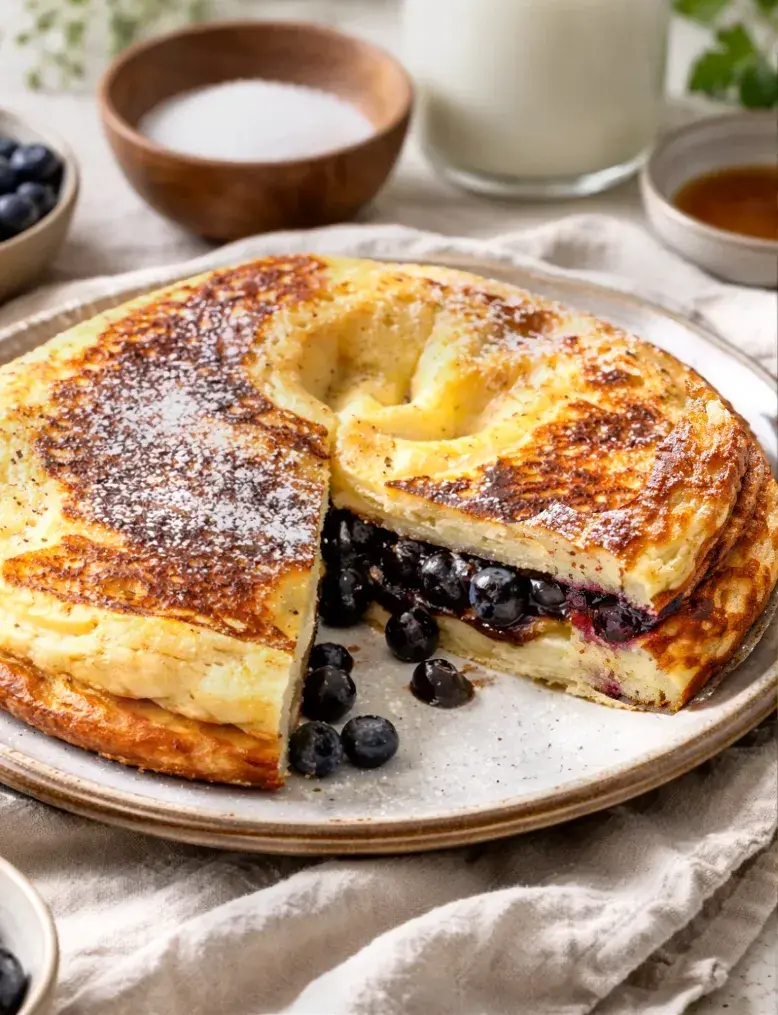
Blueberry Pachade (Rustic Pancake)
 Prep Time 10 minutes
  Cook Time 20 minutes
  Servings 4
Ingredients
For the batter
- 4 eggs
- 200 gr plain flour
- 100 gr caster sugar
- 1 l whole milk
- 1 pinch salt
- butter
For the blueberry filling
- 250 gr blueberries
- 50 gr icing sugar
To serve
Equipment
Instructions
1. Make the batter
- In a large mixing bowl, crack in the eggs and add the sugar and salt. Whisk together until slightly foamy. Add the flour and whisk until smooth and completely lump-free, take your time with this step. Gradually whisk in the milk, a little at a time, until you have a smooth, pourable batter that's noticeably thicker than crêpe batter but still flows easily. If time allows, cover and rest at room temperature for 30 minutes, the batter relaxes and the pachades will be more even.
2. Prepare the blueberries
- Tip the blueberries into a small bowl, add the sugar, and stir gently. Leave to macerate while you cook the pachades, the sugar will draw out the juice and soften the fruit slightly without turning it to mush.
3. Cook the first pachade
- Heat a 24–26cm frying pan over medium-high heat. Add a knob of butter and let it get hot. Give the batter a quick stir, then pour in half of it. It should spread to fill the pan in a thick layer. Reduce the heat slightly to medium and cook for 3-4 minutes until the underside is well browned and the edges are set. The surface will still look slightly wet, this is fine. Using a large spatula, or by inverting onto a plate and sliding back into the pan, flip the pachade and cook for a further 2-3 minutes until golden on the second side. Slide onto a warm plate and keep warm.
4. Cook the second pachade
- Add a little more butter to the pan and repeat with the remaining batter. Same process, same timings.
5. Assemble and serve
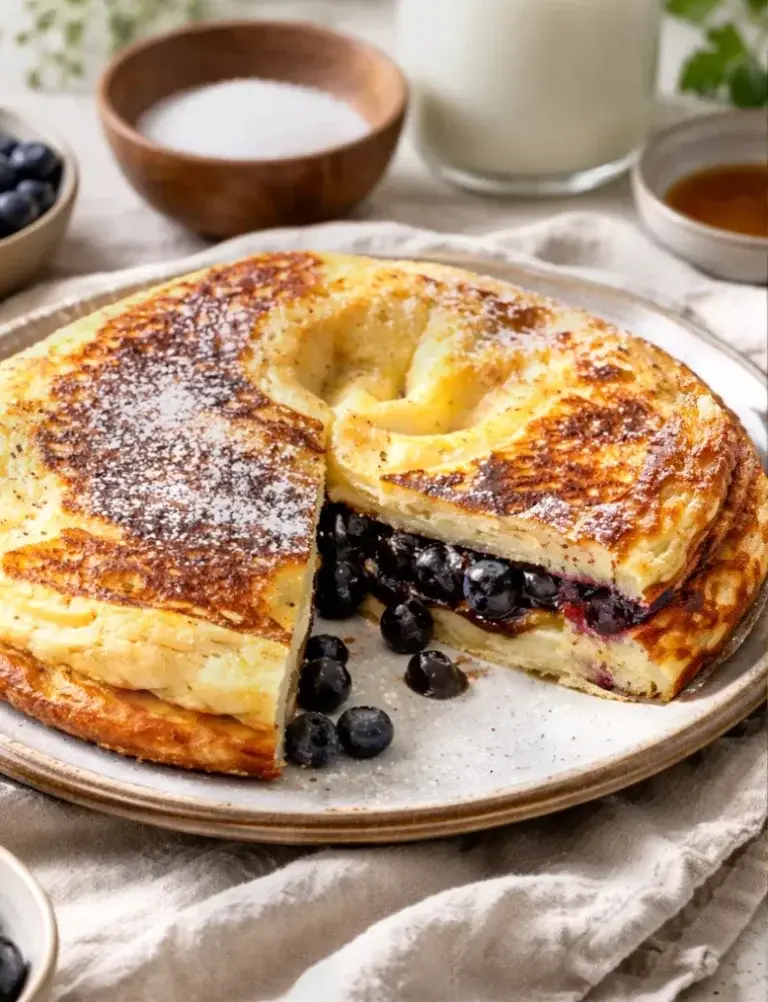
- Place the first pachade on a serving plate or board. Spoon the sugared blueberries evenly over the surface. Place the second pachade directly on top, pressing very gently. Dust generously with icing sugar and bring straight to the table. Cut into wedges like a tart and serve warm.
Notes
- Whole milk gives the best result here, the fat content matters for the texture and richness of the batter. Semi-skimmed works but the pachades will be slightly less tender.
- The batter rest is optional but worth it if you have time. It makes the batter smoother and gives a more even cook.
- Fresh blueberries are strongly preferable. Frozen can work but release considerably more liquid, which can make the filling watery, if using frozen, don’t defrost first and reduce the sugar slightly.
- The flip is the only technically demanding moment. A large flat spatula works well, or slide the pachade onto a large plate, hold the pan inverted over the plate, then flip the whole thing over in one confident motion. Hesitation is your enemy here.
- Myrtilles are the small, intensely flavoured wild blueberries from the Auvergne mountains and are the authentic choice if you can find them. They’re smaller and more tart than cultivated blueberries, and the flavour is noticeably more complex. Some specialist food shops and French delis stock them seasonally.
About this recipe
The blueberry pachade is one of those French regional dishes that exists in plain sight and never makes it onto the international food radar. It comes from the Auvergne, the rugged, volcanic region in the heart of France, where it has been eaten since at least the Middle Ages. The name almost certainly derives from the Occitan pachada, meaning something flattened or spread, which describes the cooking method precisely. It is, at its simplest, a very thick french pancake, rustic and filling and entirely unpretentious.
Where this dish comes from
Historically this fat pancake was everyday food, made from whatever was in the farmhouse kitchen: eggs, flour, milk, a little salt. Nothing that needed to be bought. The savoury version, loaded with Cantal cheese and local ham, would have been carried out to the fields at harvest time, wrapped in a cloth, eaten in the shade of a tree. The sweet pancake recipe sweet version followed the same logic: fruit from the garden or the hillside, sugar if you had it, the same batter otherwise unchanged.
This thick french pancake belongs to the same family of rustic batter dishes found across rural France. It is the crêpe’s less elegant but arguably more satisfying cousin. Not refined, not supposed to be. It is the kind of food that has survived for centuries not because anyone wrote it down but because it is genuinely good.
The Auvergne and its blueberries
The Auvergne is blueberry country. The Massif Central’s mountain slopes, particularly the Forez hills and the Puy-de-Dôme, are covered in wild blueberry plants. The myrtilles harvested there from July through August are smaller, darker, and considerably more intense in flavour than the cultivated varieties sold in supermarkets. They have been gathered by local families for centuries: eaten fresh, made into jams, stirred into batters, and used to fill this particular pancake dessert.
The combination works because blueberries and a thick, slightly chewy batter are natural partners. The fruit holds its shape under gentle heat but releases its juice into the surrounding batter as it warms, creating pockets of sweet, dark fruit against the golden pancake. A dusting of icing sugar over the top at the end turns something rustic into something that looks considerably more composed than it is.
Why this recipe matters
Outside the Auvergne, this dish remains almost entirely unknown. It will not appear on any Paris restaurant menu and is not mentioned in most French cookery books. It is precisely the kind of recipe that grandmothers in the Cantal know how to make and nobody else does. No restaurant has claimed it as a signature. No food writer has made it fashionable. It survives because the people who grew up eating it kept making it.
The french pancake traditions most people know, the crêpe, the galette bretonnes, the clafoutis, are all thoroughly documented. This fat pancake recipe represents the other side of French cooking: the regional, the unwritten, and the dishes that persist because they are good rather than because they are fashionable. That is worth something, and it is exactly why a recipe like this belongs on a French food blog.
Savoury or sweet
Most people outside the region will encounter the sweet version first, filled with blueberries or other seasonal fruit. But the savoury version is equally worth making. Cantal cheese and local ham, folded into the same thick batter and cooked in the same way, produces something closer to a substantial lunch than a dessert. The technique is identical. The result is completely different. Once you have the batter right, you can take it in either direction depending on what is in the kitchen.
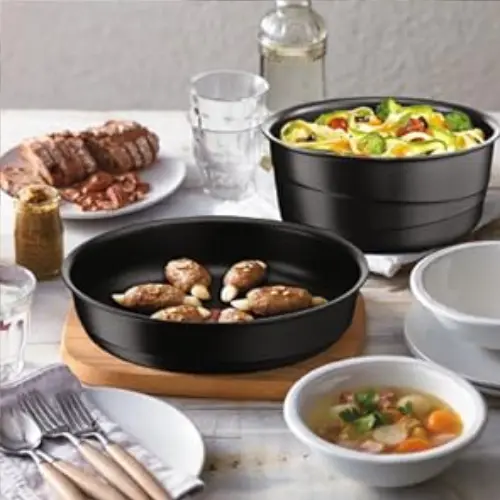
The right pan for this pancake recipe sweet
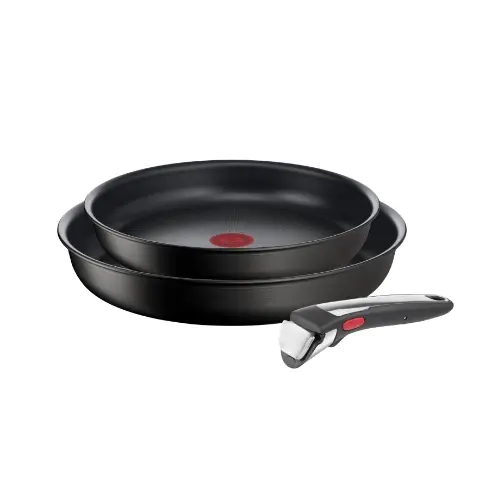
A pachade needs a wide, flat pan that heats evenly and allows a thick batter to cook through without burning the base before the centre has set. The edges need to crisp slightly while the interior stays soft and yielding. That balance requires steady, consistent heat across the entire base.
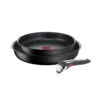
I use the Tefal frying pan for this french pancake. The non-stick surface means the thick batter releases cleanly without tearing, which matters for a pancake dessert you are going to flip and serve whole. The even heat distribution gives you a uniformly golden base rather than patches of dark and pale. For a fat pancake this simple, the pan is the most important piece of equipment on the list.
Share your feedback and spread the love!
If you try this recipe, I’d love to hear how it turns out! Leave a ★★★★★ rating and your thoughts in the comments, it helps fellow French foodies discover this recipe too. Snap a photo and tag me @obviously.french on Instagram if you’re sharing your bake or cooking online. Don’t forget to save this recipe to Pinterest so you’ll always have it handy for your next French-inspired meal!
Disclosure: Just so you know, this post contains sponsored content and/or affiliate links, If you make a purchase through these links, I may receive a small commission. Doesn’t cost you anything extra. I only link to things that are actually worth your time. All opinions are my own!