Invisible Apple Cake
 Prep Time 25 minutes
  Cook Time 1 hour
  Total Time 1 hour 25 minutes
  Servings 6
Ingredients
- 1.5 kg eating apples Braeburn,Cox, or Granny Smith work brilliantly
- ½ lemon juice of it
- 4 egg
- 150 gr caster sugar
- 130 gr plain flour
- 250 ml whole milk
- 60 gr unsalted butter
- 1 tsp vanilla extract
- 1 pinch salt
- unsalted butter for greasing the tin
Equipment
Instructions
1. Prep your apples
- Heat the oven to 180°C (160°Cfan). Peel, core, and slice the apples into the thinnest slices you can manage, aim for 2-3mm. A sharp knife and a bit of patience will get you there.Toss the slices in lemon juice as you go to stop them browning.
2. Make the batter
- Whisk the eggs and sugar together until pale and thick, about 3 minutes with an electric whisk. Sift in the flour and salt, then whisk until smooth. Gradually add the milk, then the melted butter and vanilla. The batter should be completely smooth and about the consistency of double cream.
3. Combine everything
- This is where it gets interesting. Add all the apple slices to the batter and fold them in gently but thoroughly. Every single slice needs to be coated. It'll look like far too many apples for the amount of batter. That's exactly right.
4. Into the tin
- Butter a loaf pan generously. Pour in the apple-batter mixture and level the top as best you can.The tin will look properly full, that's normal.
5. Bake until golden
- Into the oven for 50-60minutes, until the top is golden brown and a skewer inserted into the centre comes out clean. Don't open the oven door for the first 45 minutes, it needs that uninterrupted time to set.
6. Cool and serve
- Let it cool in the tin for 10 minutes before turning out. Serve warm or at room temperature. It keeps perfectly for 2-3 days covered, though it never lasts that long in our house!
Notes
- Apple choice matters
Eating apples work better than cooking apples here, they hold their shape and don’t release too much liquid. Braeburns are particularly good, but Cox or Granny Smith work brilliantly too. - The vanishing trick
Don’t panic when you see how little batter there is compared to apples. The trick happens in the oven as the batter finds its way between every slice, creating the invisible binding that gives this cake its name. - Serving suggestions
Brilliant on its own, lovely with a dollop of crème fraîche, and absolutely perfect with a cup of proper coffee. Some people add a dusting of icing sugar, but honestly, it doesn’t need the extra sweetness. - Storage
Keeps covered at room temperature for 2-3 days. You can refrigerate it, but let it come back to room temperature before serving, the texture is much better. - Why it works
The high ratio of fruit to batter means each slice is essentially pure apple held together by just enough cake to bind it. It’s not quite a tart, not quite a cake, but something altogether more interesting.
About this recipe
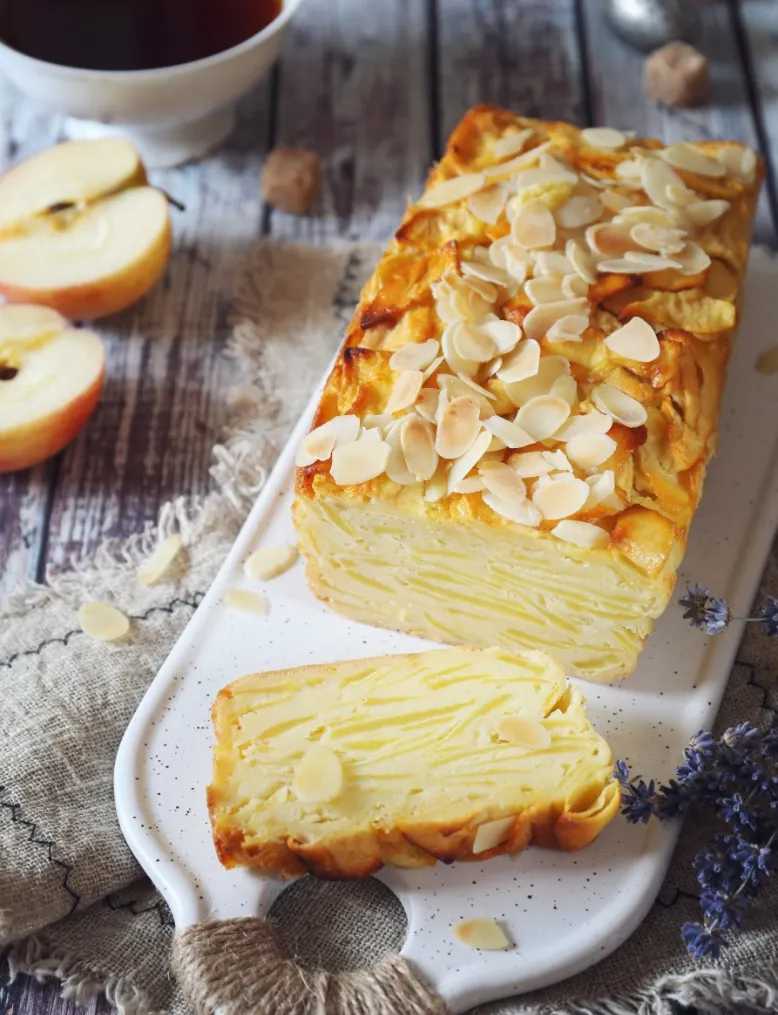
The invisible apple cake is one of those French recipes that sounds like it shouldn’t work. A mountain of paper-thin apple slices, a small amount of batter, and somehow it emerges from the oven as a perfectly sliceable cake. No heavy pastry. No thick sponge hiding the fruit. Just apples, barely held together, doing exactly what the name promises.
Why it’s called invisible
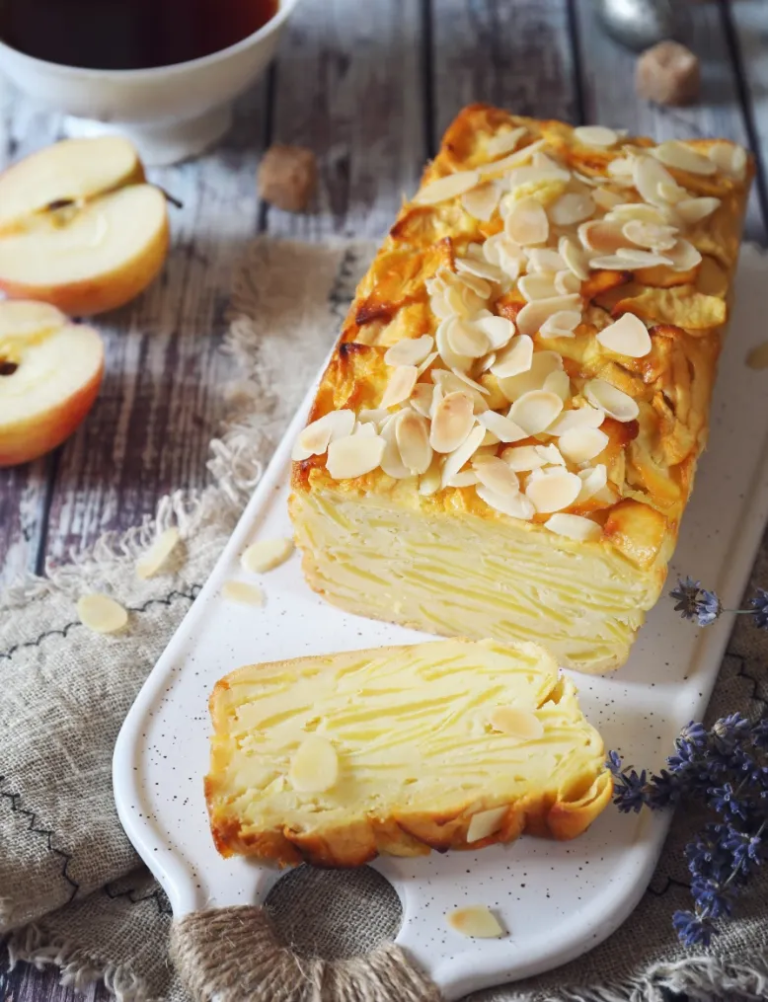
The invisible apple cake gets its name from what happens to the batter during baking. You add what appears to be nowhere near enough of it, layer it between the apple slices, and then watch it vanish completely in the oven. When you slice the finished cake, you can barely see it. What you see instead is a tightly packed mass of soft, caramelised apple slices that somehow hold together as cleanly as a terrine. The batter is there. It’s just invisible.
This reflects something genuinely French about home baking: the trust that a process will work even when it looks wrong halfway through. Only French home cooks would look at that ratio of apples to batter and proceed with complete confidence.
Where this recipe comes from
The invisible apple cake appeared in French kitchens sometime in the 1990s, though pinning down exactly who invented it is impossible. Everyone claims credit.
What we do know is that it emerged during France’s obsession with lighter desserts. The 1990s were peak health-consciousness in French cooking. Chefs were racing to prove they could create something remarkable with less butter, fewer eggs, and more fruit. This french apple cake was the home baker’s answer to all those complicated restaurant techniques. No special equipment, no difficult methods, just a lot of apples and a batter thin enough to disappear.
The cake became a sensation because it solved a particular French problem: how to showcase perfect autumn apples without hiding them under heavy pastry or drowning them in cream. It’s seasonal cooking at its most honest.
The apple question
The french invisible apple cake works best with apples that hold their shape during baking rather than collapsing into mush. Golden Delicious is the traditional French choice, partly because they’re widely available and partly because their firm flesh and mild sweetness work perfectly here. Cox, Braeburn, or Fuji all work well too.
The slicing is the most important part of the preparation. The thinner the slices, the more tightly they pack together, and the better the final cake holds when you cut it. A mandoline gives you the most consistent results. If you’re using a knife, take your time. Uneven slices mean uneven baking and a cake that falls apart when sliced.
Regional variations
Regional versions exist across France, as they do with almost every classic recipe. In Normandy, a splash of Calvados goes into the batter, which makes complete sense given that Normandy produces both the best apples and the best apple brandy in France. In the Loire Valley, some versions include a hint of Coteaux du Layon, the region’s sweet white wine. Parisians insist their version is the most refined, though it is essentially identical to everyone else’s.
The right loaf pan for this french apple cake
This invisible apple cake needs a tin that distributes heat evenly, holds the apples firmly during baking, and releases cleanly afterwards. I use the Pyrex cake mould for this recipe. The borosilicate glass conducts heat gently and evenly, which is exactly what these thin apple slices need. Too much direct heat and the edges overcook before the centre sets. The glass also lets you check the browning on the base and sides without opening the oven, which is genuinely useful for a cake this delicate. And it releases cleanly once cooled, which matters because the apple cake needs to come out in one piece.
Serving it
Serve the invisible apple cake at room temperature rather than warm. The structure sets properly as it cools, and trying to slice it whilst still hot means it will fall apart. A light dusting of icing sugar is all it needs. Crème fraîche alongside if you want something richer.
It keeps well for two days, covered, at room temperature. The texture actually improves slightly on the second day as the layers compress further. That’s a rare quality in a cake and worth knowing.
Share your feedback and spread the love!
If you try this recipe, I’d love to hear how it turns out! Leave a ★★★★★ rating and your thoughts in the comments, it helps fellow French foodies discover this recipe too. Snap a photo and tag me @obviously.french on Instagram if you’re sharing your bake or cooking online. Don’t forget to save this recipe to Pinterest so you’ll always have it handy for your next French-inspired meal!
Disclosure: Just so you know, this post contains sponsored content and/or affiliate links, If you make a purchase through these links, I may receive a small commission. Doesn’t cost you anything extra. I only link to things that are actually worth your time. All opinions are my own!