Salad Niçoise
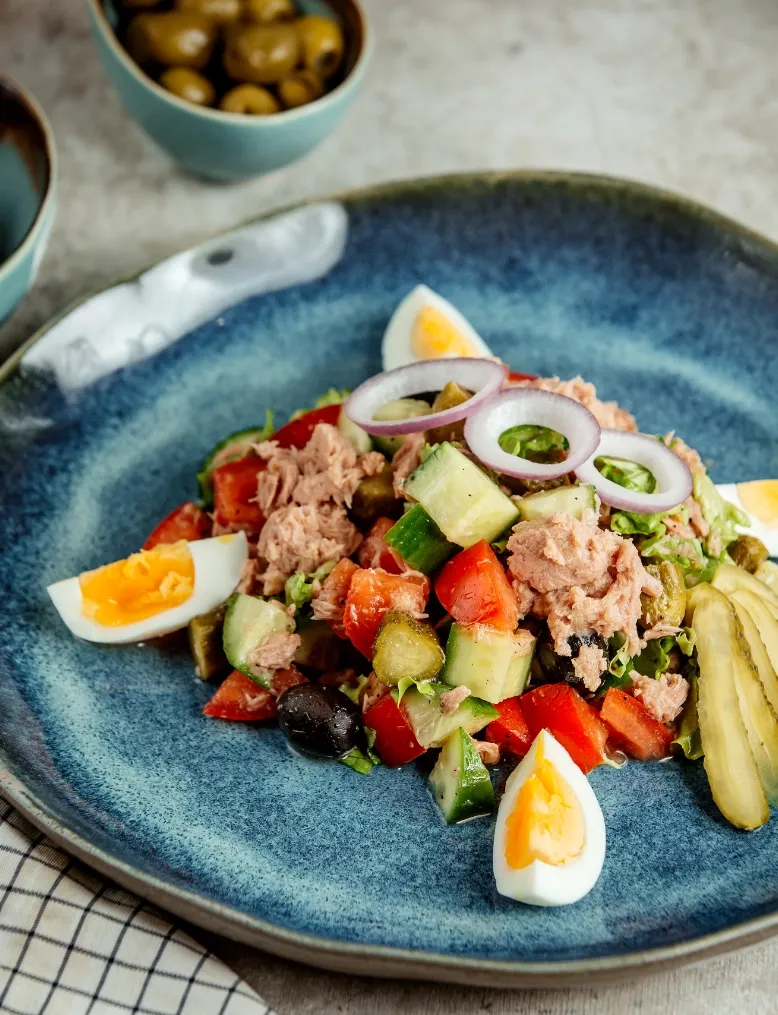
 Prep Time 20 minutes
  Cook Time 10 minutes
  Total Time 30 minutes
  Servings 4
Ingredients
- 1 lettuce butterhead (Bibb, Boston)
- 2 egg
- 200 gr fava beans shelled and blanched (or substitute with extra radish if unfindable)
- 3 tomatoes
- ½ bell pepper green
- ½ cucumber
- 6 radishes pink
- ½ red onion
- 80 gr tuna in olive oil (drained and flaked)
- 8 anchovy fillets in olive oil
- 50 gr black olives Niçoise or Kalamata
- 4 artichoke hearts in oil or brine, not vinegar
- 1 handful basil
- 1 clove garlic
Equipment
Instructions
1. Prepare the eggs and beans
- Bring a pan to the boil, then gently add the eggs. Boil for 10 minutes for hard yolks. Remove, cool under cold water, and peel. For fava beans, boil pods for 1–2 minutes, then stop the cooking in a bowl of ice water. Slip off the outer skins if the beans are large for the best texture.The eggs get that perfectly creamy hard yolk, essential for the right Niçoise mouthful. Blanching the beans quickly keeps them bright and just softened.
2. Chop and arrange the fresh ingredients
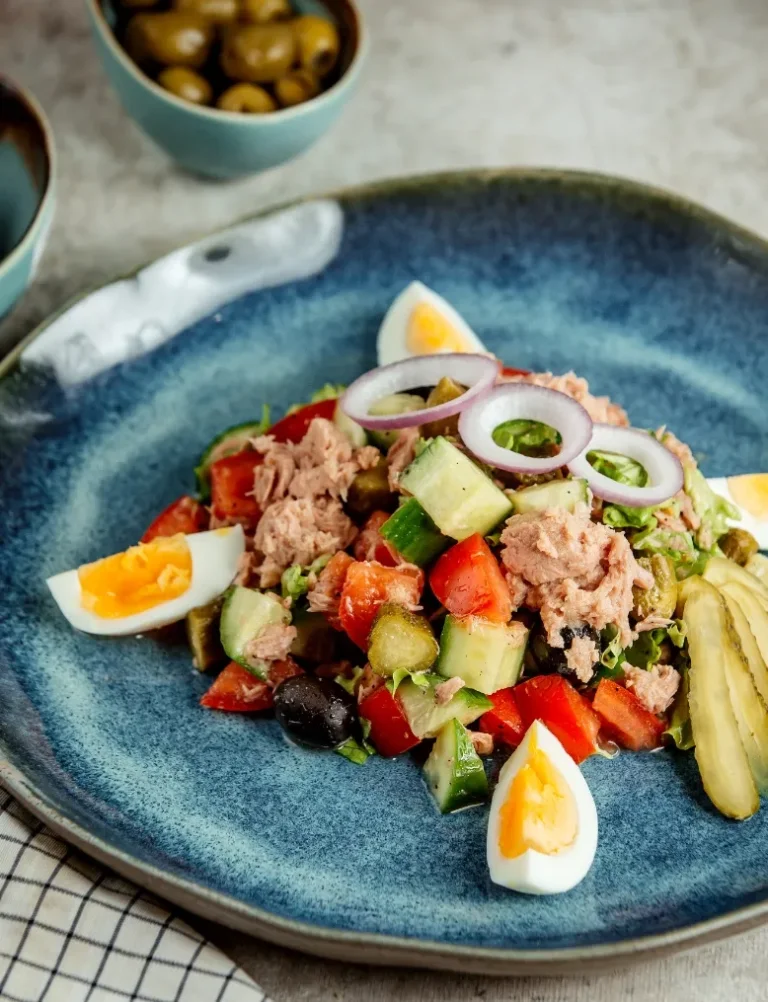
- Rub the cut clove of garlic across your platter or plates for a soft hit of garlic. Tear the lettuce and arrange as a base, followed by the tomatoes, bell pepper, cucumber, radishes, and onion. Scatter the fava beans over the top.
3. Layer on the classics
- Distribute the olives, quartered artichoke hearts, anchovy fillets, and flakes of tuna evenly. Slice eggs into quarters and place on top. Tuck basil leaves here and there.
4. Mix the vinaigrette
- Whisk together the olive oil, red wine vinegar, Dijon mustard, garlic, salt, and pepper. Add a squeeze of lemon, herbs, or a chopped anchovy if desired. Blend until smooth and lively.
5. Drizzle and serve
- Drizzle the vinaigrette evenly over the platter right before serving. Toss very gently, or just let everyone scoop up a mix as they like.
Notes
- Salade Niçoise is all about presentation: arranging each ingredient separately gives it that composed, market-fresh feel.
- Don’t skimp on the anchovies or olives, they’re the soul of this salad, bringing salt and richness.
- This vinaigrette gives your Niçoise real Riviera punch, simple, zesty, and packed with flavour.
About this recipe
Salade Niçoise is one of those dishes that people argue about with genuine passion. Ask ten people from Nice what goes into a proper salad nicoise and you’ll get ten different answers, several of them delivered with considerable conviction. Potatoes or no potatoes. Cooked beans or raw. Anchovies or tuna. The debates are real and they matter to the people having them. Here’s what I know: done properly, with good ingredients and the right balance, it’s one of the great salads of French cooking.
Where salade niçoise comes from
Salade niçoise means, simply, salad from Nice. It dates back to at least the late 19th century, though its roots are likely older. Along the French Riviera, fishermen and farmers needed meals that were quick, nourishing, and made from what was immediately available. Fresh tomatoes, hard-boiled eggs, olives, anchovies, olive oil. These were the staples of the coastal kitchen, and the combination that became salade niçoise was a practical way to put them together.
Nice has been a crossroads city for centuries, influenced by Italian cooking from across the border and by the particular Mediterranean abundance of its markets. The salad reflects that geography. Olive oil rather than vinaigrette. Raw vegetables where possible. Fish rather than meat at the centre of the plate.
The salad nicoise ingredients question
This is where the arguments start. The traditional Nice version uses no cooked vegetables at all. Raw tomatoes, raw broad beans in season, raw radishes, hard-boiled eggs, anchovies, black Niçoise olives, and good olive oil. That’s it. No tuna, no potatoes, no cooked green beans. That version is authentic and genuinely good.
The version most people know outside Nice includes niçoise salad tuna, cooked green beans, and sometimes potatoes. This is the bistro adaptation, the one that spread across France and then across the world. It’s different from the original but has become a classic in its own right. This recipe uses tuna because that’s the version most people are looking for, and because a good niçoise salad tuna, well-made with quality ingredients, is a brilliant thing.
The salad nicoise ingredients that matter most are the ones you can’t substitute: ripe tomatoes, good olives, eggs cooked to the right point, and olive oil worth tasting. Everything else is negotiable.
Pan bagnat: the salad nicoise sandwich
One useful piece of knowledge alongside this recipe: pan bagnat is essentially this salad in bread form. “Bathed bread” in the local dialect, a round roll soaked with olive oil and packed with all the same salad nicoise ingredients, pressed until the bread absorbs the juices. It’s sold at every market in Nice and eaten on the beach, at picnics, and as a packed lunch across the region. If you love this salad, the sandwich is worth making.
The right knife for this salad
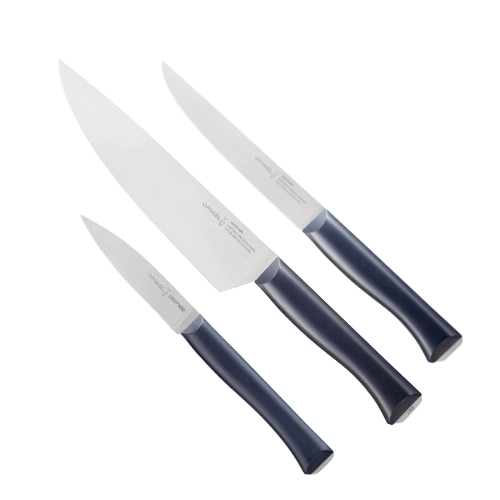
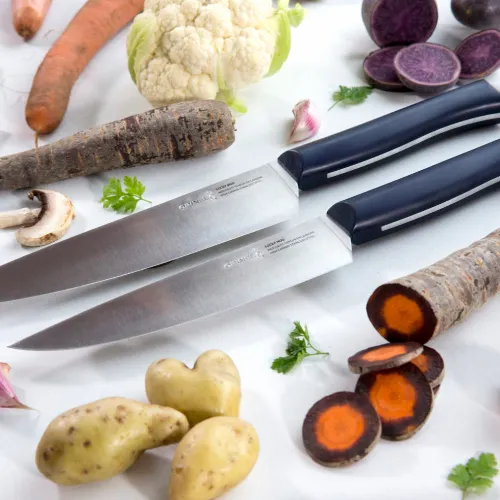
A salad with this many components needs a knife that handles different tasks cleanly. Slicing tomatoes without compressing them. Cutting eggs cleanly without crumbling the white. Halving olives. Trimming green beans. A sharp, versatile kitchen knife handles all of it properly.
I use the Opinel Intempora knife set for this kind of prep work. Opinel knives are made in the Savoie region of France and have been part of French kitchen culture for generations. The Intempora set covers every task this salad requires, from the precision of slicing tomatoes cleanly to the control needed for trimming beans and halving olives. For a salad where the preparation is the main work, having the right knives makes the whole process faster and more enjoyable.
How to eat it
In Nice, salade niçoise is eaten year-round, but it makes most sense in summer when the tomatoes are at their best and the idea of a composed salad with a glass of chilled rosé is genuinely appealing rather than aspirational. Serve it at room temperature, not cold from the fridge. The flavours in the olive oil and the tomatoes come through properly at room temperature in a way they never do straight from the cold.
This is the salad nicoise salad that makes sense once you understand where it comes from and why each ingredient is there. Make it with good tomatoes and it will be one of the best things you eat this summer.
test
Salade Niçoise (literately meaning salad from Nice) has a history that’s as colourful as the ingredients that go into it. It dates back at least to the late 19th century, but like many traditional dishes.
test
Salade Niçoise (literately meaning salad from Nice) has a history that’s as colourful as the ingredients that go into it. It dates back at least to the late 19th century, but like many traditional dishes.
Share your feedback and spread the love!
If you try this recipe, I’d love to hear how it turns out! Leave a ★★★★★ rating and your thoughts in the comments, it helps fellow French foodies discover this recipe too. Snap a photo and tag me @obviously.french on Instagram if you’re sharing your bake or cooking online. Don’t forget to save this recipe to Pinterest so you’ll always have it handy for your next French-inspired meal!
Disclosure: Just so you know, this post contains sponsored content and/or affiliate links, If you make a purchase through these links, I may receive a small commission. Doesn’t cost you anything extra. I only link to things that are actually worth your time. All opinions are my own!