Strawberry Tart
 Prep Time 40 minutes
  Cook Time 30 minutes
  Total Time 5 hours 10 minutes
  Servings 8
Ingredients
For the Pâte Sablée
- 250 gr plain flour
- 125 gr unsalted butter cold and cubed
- 100 gr icing sugar
- 2 egg
- 1 tsp vanilla extract or seeds from 1/2 vanilla pod
- pinch salt
For the Crème Diplomate
- 500 ml whole milk
- 1 vanilla pod or 2 tsp vanilla extract
- 6 egg yolks
- 125 gr caster sugar
- 40 gr cornflour
- 1 tsp agar agar powder
- 300 ml Double cream well chilled
For the Topping
- 600 gr fresh strawberries small to medium, perfectly ripe
Equipment
Instructions
1. Make the pâte sablée
- Pulse the flour, icing sugar, and salt in a food processor. Add the cold butter cubes and pulse until the mixture looks like breadcrumbs, about 10-15 short pulses. Add the egg, egg yolk, and vanilla, then pulse just until the dough starts to clump together. Don't overwork it.Turn the dough out onto your work surface and bring it together gently with your hands. Shape it into a disc about 2cm thick, wrap in cling film, and refrigerate for at least 1 hour. This rest is crucial, it prevents shrinking and gives you a properly sandy, crumbly texture.
2. Blind bake the tart shell
- Roll out the chilled pastry between two sheets of baking paper until it's about 3mm thick and roughly 30cm in diameter. Remove the top sheet, then flip the pastry into your fluted flan dish. Press it gently into the corners and trim the excess. Prick the base all over with a fork.Chill the tart shell for another 30 minutes. This second chill prevents shrinking.Meanwhile, heat your oven to 180°C (160°C fan/350°F). Line the fluted flan dish with baking paper and fill with baking beans. Bake for 20 minutes, then remove the paper and beans. Brush the base lightly with a beaten egg if you want an extra-crisp seal (optional), then return to the oven for another 10-12 minutes until golden and completely dry. Let it cool completely in the fluted flan dish.
3. Make the crème pâtissière
- To make a crème diplomate, you first need to make a crème pâtissière. Pour the milk into a medium saucepan, add the vanilla pod and seeds (or extract), and bring to just below boiling point. Meanwhile, whisk the egg yolks and sugar in a bowl until pale and thick, about 2 minutes of vigorous whisking. Add the cornflour and whisk until smooth.Remove the vanilla pod from the milk. Pour about a third of the hot milk onto the egg mixture, whisking constantly. Pour this back into the saucepan with the remaining milk and return to medium heat.Whisk constantly while the mixture thickens, this takes about 2-3 minutes. It'll go from liquid to thick custard quite suddenly. Keep whisking for another minute after it's thickened to cook out the cornflour.Sprinkle the agar agar powder over the hot custard and whisk vigorously for 1-2 minutes to ensure it's completely dissolved and incorporated. The agar agar will help stabilize the cream when you add the whipped cream later.Transfer to a clean bowl, press cling film directly onto the surface to prevent a skin, and let it cool to room temperature, about 1-2 hours. Do not refrigerate yet.
4. Make the crème diplomate
- Once the crème pâtissière is at room temperature, whisk it gently with a hand whisk to loosen it and make it smooth again.In a separate large bowl, whip the cold double cream to soft peaks, it should hold its shape but still be quite soft and billowy, not stiff.Gently fold the whipped cream into the crème pâtissière in three additions, using a rubber spatula and a light hand. The mixture should be light, airy, and mousse-like. This is crème diplomate, lighter than crème pâtissière, more stable than plain whipped cream, and the traditional filling for French fruit tarts.Refrigerate for at least 1 hour to let the agar agar set the cream properly before assembling the tart.
5. Assemble the tart
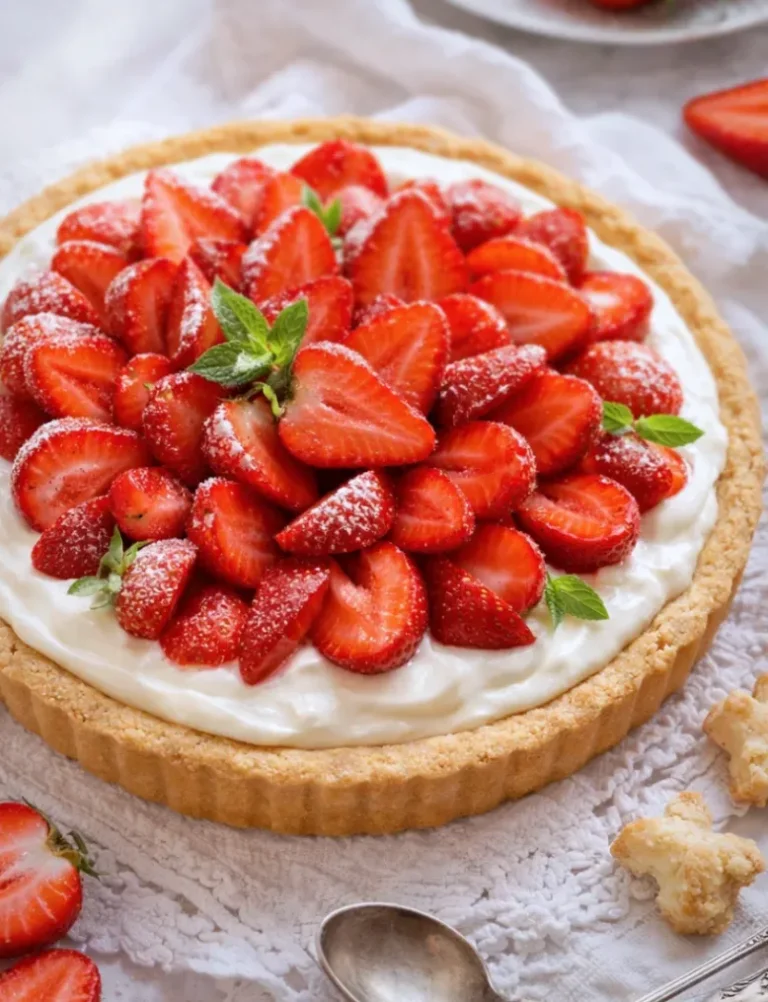
- Spread the chilled crème diplomate into the cooled tart shell, smoothing it level with a palette knife or the back of a spoon. You want it about 1.5cm deep, enough to support the strawberries without overwhelming them.Hull the strawberries and cut larger ones in half lengthways. Arrange them over the cream. Pack them relatively tightly, you want a full carpet of berries, not sparse coverage.Refrigerate for at least 30 minutes before serving to let everything set. Eat within 4-6 hours for the best texture, after that, the berries start releasing juice and the pastry softens.
Notes
- Pâte sablée means sandy dough, and that’s exactly what you’re after, a crumbly, short-textured pastry, not elastic or chewy. Cold butter and minimal handling are key. If you don’t have a food processor, rub the butter into the flour quickly with your fingertips, then add the wet ingredients.
- Crème diplomate is crème pâtissière lightened with whipped cream and stabilized with agar agar (or traditionally, gelatin). It’s lighter than straight pastry cream but more stable than plain whipped cream. The agar agar is essential, it prevents the cream from becoming soupy when you fold in the whipped cream and helps it hold its shape in the tart.
- Agar agar is a plant-based gelling agent derived from seaweed, making this recipe vegetarian-friendly. It sets at room temperature and creates a softer, more delicate set than gelatin. Make sure to whisk it into the hot custard vigorously so it dissolves completely, any lumps will create an unpleasant texture.
- You can make the pastry shell a day ahead and store it in an airtight container. The crème pâtissière can be made up to the point of adding whipped cream and stored in the fridge for 1 day. Fold in the whipped cream and assemble the tart on the day you’re serving it. Once assembled, eat within 4-6 hours.
- Strawberry selection: Small to medium berries work best, the giant ones look impressive but taste of water. French gariguette or mara des bois varieties are ideal if you can find them.
- Timing matters with this tart. Make it during peak strawberry season, May through July in most places, when berries are naturally sweet and fragrant. Avoid winter strawberries that taste like cardboard. The French wait all year for their gariguettes in May, and there’s a reason for that. If your strawberries don’t smell like anything, they won’t taste like anything either. Buy them from farmers’ markets when possible, and use them the day you buy them for the best flavor.
About this recipe
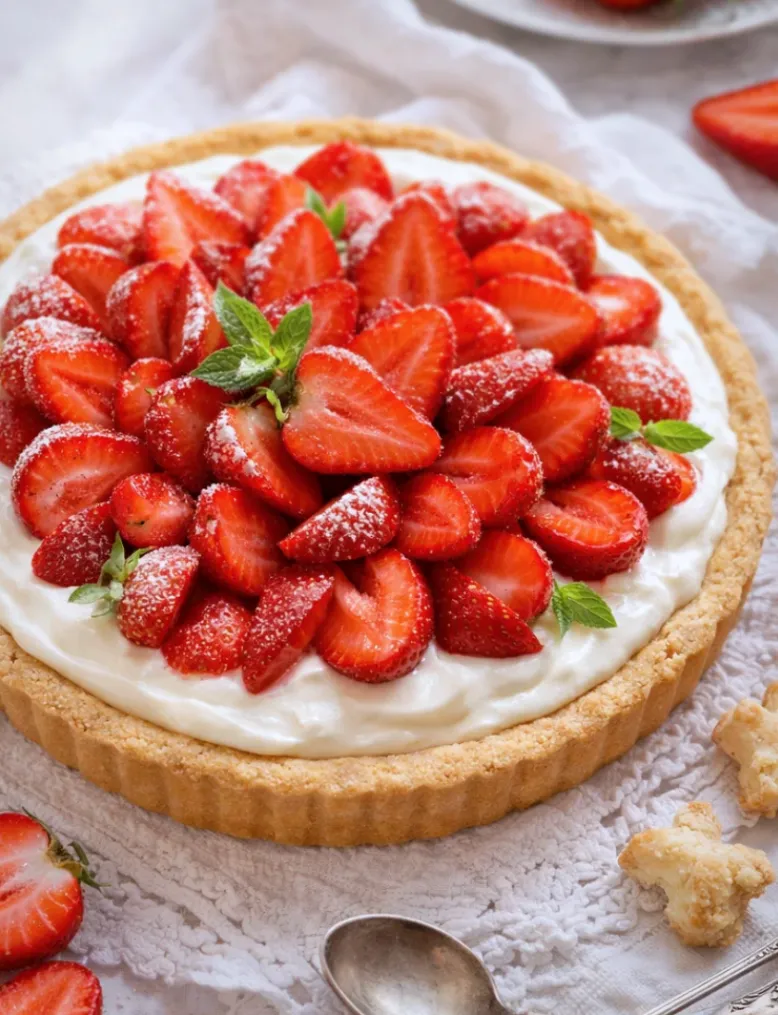
The first time I understood what a proper strawberry tart was supposed to be, I was standing outside a pâtisserie in Lyon watching someone carry one out in a flat white box, holding it level with both hands like it contained something sacred. Which, in a sense, it did. A french strawberry tart done properly is one of those things that stops you mid-pavement. The pastry a deep golden colour, the cream smooth and perfectly flat to the rim, the strawberries arranged with a precision that suggests either enormous patience or a very good eye. Not a single one out of place. A light glaze over the top to make everything shine.
It is French pâtisserie at its most straightforward and its most unforgiving. Three components, carefully made, nothing to hide behind. No sauce to cover imprecision, no decoration to distract from a poorly made cream. Everything is exactly what it is, which is why getting each element right matters so much.
What makes a french strawberry tart recipe different
The foundation is pâte sablée, and it is worth understanding French pastry doughs. The word sablée means sandy, and that describes the texture precisely. A high ratio of butter to flour, mixed until the dough resembles breadcrumbs before it comes together, produces a pastry that shatters cleanly when you cut it and dissolves on the tongue rather than chewing.
It is different from pâte sucrée, which uses whole eggs and produces a firmer, more cookie-like result, and completely different from pâte brisée, which is a savoury shortcrust with an entirely different purpose. The French are extremely particular about these distinctions, and the distinction matters here. Pâte sablée is the right pastry for a summer fruit tart because it is rich enough to stand up to the cream filling without becoming soggy, and light enough not to compete with the fruit.
The pastry dates back to medieval France. The word appears in French recipe books from the 1600s, describing exactly this texture, a buttery, crumbly pastry with a high fat content. Four centuries later it remains the standard base for every fruit tart in every pâtisserie window across France.
The cream
The classic french strawberry tart recipe uses crème diplomate, a lighter, more elegant version of crème pâtissière that became standard in French pastry through the early to mid 20th century. It is essentially crème pâtissière, the vanilla custard base of French pâtisserie, stabilised with gelatin and then folded through with whipped cream. The result is something richer than whipped cream alone and considerably lighter than straight pastry cream. It holds its shape perfectly, slices cleanly, and tastes like something between a cloud and a custard.
The name comes from its use in the classic Diplomat pudding, a moulded dessert from the 19th century. French pâtissiers adopted the technique for fruit tarts because it behaves impeccably, sitting in the shell without weeping or collapsing, even on a warm summer afternoon.
The right dish for a summer fruit tart
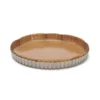
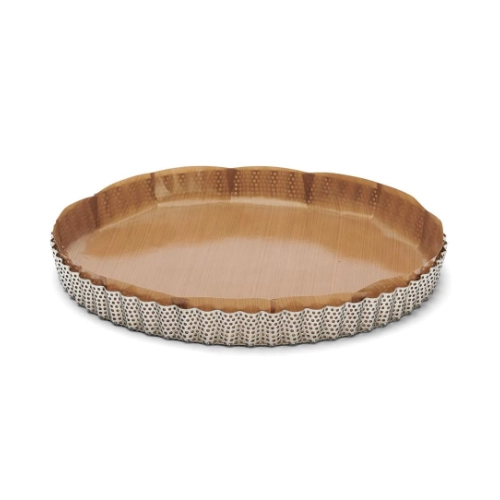
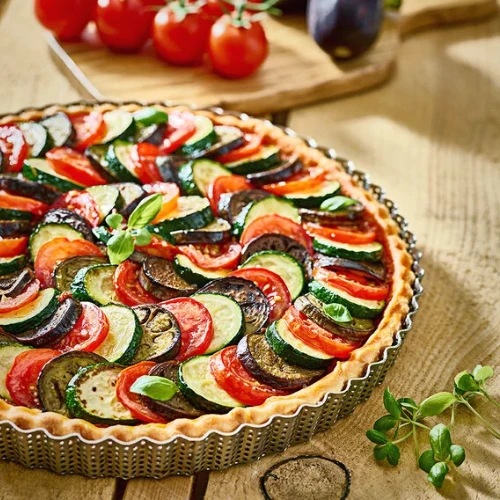
The tart tin matters more than most people realise, particularly for a summer fruit tart this precise. The fluted edge is not purely decorative. It increases the surface area of the pastry rim, which helps it bake more evenly and gives you that characteristic wavy border that makes a French tart look like a French tart rather than something assembled in a springform tin.
I use the De Buyer fluted dish for this. The carbon steel conducts heat directly and evenly, which is exactly what pâte sablée needs. Too much direct heat too quickly and the edges catch before the base is cooked through. The De Buyer distributes that heat across the whole base and up the sides uniformly, so the pastry bakes to an even golden colour throughout rather than darker at the edges and pale in the centre. It also releases cleanly once cooled, giving you a clean, professional finish on the pastry edge every time.
Strawberries, season, and variations
This french strawberry tart is a seasonal recipe, and it is worth making only when the strawberries are worth eating. In France, markets around Carpentras and the Vaucluse are famous for their early-season berries, arriving in May with an intensity of flavour that supermarket strawberries rarely match. When they are good, they need nothing more than a light glaze to make them shine. When they are not quite there, no amount of cream or pastry will compensate.
The same construction works throughout summer as a fruit tart with whatever is best at the market. Tarte aux framboises with raspberries, tarte aux myrtilles with blueberries, tarte aux figues in autumn when the figs arrive. The pâte sablée and crème diplomate stay constant. The fruit changes with what is brilliant right now, which is the most French approach to seasonal cooking there is.
When to make this
The French do not make a strawberry tart on a Tuesday. This is an occasion tart, the kind that comes out for summer birthdays, garden lunches, and Sunday afternoons when there is time to do things properly. It takes patience. The pastry needs to rest, the cream needs to set, the strawberries need to be arranged rather than scattered. None of it is difficult, but none of it can be rushed.
Do it right and it will stop people mid-conversation when you bring it to the table. Which is exactly what a proper french strawberry tart is supposed to do.
Share your feedback and spread the love!
If you try this recipe, I’d love to hear how it turns out! Leave a ★★★★★ rating and your thoughts in the comments, it helps fellow French foodies discover this recipe too. Snap a photo and tag me @obviously.french on Instagram if you’re sharing your bake or cooking online. Don’t forget to save this recipe to Pinterest so you’ll always have it handy for your next French-inspired meal!
Disclosure: Just so you know, this post contains sponsored content and/or affiliate links, If you make a purchase through these links, I may receive a small commission. Doesn’t cost you anything extra. I only link to things that are actually worth your time. All opinions are my own!