For years I bought ready-made pastry doughs, convinced that homemade dough required skills I did not have. Then one day I was in my neighbour’s kitchen while she was cooking, and she started making what looked like pastry. Just chatting away while her hands worked butter into flour, no recipe book in sight, barely even looking at what she was doing. “What’s that?” I asked. “Pâte brisée. For a quiche.” She said it like it was nothing. Five minutes of rubbing butter into flour while telling me about her week, a bit of water, done. “Nothing beats a homemade quiche with homemade dough,” she said. And she was right.
Later that day, she texted me the ingredients. Flour, butter, salt, water. That’s it? I could not believe something I had been buying for years was just four ingredients and five minutes of work.
That got me thinking: what else could I make at home? And which pastry dough should I use for what? A tart dough is not the same as a quiche dough. Sweet pastries use something else entirely. It turns out French baking uses four completely different pastry doughs, each built for a specific job. Once you know which does what and why, the whole thing clicks into place.
Butter melts at 32°C
Before we start, here is the one insight that makes all of this work: French pastry is basically a battle against butter melting. Your hands are warm. Your kitchen is probably warm. Butter melts at 32°C. The French solution? Keep everything cold. Chill your bowl. Chill your butter. Work fast, rest the dough often, and when in doubt, put it back in the fridge.
Pâte Brisée: the everyday shortcrust pastry dough
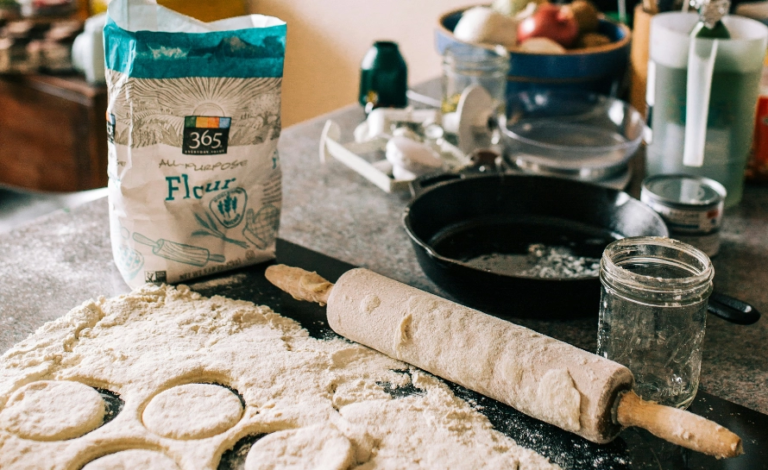
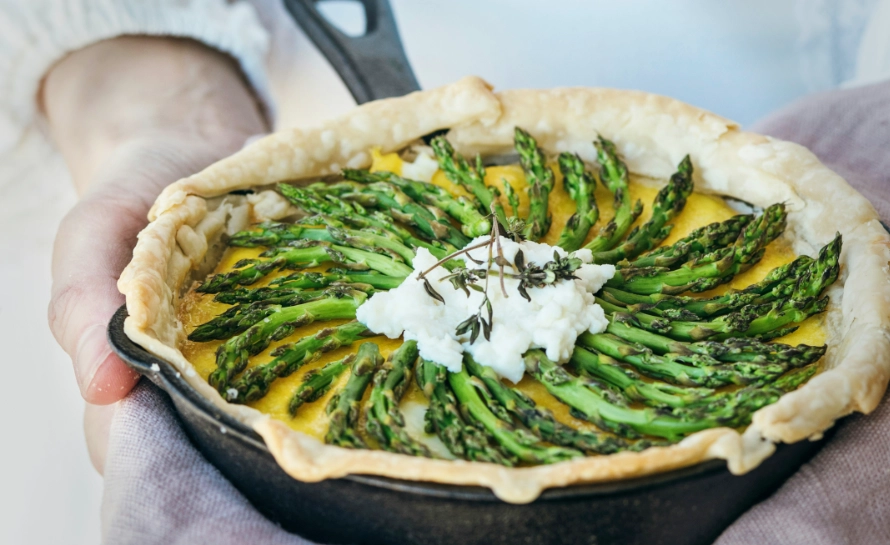
Pâte brisée is the simplest of the French pastry doughs. It is similar to a shortcrust pastry dough, but calling it that misses the point. This is the pastry French home cooks make without thinking. I learned this one from my neighbour. Sturdy enough to hold a proper quiche filling, tender enough that it does not taste like cardboard.
You rub or mix the butter into the flour until it looks like breadcrumbs, then bring it together with cold water. The key is temperature. Twenty minutes in the fridge between mixing and rolling is non-negotiable.
Ratio to remember
2 parts flour : 1 part butter : 1 part water (by weight)
Ingredients
– 200g plain flour
– 100g butter
– A pinch of salt
– 2 tbsp water
Sometimes egg yolk for richness
When is it used?
Quiche Lorraine
Mini quiches
Plum tarts
Pear & blue cheese tart
Thin asparagus tart
Cheese tart
Tomato Tart
Apple tarts
Meat pies
Goat’s cheese & honey tart
Mediterranean vegetable tart
The method
- Put your flour and salt in a bowl. Drop in cold butter cubes. Using just your fingertips (your palms are too warm), squash and rub the butter into the flour until it looks like coarse breadcrumbs with some larger pieces of butter still visible. Those larger pieces create the flaky bits.
- Make a well in the middle and pour in most of the cold water. Use a knife to cut and mix it together rather than your hands. It should start clumping. Add the remaining water if it is too dry.
- Tip it onto the counter and do what the French call fraisage: use the heel of your hand to smear the dough away from you, bit by bit, creating butter layers. Gather it back together, form a disc, wrap it, and refrigerate for at least an hour.
A food processor works too. Pulse butter and flour together, add water while pulsing, stop the moment it comes together. No shame in that at all.
Pâte Sablée: the crumbly sweet short crust
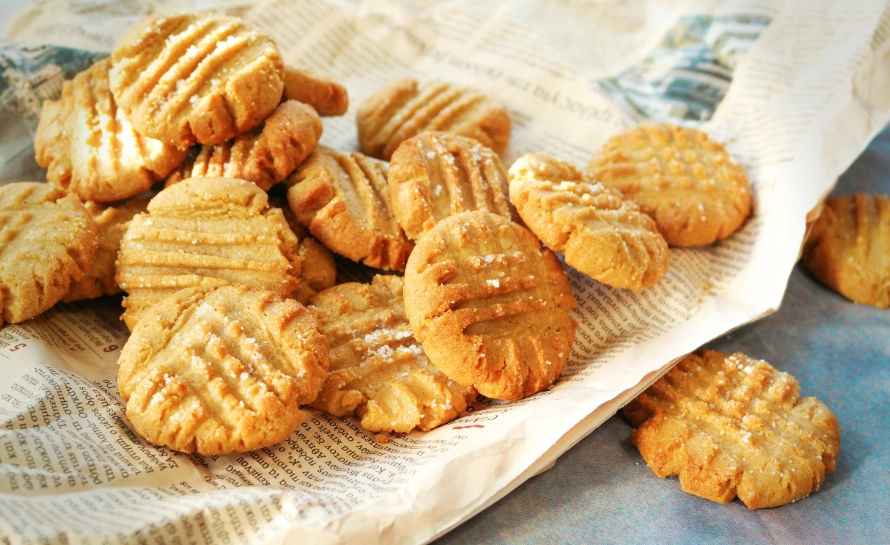
Sablée means sandy, and that is exactly what this feels like: fine, crumbly, melts on the tongue. It is sweeter and richer than pâte brisée, more like a cross between shortbread and pastry. This is the pastry equivalent of a rich biscuit base.
Because it is crumbly, it is less suited to heavy, wet fillings but excellent under delicate creams and fruit. Ground almonds, around 50g replacing the same amount of flour, make it even more crumbly and slightly nutty.
Ratio to remember
3 parts flour : 2 parts butter : 1 part sugar
Ingredients
– 250g plain flour
– 160g soft butter
– 80g caster sugar
– 2 egg yolks
– A pinch of salt
Sometimes ground almonds for richness
When is it used?
Petits sablés
Savoury biscuits
Vegetable tartlets
Pepper and walnut sablés
Fig tart
Tarte amandine
Strawberry tarts
Alsatian fruit tart
Peach tart
Herbed shortbread
Rhubarb tart
Blueberry Tart
Tarte Bourdaloue
The method
- Beat the soft butter with the sugar until pale, a couple of minutes with a mixer. You are not just mixing, you are making it fluffy.
- Beat in the egg yolks one at a time. Add all the flour at once and mix gently until it just comes together. The moment it forms a dough, stop. Overworking makes it tough.
- It will be quite soft. That is normal. Wrap it and refrigerate for at least two hours. When ready to use, either roll it between two sheets of baking paper or press chunks of it directly into the tart tin. The pressing method is excellent: no rolling, no tearing, no frustration.
Pâte Sucrée: the crisp sweet base
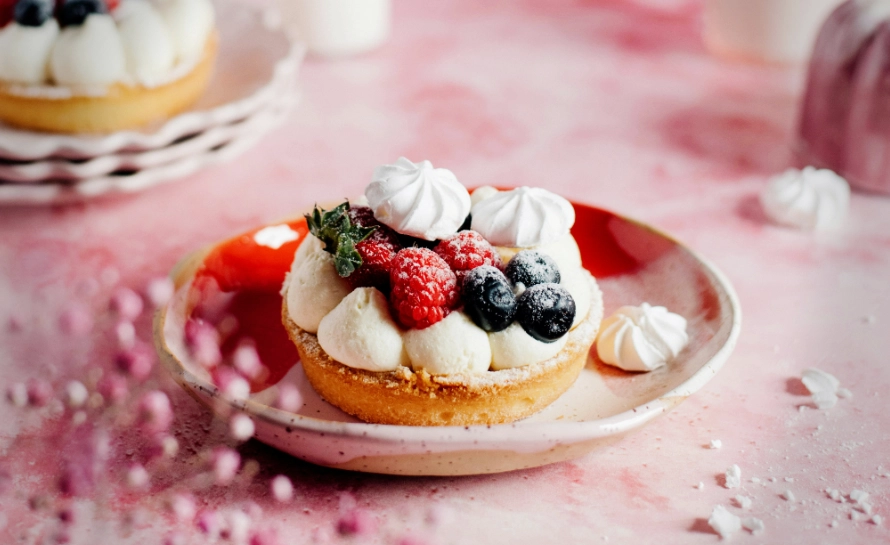
This is what you see in patisserie windows: tart shells that hold their shape perfectly, crisp and sweet with clean edges. Pâte sucrée is pâte sablée’s more professional sibling, the one used in bakeries precisely because it keeps its shape so reliably.
Using icing sugar instead of caster sugar, and creaming the butter and sugar together properly, gives it a firmer texture and sharper edges after baking. This is a sweet pastry dough by design, reserved for sweet tarts and desserts.
Ratio to remember
2 parts flour : 1 part butter : just under 1 part sugar
Ingredients
– 250g plain flour
– 125g soft butter
– 100g icing sugar
– 1 egg
Sometimes vanilla or almond extract
When is it used?
Red fruit tartlets
Salted butter caramel tart
Tartelettes au chocolat
Tarte au citron
Apple Tart
Tarte framboises, vanille
Flan pâtissier
Tarte Amandine aux nectarines
Tarte café
The method
The difference between sablée and sucrée isn’t just the sugar type, it’s the mixing method that creates a completely different structure.
- Beat the butter and icing sugar properly, three to four minutes until genuinely white and fluffy. This matters. You are changing the structure of the dough.
- Add the egg bit by bit, beating well between additions. If it looks like it is curdling, the egg was too cold. Keep beating and it will come together.
- Tip in all the flour at once. Mix gently with a spatula or on the slowest mixer speed until it just comes together. Overworking is the enemy here too.
- This dough needs a long rest. Overnight in the fridge is ideal. Roll it between baking paper, always from the centre outwards. If it cracks, patch it up. It is not a problem.
Pâte Feuilletée: the flaky puff pastry dough
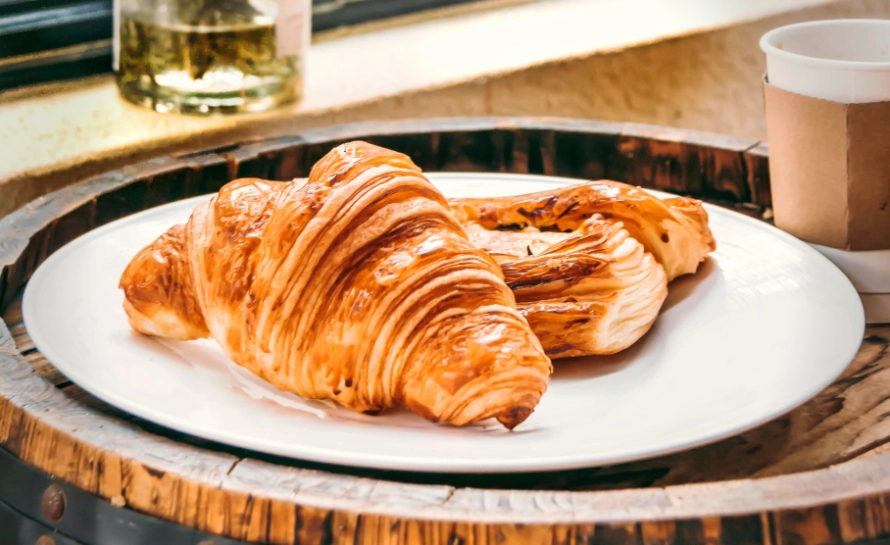
Finally, pâte feuilletée, better known as puff pastry. The name translates as leafed pastry, which describes the countless thin, buttery layers that puff up dramatically in the oven. It is one of the great achievements of French baking and requires genuine patience.
My honest advice? Make it once, just to understand the craft. Then do as most French home cooks do and buy it ready-made. Just make sure you choose a version made with real butter rather than margarine, and you will be fine.
Ingredients
– 250g flour
– 230g cold butter
– 125ml cold water
– A pinch of salt
Sometimes vanilla or almond extract
When is it used?
Croissants
Millefeuille
Palmiers
Apple turnovers
Galette des Rois
Bastelle Corse
Dorade en croûte feuilletée
Vol-au-vents
Apple tarts
Smoked salmon appetizers
Feuillantine comtoise
Tarte soleil
Petits feuilletés de sardines
The method
- Make the dough: mix flour, salt, water, and a small amount of melted butter until it comes together. It will not be smooth at this stage and that is fine. Knead it briefly, form a ball, cut a cross on top to help it relax, wrap it, and refrigerate for 30 minutes.
- For the butter block: put the cold butter between two sheets of baking paper and bash it with a rolling pin until it forms a 15cm square about 1cm thick. You want it pliable but still cold. The dough and butter need to be the same consistency.
- Roll the dough into a 30cm square. Put the butter block in the middle at an angle like a diamond. Fold the corners of the dough over the butter like wrapping a parcel. Seal the edges.
- Roll this packet out to about 60cm by 20cm. Fold it in three like a letter. Turn it 90 degrees, roll out again, fold again. That is two turns. Wrap it, mark it with two finger indentations so you remember where you are, and refrigerate for 30 minutes.
- Do two more turns, refrigerate, then two more turns, refrigerate overnight. You now have 729 layers of puff pastry dough. The patience required explains why most French home cooks buy it.
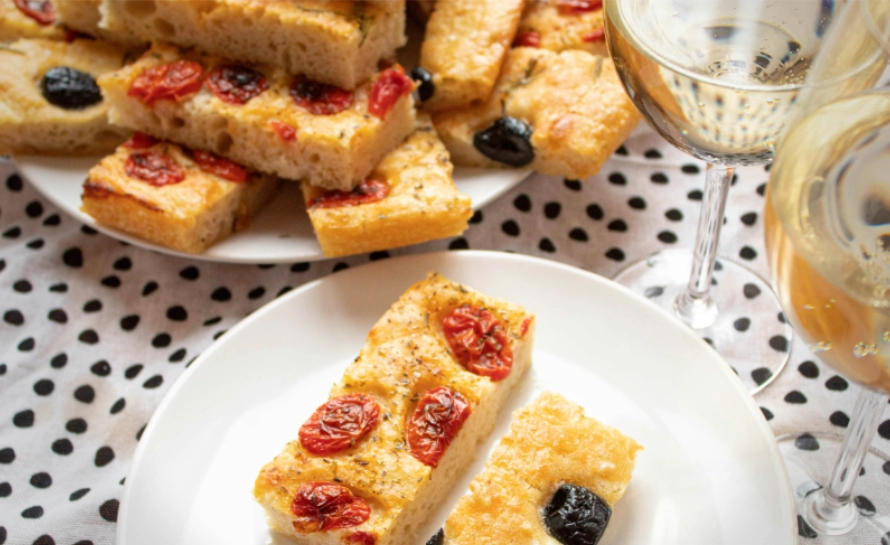
Bonus: Pizza dough
Not French, but French people make pizza regularly and this yeast-leavened dough gets you the chewy, slightly crispy crust that works. It is also the opposite of everything above: no butter, no careful temperature management, just flour, water, yeast, salt, and time. Patience with the rise builds the flavour and texture.
Ingredients
– 500g bread flour
– 325ml lukewarm water
– 7g instant yeast
(or 20g fresh)
– 10g salt
– 30ml olive oil
When is it used?
Pizza
Flatbreads
Focaccia
Pide aux lentilles
Pissaladière Niçoise
Fougasses
Breadsticks
Panzerotti
The method
- Mix flour and water first. Just mix, do not knead yet. Leave it 30 minutes. This is called autolyse and it makes the dough significantly easier to work with.
- Add everything else and knead for about 10 minutes by hand or five minutes in a mixer until smooth and stretchy. It will be quite wet and sticky. Do not add more flour.
- Put it in an oiled bowl, cover it, and leave for an hour. Every 20 minutes, wet your hand and fold the dough over itself four times. This builds structure without additional kneading.
- After an hour, divide into three or four balls. The best step: put these in the fridge for one to three days. The flavour improves dramatically with time. Take them out an hour before using and stretch from the centre outwards, keeping the edges thicker for the crust.
Which pastry dough for which job?
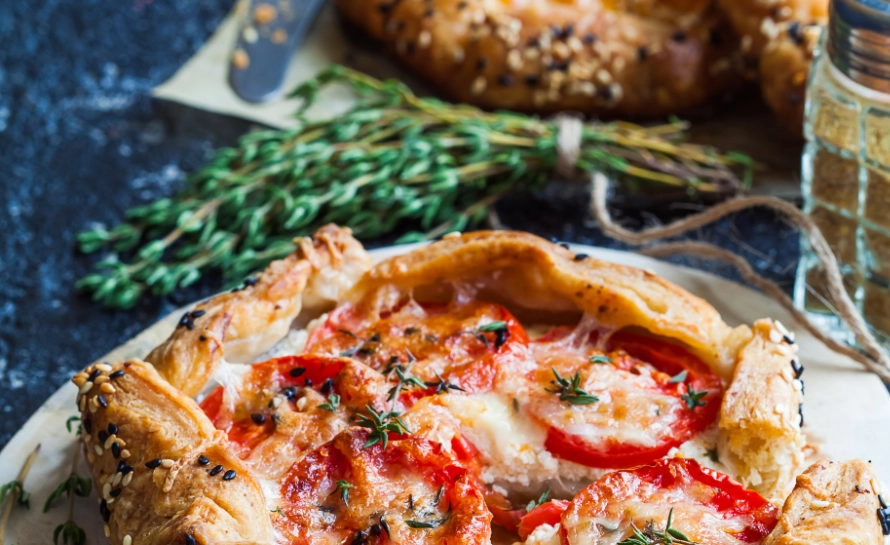
Pâte brisée shows up at lunch tables in quiches and rustic tarts. Pâte sablée works under delicate fruit and cream. Pâte sucrée produces the clean, precise tart shells you see in patisserie windows. Puff pastry is the backbone of croissants, palmiers, and the galette des rois that appears every January across France. And regional variations exist throughout: buckwheat sneaks into galettes in Brittany, and the Loire Valley leans into seasonal fruit in its tarts.
| Dough Type | Texture/Characteristics | Sweetness | Sturdiness |
| Pâte Brisée | Crumbly, tender, slightly firm | Creamy, mild and full-flavoured | Quite sturdy |
| Pâte Sablée | Sandy, rich, crumbly, melts in mouth | Creamy, slightly nutty, smooth finish | Delicate, crumbly |
| Pâte Sucrée | Crisp, buttery, holds shape very well | Earthy, rich, classic soft cheese | Firm and crisp |
| Pâte Feuilletée | Flaky, buttery, many layers, light | Soft and creamy with a gentle aroma | Light and flaky |
| Pizza Dough | Chewy, elastic, slightly crispy edges | Triple cream, luxuriously buttery | Sturdy but flexible |
Storage intelligence
Unbaked (raw) dough:
- Fridge: 3 days all types
- Freezer: 3 months (except feuilletée – 1 month)
- Wrap twice, plastic then foil
Blind-baked shells:
- Room temperature: 2 days in airtight container
- Freezer: 2 months (freeze in tin, then wrap)
Pro tip: Make double batches. The effort’s the same, future you will thank present you.
Over to you
So, that’s the lowdown on French pastry doughs. Surprising how few ingredients go into them, isn’t it? Ever given homemade pastry a go, or do you stick to the bakery queue? If you’ve got a favourite French recipe for one of these doughs (sweet or savoury) share it with the rest of us below. And if you’re rolling up your sleeves for the first time, don’t be shy! Tell us how you get on: photos, flops, victories and all.
Disclosure: Just so you know, this post contains sponsored content and/or affiliate links, If you make a purchase through these links, I may receive a small commission. Doesn’t cost you anything extra. I only link to things that are actually worth your time. All opinions are my own!