Oeufs au Lait
 Prep Time 10 minutes
  Cook Time 40 minutes
  Total Time 50 minutes
  Servings 4
Ingredients
- 1 l whole milk
- 6 egg
- 200 gr sugar
- 1 vanilla pod or 2 tsp vanilla extract
- 1 tbsp water
Equipment
Instructions
1. Make the caramel sauce
- Place the sugar (100gr) and water in a small saucepan over medium heat. Stir gently to dissolve the sugar, then stop stirring and let the mixture bubble. Watch closely as it turns from clear to golden amber. Once it reaches a rich amber colour, remove from the heat. Carefully swirl the pan to coat the bottom and sides of your baking dish or ramekins. Set aside to cool and harden slightly while you prepare the “oeufs au lait”.
2. Heat the milk
- Pour the milk into a large saucepan. Split the vanilla pod lengthwise and scrape out the seeds, then add both pod and seeds to the milk. Stir in the sugar (100gr). Heat gently, stirring occasionally, until the milk just comes to the boil. Remove from the heat and set aside to infuse for a few minutes. Remove the vanilla pod before using the milk.
3. Beat the eggs
- While the milk is heating, crack the eggs into a large mixing bowl. Beat them well with a whisk or fork until they are smooth and slightly frothy.
4. Combine milk and eggs
- Slowly pour the hot milk into the beaten eggs, whisking constantly to avoid scrambling the eggs and to ensure a smooth, custardy mixture.
5. Prepare for baking
- Pour the custard mixture over the cooled caramel in your baking dish or ramekins. For a bain-marie, place your baking dish inside a larger dish and fill the larger dish with hot water so it comes about halfway up the sides of your baking dish.
6. Prepare for baking
- Place the dish or ramekins in a cold oven. Set the oven to 120°C (fan 100°C) and bake for 20 minutes. Then increase the temperature to 180°C (fan 160°C) and bake for a further 30–40 minutes, or until the top is golden and the centre is just set (it should still have a slight wobble).
7. Cool and chill
- Turn off the oven and leave the door ajar to let the dish cool slowly. Once at room temperature, transfer to the fridge and chill for at least 2 hours, or preferably overnight, before serving.
8. Serve
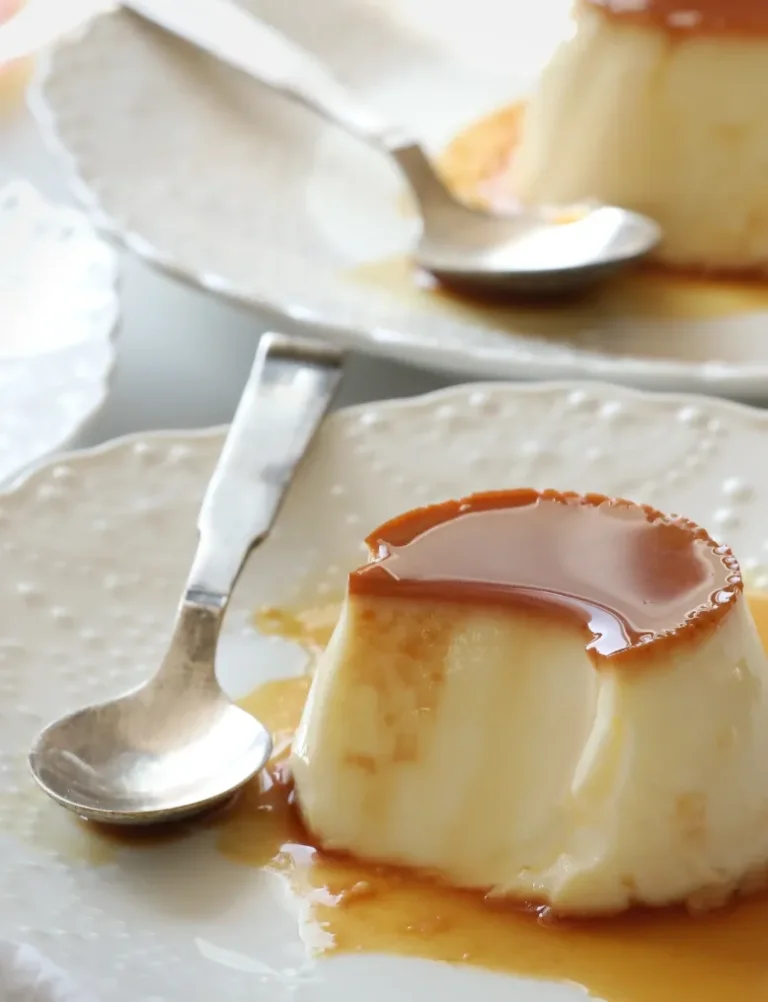
- To serve, gently run a knife around the edge of your dish or ramekins to loosen the custard from the sides. Place a plate on top, flip everything over in one confident move, and lift off the dish or ramekin so the gorgeous caramel sauce cascades over the top. If the caramel sticks the first time, don’t worry, just give it a gentle tap and try again. The result should be a smooth, glossy custard with a beautiful caramel topping every time.
Notes
- Caramel watch: Keep an eye on the caramel as it cooks, it can burn quickly.
- Vanilla options: If you don’t have a vanilla pod, vanilla extract works just as well.
- Make ahead: This dish is even better the next day.
About this recipe
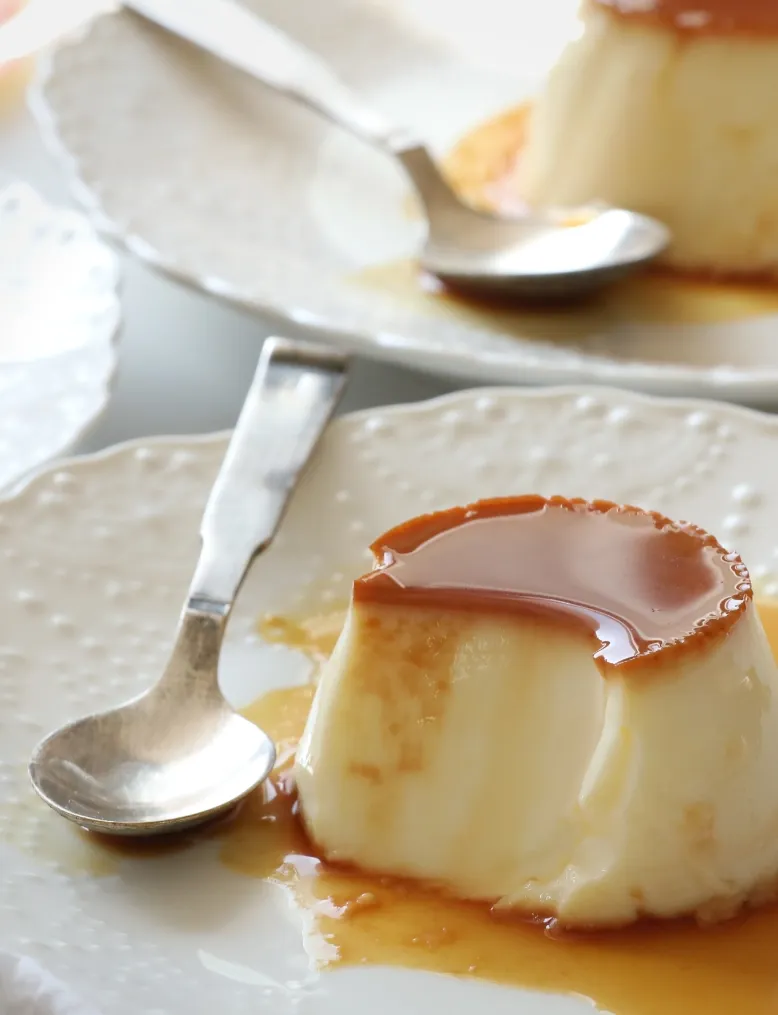
Oeufs au lait is the dessert that every French child knows and every French adult remembers. Eggs, milk, sugar, vanilla. Nothing else. The result is a set custard that is soft enough to tremble when you carry it to the table, pale and golden on top, and cool and creamy underneath. It is one of the most straightforward desserts in the French repertoire and one of the most satisfying.
Where oeufs au lait comes from
This egg custard recipe has roots stretching back to the Middle Ages, when rural French families made do with what their land produced. Fresh milk from their own cows, eggs from their hens, sugar when they could afford it. The combination of eggs in milk, gently baked until set, required no special technique and no unusual ingredients. It fed a household cheaply and well, which is why it survived for centuries without changing much.
As trade routes expanded and vanilla arrived from the colonies in the 17th century, French cooks added it to the custard and egg base as a matter of course. It was the natural thing to do. Vanilla improved the flavour without complicating the recipe, and it has been part of oeufs au lait ever since. Some families flavoured the milk with local herbs or spices instead. Others added caramel. The core recipe stayed the same.
Over the centuries, the dish moved from farmhouse tables to bourgeois kitchens to restaurant menus, always retaining its essential simplicity. It never became elaborate. That’s part of why it has lasted.
What makes this custard and egg dessert different
Oeufs au lait is not crème brûlée and it is not crème caramel. It is simpler than both. There is no caramel base to prepare, no blowtorch finish, no unmoulding required. The custard bakes in the dish it will be served from and comes to the table exactly as it left the oven, once it has cooled.
The texture is softer and more delicate than either of those better-known desserts. A proper oeufs au lait has a slight wobble when you move the dish. The surface should be just set, pale gold from the oven, with no browning or cracking. Cracking means the oven was too hot or the baking time too long. The custard continues to set as it cools, so it should come out of the oven looking barely done.
The egg custard recipe relies on the ratio of eggs to milk. Too many eggs and the custard turns rubbery and dense. Too few and it never sets properly. Three eggs to 500ml of whole milk is the standard, with enough sugar to sweeten without masking the flavour of the vanilla and the milk.
The milk matters
Whole milk is not optional here. Semi-skimmed milk produces a thinner, less creamy custard that lacks the body and the flavour of the full-fat version. The fat in whole milk is what gives the eggs in milk mixture its richness and its characteristic texture. Use the best milk you can find. In France, this would traditionally have been raw milk from a local farm, which has a flavour that pasteurised supermarket milk can’t replicate. Good quality whole milk is the closest alternative.
Warm the milk before adding it to the eggs. Cold milk added to beaten eggs can cause the mixture to curdle slightly during baking. Warmed milk incorporates more smoothly and gives you a more consistent result.
The right dish for oeufs au lait
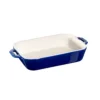
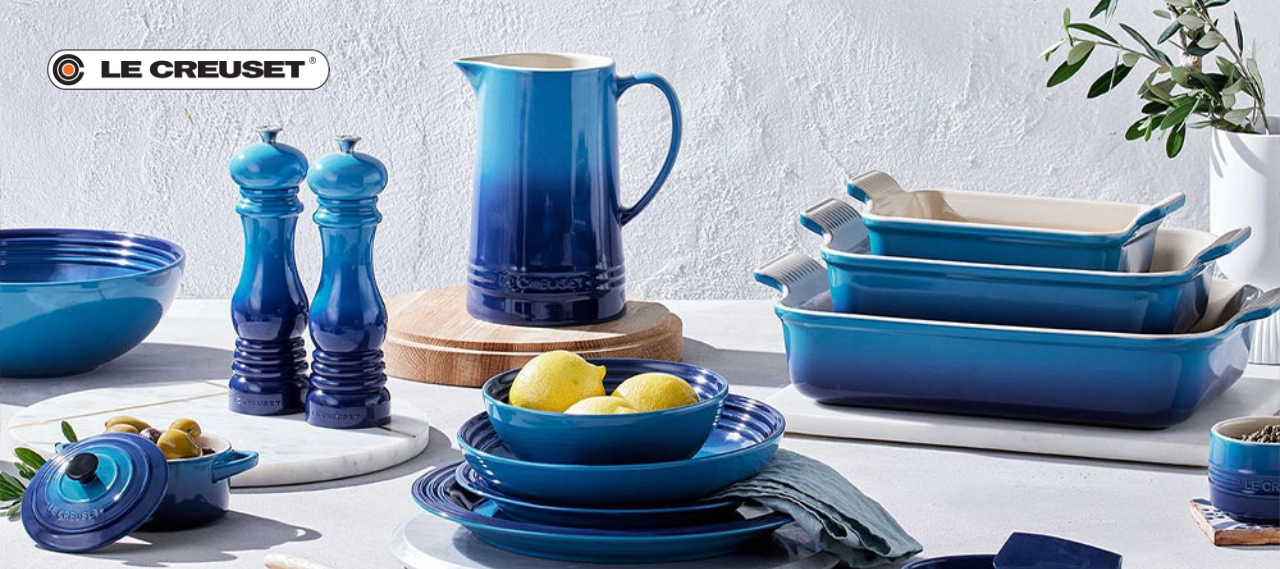
This egg custard recipe needs a dish that distributes heat gently and evenly, holds the custard at a steady temperature throughout the bake, and goes straight to the table for serving. I use the Le Creuset baking dish for this. The stoneware conducts heat evenly without hot spots, which is exactly what a delicate custard and egg mixture needs. Too much direct heat in one area causes the custard to overcook and crack before the rest has set. The Le Creuset’s steady, even heat means the whole surface sets at the same rate. It also retains heat well once out of the oven, which means the custard finishes setting gently as it cools rather than stopping abruptly.
How the French eat oeufs au lait
In most French households, oeufs au lait is Sunday lunch dessert. It appears at the end of a long meal, cool and undemanding, after whatever has come before. It is not a restaurant dessert and was never meant to be. It belongs at a family table, served from the dish it was baked in, with a spoon and nothing else required.
Some families serve it with a drizzle of caramel or a few simple biscuits alongside. Most serve it plain. The vanilla and the milk and the eggs are enough.
Share your feedback and spread the love!
If you try this recipe, I’d love to hear how it turns out! Leave a ★★★★★ rating and your thoughts in the comments, it helps fellow French foodies discover this recipe too. Snap a photo and tag me @obviously.french on Instagram if you’re sharing your bake or cooking online. Don’t forget to save this recipe to Pinterest so you’ll always have it handy for your next French-inspired meal!
Disclosure: Just so you know, this post contains sponsored content and/or affiliate links, If you make a purchase through these links, I may receive a small commission. Doesn’t cost you anything extra. I only link to things that are actually worth your time. All opinions are my own!