
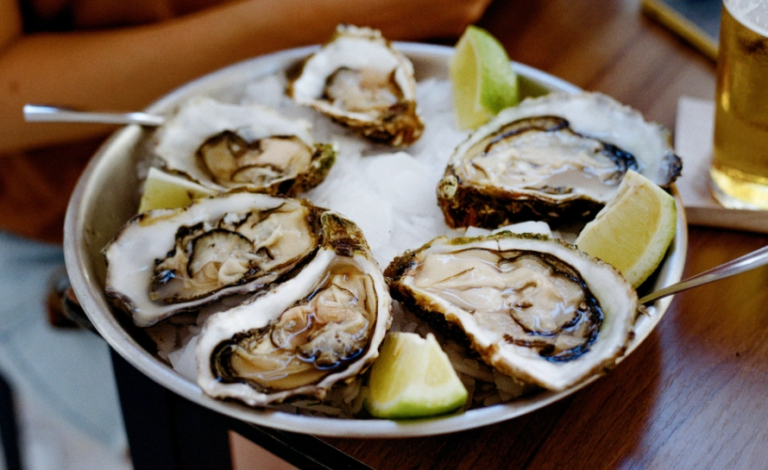
I won’t lie, the first time I tried oysters I had no idea what to expect. The texture caught me off guard. By the second one I was hooked, and that complex taste of the sea turned out to be addictive. I find it strange when people swallow them whole without tasting anything. I chew, and chew again, to get every bit of flavour out of them. And yes, in my books, as in most French houses, oysters are for special occasions.
Here’s the statistic that tells you everything. Half the oysters French people eat in an entire year are eaten between Christmas Eve and New Year’s Day. It isn’t religious, though you’ll see them on every réveillon table from Brittany to Provence. It’s simply that oysters are what you eat when something matters, and in France the end of the year matters.
This guide covers the seven growing regions and how they taste, the two numbering systems nobody explains properly, what fines and spéciales actually mean, how to read a French oyster label, and how to open a dozen without stabbing yourself.
Table of Contents
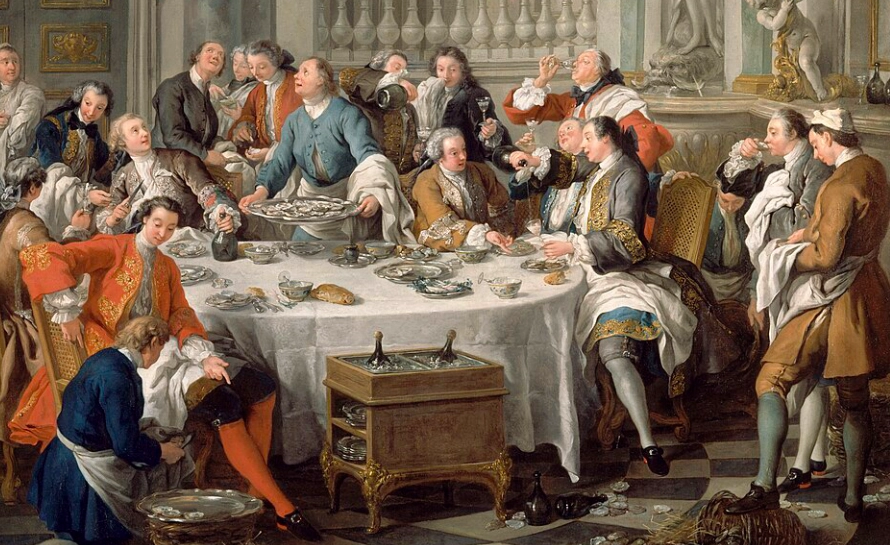
Why the French are obsessed with oysters
Louis XIV had six dozen French oysters delivered to Versailles every day and slurp them down before breakfast. Napoleon ate them before battles for luck. French philosophers ate them for inspiration, which frankly explains a lot about French philosophy.
These days it’s less about divine right. France farms, sells and eats more oysters than any other country in Europe. The average French household gets through around 4 kg a year, which sounds reasonable until you remember that half of it disappears in a single fortnight in December.
Pop-up oyster stalls appear on street corners. Fishmongers stack towers of boxes outside their shops. Restaurants abandon their normal menus for seafood platters. It’s completely mad and I love it.
The tradition has practical roots. Oysters spawn in warm weather, which makes them milky and soft, and before refrigeration you could only ship them inland safely in cold months. So eating oysters only in months with an R in the name became the rule. September through April. That is the sensible thing to do.
And there’s something else. The French want festive food that is deliberately unlike everyday food. French oysters tick both boxes. They’re special, they’re not cheap, and on a bed of ice with a glass of champagne they look the part for special occasions.
Do the R months still apply?
The R rule made sense when every oyster was born at sea. A spawning oyster goes milky, soft and faintly bitter. Nobody wants that in August.
Then came the triploid. Developed by the French marine research institute Ifremer, it’s a hatchery oyster with three sets of chromosomes instead of two, which makes it sterile. It never spawns, never goes milky, and because it spends no energy on reproduction it reaches market size in around 18 months to two years instead of three. Producers sell them as huîtres des quatre saisons, four-season oysters. They are the reason you can buy oysters in July.
They are not GMOs in the legal sense, since no genes have been inserted. They’re bred by crossing a tetraploid with a diploid. But they are a laboratory product, and there is no obligation to say so on the box. Most people eating them have no idea. Traditional growers have been pushing for compulsory labelling for years and losing.
Does it matter on the plate? Growers who work with sea-born oysters say triploids taste flatter and carry less of the character of the basin they came from, partly because they’re often shuttled between basins during growing. Others say a skilled producer can make either taste of somewhere.
My own take is practical. If you’re buying oysters to taste the difference between Cancale and Marennes-Oléron, look for née en mer or non triploïde on the label. That’s the entire reason you’re paying for a regional oyster in the first place. If you just want oysters in July, the triploid is why you can have them, and there’s no shame in that.
The two types of French oysters
France grows two, and you’ll see one far more often than the other.
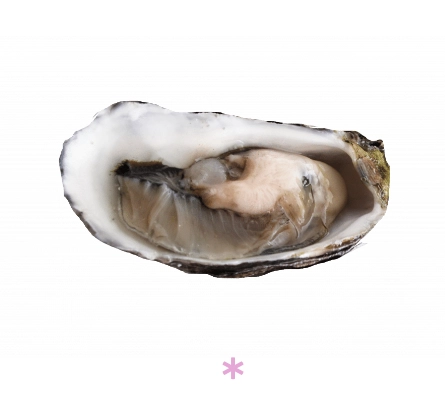
Huîtres creuses
Cupped oysters
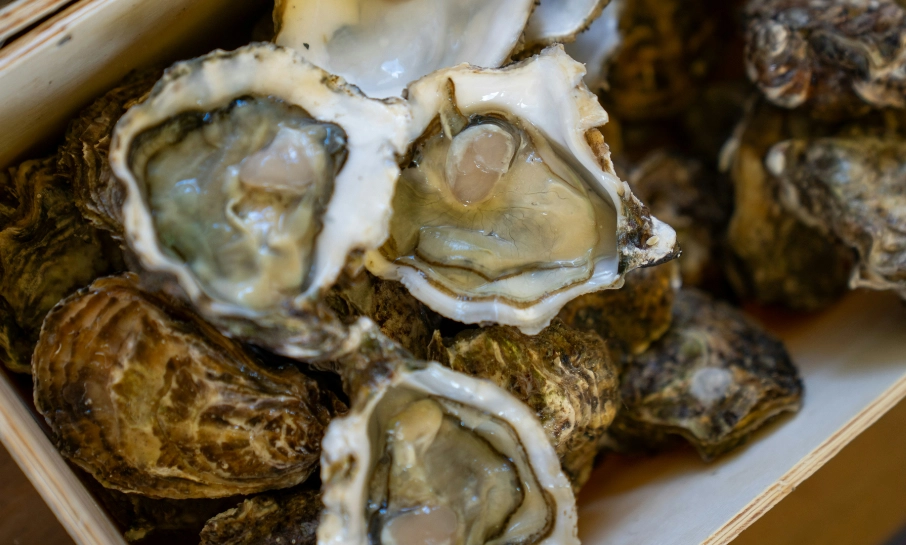
These are the ones you’ll meet almost everywhere, accounting for roughly 90 percent of French production. They’re Pacific oysters, Crassostrea gigas, with deeply curved shells. The French call them creuses, or sometimes japonaises.
They arrived by accident in 1868, when a cargo of supposedly dead Portuguese oysters was tipped into the Gironde estuary. They flourished. Then in the 1970s disease wiped out the Portuguese variety and growers switched to Pacific stock. Now they dominate.
Taste
Mild and balanced. Salty without being aggressive, with a clean finish. This is what you’ll find at most markets and restaurants, and the differences between regions are easier to taste than you’d expect.
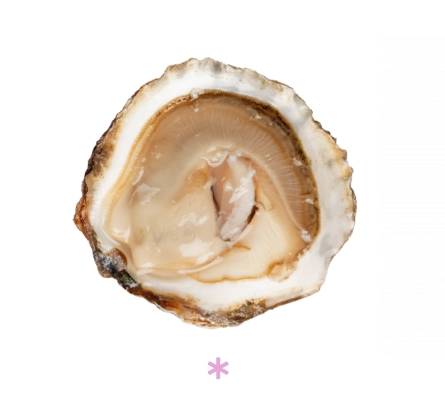
Huîtres plates
Flat oysters
The native European oyster, Ostrea edulis, and a rarer, more expensive animal altogether. They make up only 1 to 2 percent of production. They’re called plates, or Belons when they come from that particular Brittany estuary.
They’re harder to farm, slower to mature and cost a great deal more. If you see them on a menu you’re either somewhere very good or paying for the privilege.
One thing worth knowing: Belon is a place, not a type. Only flat oysters finished in the Belon estuary can properly be called Belons. Plenty of menus use the word loosely for any flat oyster, which is a bit like calling every sparkling wine champagne.
Taste
Dense, metallic, challenging and deeply satisfying. More complex, more lingering, often described as nutty. This is the oyster that converts people or defeats them.
The seven French oyster regions
From north to south: Normandy, North Brittany, South Brittany, West-Central, Marennes-Oléron, Arcachon and the Mediterranean. Each produces oysters with a different flavour, shaped by water temperature, salinity and what the oysters have been feeding on.
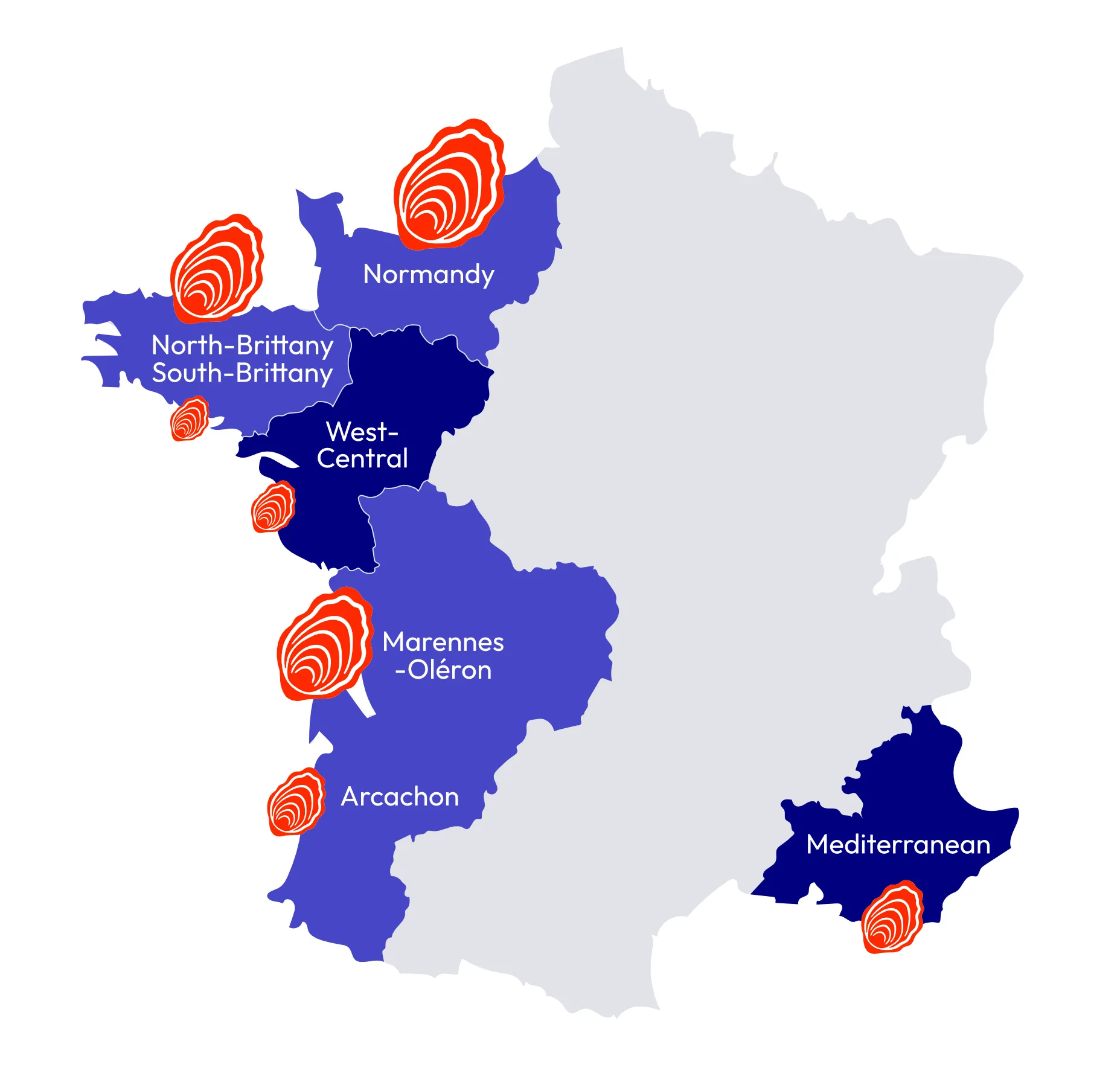
Normandy
Norman oysters grow in cold, nutrient-rich water with strong tides. The mixing of Channel waters brings in plenty of plankton. Less famous than the southern basins, which usually means better value for the same quality. The main areas are the Cotentin peninsula and the coast around the Seine estuary.
Taste
Plump and meaty with a bold, briny flavour and pronounced iodine notes. These have real body and a clean, assertive taste that reminds you exactly where they came from.
North-Brittany
This is Cancale country, arguably France’s most famous oyster town. The parks sit opposite Mont-Saint-Michel and benefit from some of the strongest tides in the world, a range of up to 14 metres. The oysters are exposed to the sun daily and then flooded with plankton-rich water. Cancale was once the official supplier of oysters to the royal table.
You can still buy them from roadside stalls above the bay, watch them shucked, and eat them looking at the farms they came from. Paimpol and the Bay of Saint-Brieuc are the other names to know.
Taste
Firm, supple flesh and a pronounced iodine scent. Intense ocean flavour and excellent texture. That powerful Atlantic character in its purest form. Worth the trip.
South-Brittany
Warmer and more sheltered than the north, which changes both growth rate and flavour. The region takes in the Gulf of Morbihan and the Étel and Belon rivers.
The famous Belon flat oysters come from here. They’re raised in the open sea for three years, then moved to the Belon estuary where fresh and salt water meet. Expensive, hard to find, and absolutely worth trying if you get the chance.
Taste
Softer and rounder than the north, with a gentler brine and a subtle sweetness. The Belon plates are the challenging, metallic, unmistakable ones with mineral complexity and a long finish.
West-Central
The Vendée-Atlantic coast: the Loire estuary, Noirmoutier, the Bay of Bourgneuf at Bouin, the Bay of Aiguillon and the water around Pornic. Generations of growers here mastered a set of very specific local conditions. Underrated next to the famous basins, which again means better value.
Taste
Balanced, with firm, crunchy flesh. These suit people who want an oyster that’s neither too briny nor too mild. Every sub-area differs slightly, but all share that satisfying middle ground with good body and a clean finish.
Marennes-Oléron
France’s largest and most prestigious basin, and the only one where the finishing is as important as the growing.
What makes it different is the claires, shallow clay ponds left over from old salt marshes, where oysters spend their final weeks or months filtering brackish water. Some come out with a green tint, which brings us to the thing everyone asks about.
The green comes from a diatom called Haslea ostrearia, known locally as the navicule bleue, which grows on the clay bottom of the claires. It releases a blue-green pigment called marennine. The oyster doesn’t eat the algae. It filters seawater carrying the pigment, and the marennine binds to its gills. This is why the phenomenon can’t be reproduced anywhere else: it depends on the clay of the Seudre marshes. Green gills are a mark of quality, not a fault, and they’re a required criterion for the Fine de Claire Verte Label Rouge.
Taste
The maturation gives these oysters a flavour of what the French call terres marines, marine lands, and a richness that lingers. Fines are lean, balanced and refined. Spéciales are plumper and more substantial. This basin is the benchmark the rest of France is measured against.
Arcachon
The basin near Bordeaux is France’s leading breeding ground. It supplies most French farms with natural spat, the baby oysters that are then grown on elsewhere. But it finishes plenty of its own, with Cap-Ferret and the Île aux Oiseaux the notable areas.
Arcachon is also one of the best places in France to eat oysters, thanks to the cabanes lining the waterfront where you sit with a plate, bread, butter and a glass of white while the tide comes in.
Taste
Strong personality and real character. At Cap-Ferret you get delicate, refreshing notes of vegetables and citrus. Around the Île aux Oiseaux they’re more vegetal and mineral with greater depth. Meaty and full-flavoured overall. Less refined than Marennes-Oléron but with more immediate impact, and some people prefer that directness.
Mediterranean
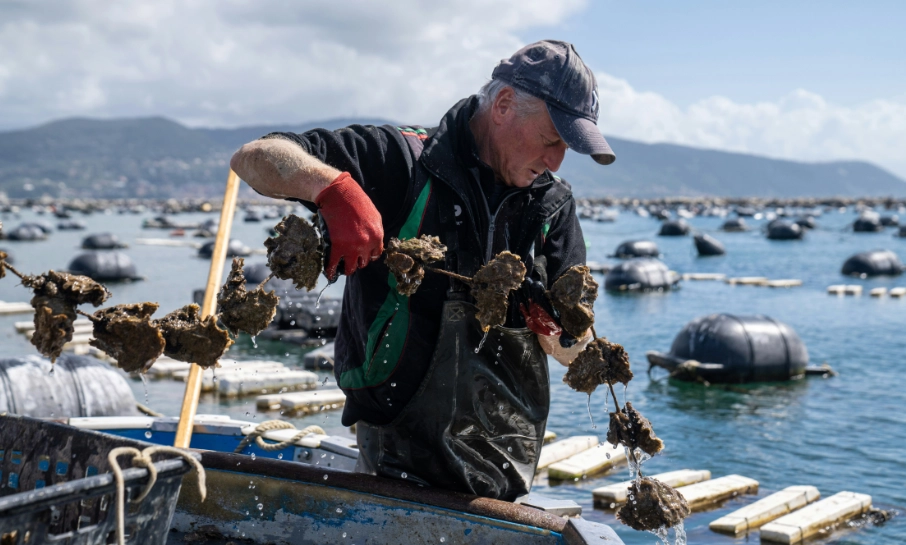
Farmed mainly in the Étang de Thau near Sète and Bouzigues, and in the Étang de Leucate. There are no tides in the Med, so the method is completely different: young oysters are individually cemented to ropes, a technique called collage, and the ropes hang vertically in the water. The oysters feed constantly and grow faster than their Atlantic cousins. Thau has been producing since Roman times, and the water is classified grade A, meaning oysters can be eaten straight from the water.
Taste
Firm and melting, with fine flesh and a distinct hint of hazelnut. Milder and rounder than Atlantic oysters, still briny but gently so. Traditionalists insist proper oysters come from the Atlantic. If you prefer something subtler, they’re wrong for you.
Understanding French oyster sizes
The numbering runs backwards: the smaller the number, the bigger the oyster. What trips everybody up is that there are two separate scales, and almost every English-language guide gets this wrong.
Cupped oysters (creuses) run from 5 down to 0, graded on the weight of a single oyster.
Cupped oysters (creuses)
Calibre
Weight per oyster
No. 5
30 to 45 g
No. 4
46 to 65 g
No. 3
66 to 85 g
No. 2
86 to 110 g
No. 1
111 to 150 g
No. 0
over 150 g
Flat oysters (plates) run from 6 down to 000, and here the weight is measured per hundred oysters rather than per oyster. A 000 Belon works out at roughly 10 to 12 kg per hundred, which is why it’s nicknamed pied de cheval, horse’s hoof.
No. 3 is the standard restaurant size and the right place to start. Substantial enough to taste properly, manageable if you’re still getting used to the texture. If you’re nervous, go to No. 4. Numbers 1 and 0 are for people who already know they like oysters, and they’re often used for cooking rather than eating raw.
The calibre is a compulsory marking, so it will always be on the bourriche. You never have to guess.
The grades: fines, spéciales and pousse en claire
You’d think the numbers were enough. They aren’t. French oysters are also graded on how they’ve been finished, and there’s one technical detail behind it that nobody explains.
The legal distinction between a fine and a spéciale is the indice de remplissage, or fill index: drained flesh weight against total weight, multiplied by 100. Fines score between 6.5 and 10.5. Spéciales score above 10.5. Time in the claires shapes the flavour, but the index is what decides the name on the box.
| Grades | What it means |
| Fine de Claire | Finished for at least 28 days in the claires. Leaner, with more liquor and a balanced, refined flavour. The everyday benchmark and the best place to start. |
| Fine de Claire Verte | The same, with the green gills produced by marennine. The first seafood product in France to receive the Label Rouge, in 1989. Round shell, striking colour, and a mark of quality rather than a fault. |
| Spéciale de Claire | Selected for size and regular shape, then matured at low density for at least two months, no more than ten per square metre. Plumper, richer, longer finish. Sought after and priced accordingly. |
| Pousse en Claire | The aristocracy. Raised at just five oysters per square metre for four to eight months, and unlike the others these are grown in the claire rather than merely finished there. They roughly double in weight during maturation. Label Rouge, top of the Marennes-Oléron range, and not cheap. Try them once and you’ll understand the fuss. |
How to buy French oysters
A good fishmonger will have French oysters in season, particularly in December. Ask specifically for Marennes-Oléron, Cancale or whichever basin you’re after, and don’t accept a vague “French”. Many fishmongers will order them in with a few days’ notice.
Online specialists deliver too. Delivery charges make small orders poor value, so it’s worth it for an occasion rather than a Tuesday.
Reading the label
Every box of French oysters carries the same required information, and it tells you more than the person selling them will.
- The estampille sanitaire, an oval health mark with a registration number and FR. This identifies the dispatch centre and it’s traceable.
- The packing date, date de conditionnement. Not a use-by date. Count from here.
- The calibre, so you know exactly what size you’re getting.
- The species and origin, which lets you check the basin matches what you were told.
- Sometimes née en mer or non triploïde, meaning a sea-born oyster rather than a hatchery one.
Oysters stay alive for around 7 to 10 days from packing if they’re kept properly, but they lose liquor and character the whole time. Buy one or two days before you want them, or the same day if you can manage it.
What to look for
If a shell is slightly open and doesn’t close when tapped, throw it away. If it feels hollow or unusually light, it’s probably empty. If it smells sour or strong, it isn’t safe. French oysters should smell clean and of the sea, nothing more.
Once it’s open, there’s a better test than the tap. Touch the flesh, or the frill at its edge, with a knife tip or a drop of lemon. A living oyster contracts. If nothing moves, don’t eat it.
The liquor should be clear and there should be plenty of it. An oyster that arrives dry has been lying open or was shucked far too early.
How many, and what to expect to pay
Six is a starter. Twelve is a main course. For a réveillon where oysters open a long meal, count six a head and add a few for whoever turns out to be the enthusiast.
A dozen No. 3 fines de claire is the sensible first purchase. Spéciales cost more, pousse en claire considerably more, and flat oysters are in another league entirely because they take three years to grow and account for a sliver of production.
Who shouldn’t eat them raw
Raw oysters are live shellfish and carry a small risk of norovirus and vibrio. French authorities temporarily close individual growing areas when testing picks up contamination, and it does occasionally happen in December, which is precisely when everyone is buying.
Anyone pregnant, immunocompromised or living with liver disease is generally advised against raw shellfish altogether. Cooking removes the risk, so grilled or baked oysters are the answer if you’re in that group and want the flavour.
For everyone else: buy from a proper source, check the packing date, keep them cold.
Storing oysters at home
Oysters are alive. They breathe, and they need both humidity and cool air. Sealed too tightly or left somewhere warm, they die quickly and become unsafe.
Keep them in their box and take off any plastic wrap. Cover with a slightly damp cloth. Store somewhere cool, between 5 and 10°C, so not the coldest part of the fridge and not the warmest either.
Store them cup side down so they keep their liquor.
Never freeze oysters in the shell intending to eat them raw later. Freezing kills them, and a dead oyster is not safe raw. Oyster meat can be frozen for cooking, but that’s a different product from what comes in a bourriche.
Opening: Tools
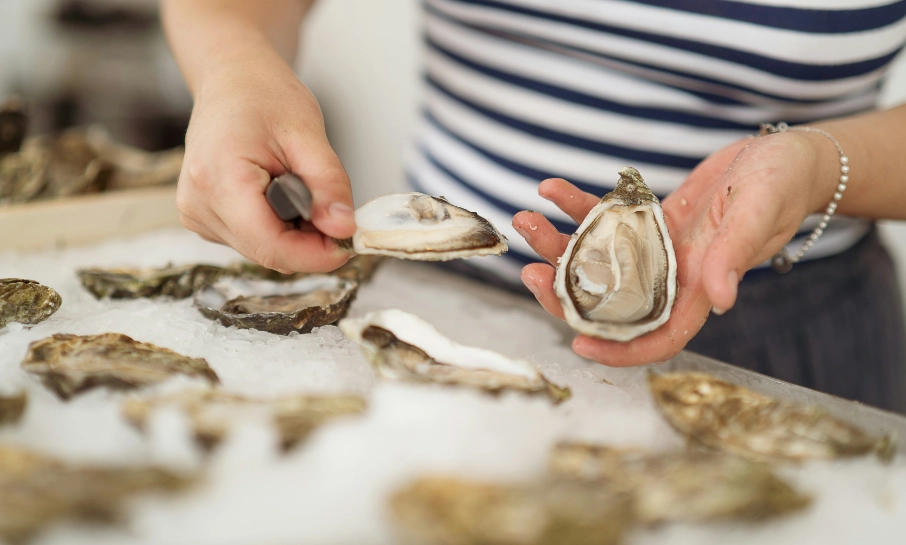
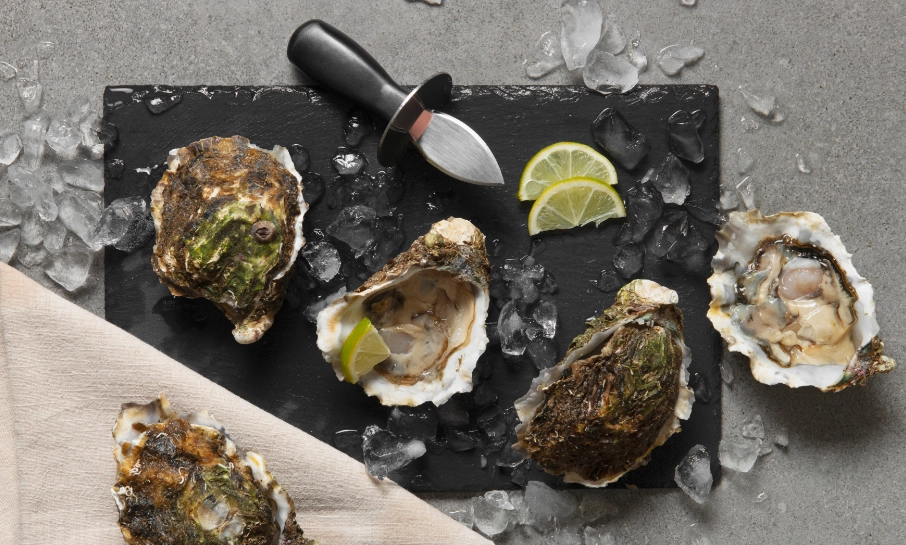
Shucking without professional help takes practice. With the right tools and the right method it’s entirely manageable, and there’s a real satisfaction in the moment the hinge gives.
The oyster knife
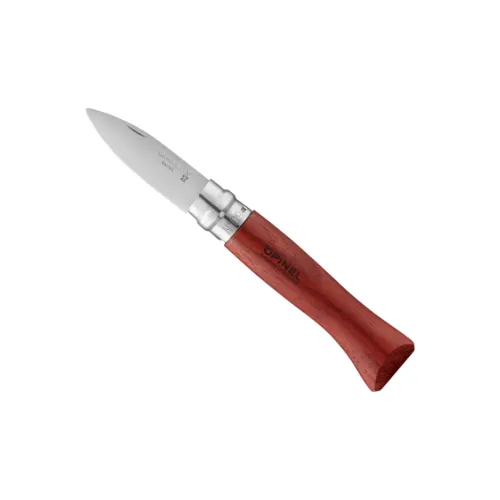
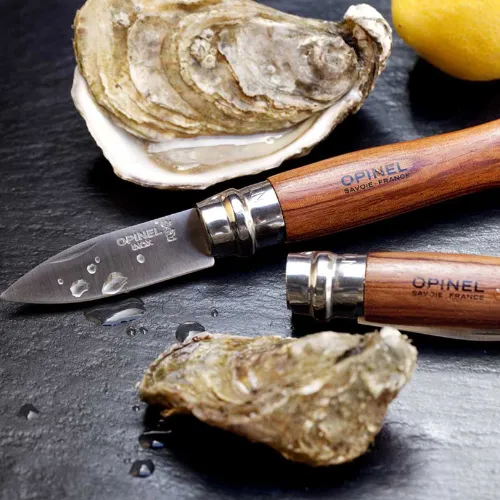
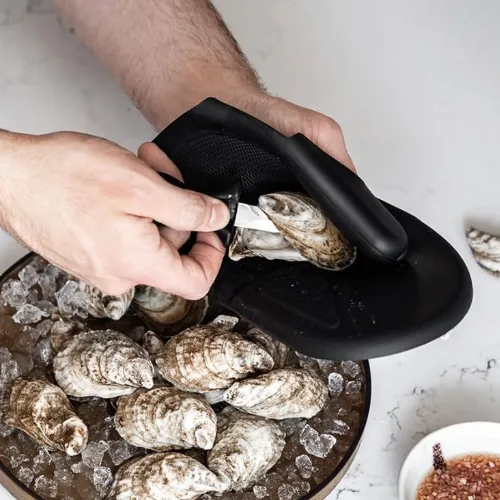
You absolutely need a proper oyster knife. Don’t attempt this with a kitchen knife or a paring knife. You’ll break the knife, wreck the oyster, or stab yourself, possibly all three. An oyster knife has a short, thick blade, usually 7 to 8 cm, and it’s blunt rather than sharp. It’s built for leverage and twisting, not cutting.
Protecting your hand
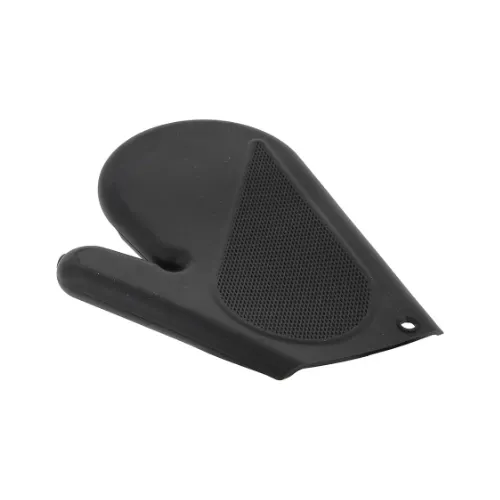
A thick tea towel or folded cloth is the minimum, used to hold the oyster. A chainmail or Kevlar oyster glove is safer, and De Buyer make a silicone oyster mitt designed for the job.
Opening: Technique
Step 1
Scrub the oysters under cold running water to get rid of sand, mud and shell fragments. Pat dry with a clean cloth.
Step 2
Find the hinge at the pointed end, where the two shells meet and leave a small gap. Position the knife tip there, angled slightly upwards.
Step 3
Now comes the tricky bit. You need to wiggle the knife tip into the gap whilst applying steady pressure. Push and twist gently. You’re looking for the moment when the knife tip pops through the hinge. You’ll feel it give.
Step 4
Once you’re inside, don’t pull the knife out. Instead, twist the knife 90 degrees to pry the shells apart slightly. You’ll hear a small crack.
Step 5
Now slide the knife blade along the inside of the top (flat) shell. Keep the blade flat against the shell. You’re cutting through the adductor muscle that holds the two shells together. Run the knife all the way around until the top shell comes free.
Step 6
Lift off the top shell. You should see the oyster sitting in its liquor in the bottom shell.
Step 7
Finally, slide your knife under the oyster meat to detach it from the bottom shell. Be gentle. You don’t want to tear the flesh or spill all the liquor.
Common mistakes
- Wrong entry point. Forcing the knife in at the side rather than the hinge crushes the shell and puts fragments everywhere.
- Too much force. This isn’t about strength. It’s about finding the angle and wiggling until the tip slips through. Steady pressure beats aggressive jabbing every time.
- Lifting the top shell too early. Cut the adductor muscle first or you’ll rip the oyster in half.
Safety tips
Always use protection. Experienced shuckers use it because knives slip. Work slowly while you’re learning. Your first dozen might take 20 minutes. That’s fine, speed comes later. If one is being stubborn, set it aside and open another rather than fighting it to the point of hurting yourself. Keep your free hand behind the blade, never in front of it.
If this all sounds like too much
Many fishmongers will shuck them for you if you ask, some for a small fee and some for free if you’re buying a decent quantity.
The catch is that shucked oysters need eating within an hour or two, so you can’t have them done in the morning for an evening party. For immediate eating, though, it’s a brilliant option!


How to eat French oysters
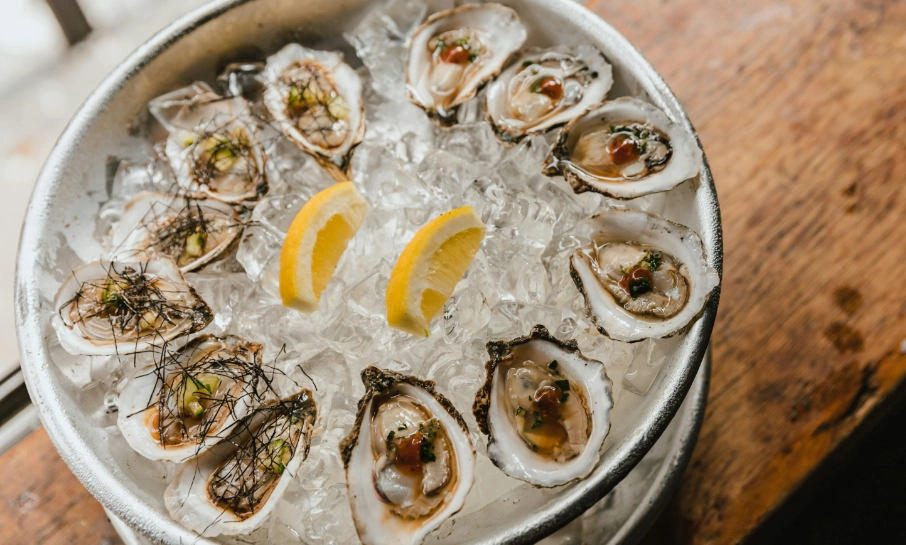
The classic French approach is the simple one, and it’s still my favourite because it lets you actually taste the oyster. Oysters on ice, a wedge of lemon, maybe some mignonette, good bread, French butter, and champagne or a crisp white.
Mignonette Sauce
Red wine vinegar, finely minced shallots, black pepper. That’s the whole recipe for this vinaigrette. Mix it an hour ahead so the shallots soften. Some people add a squeeze of lemon. And mind you, don’t drown the oyster in it, a few drops is enough to cut the brine.
What to serve alongside
Thin slices of rye or sourdough with proper salted butter. French people alternate between an oyster and a piece of buttered bread, which sounds odd until you try it and then makes complete sense. Lemon wedges always on the table. Some people use them, some don’t. Nobody argues about it.
Grilling
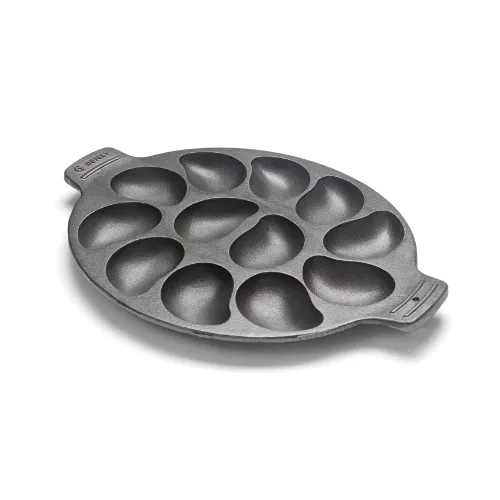
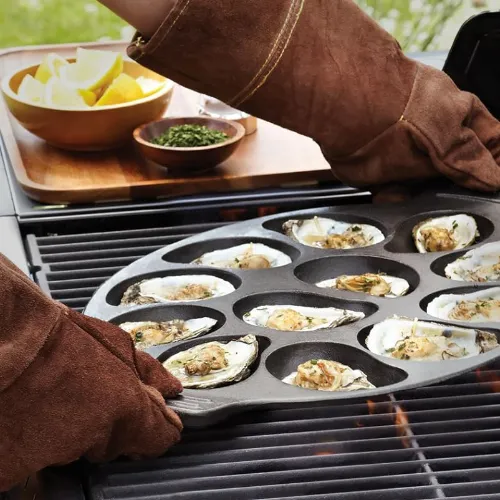
While purists eat oysters raw, grilling is popular through much of the world, particularly at summer festivals. The heat opens the shells and adds a subtle smokiness. A cast iron oyster pan keeps them level on the grill so they don’t tip and lose their liquor. It’s also the right answer for anyone who can’t eat them raw, and for the sceptic at the table who needs easing in.
The wine
Serve with chilled Muscadet, Sancerre or Chablis, and you’ve created an authentic French oyster experience at home. The wine should be cold, crisp, and not too aromatic. Champagne is traditional at réveillon. The wine should be cold, crisp and not too aromatic.
More seafood recipes to try
How to serve oysters
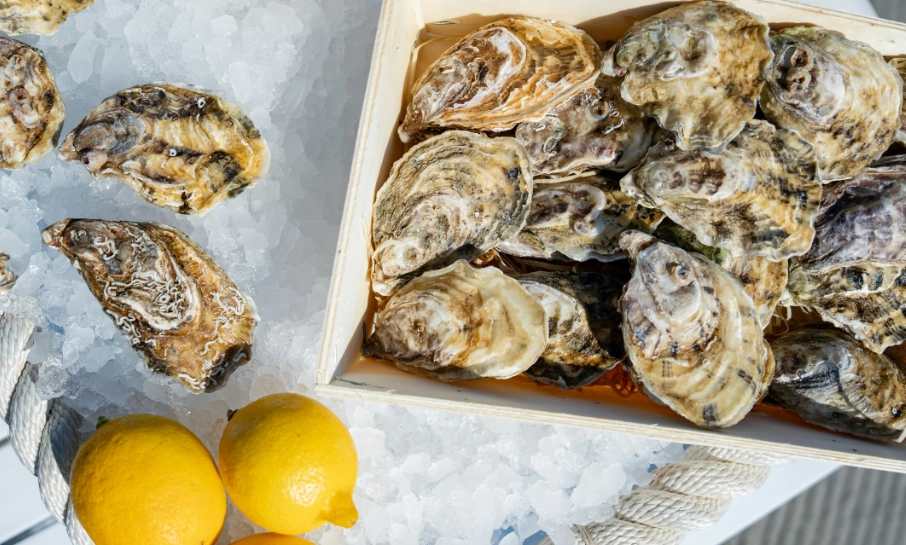
The French take presentation seriously but keep it simple. Serve on a large platter or individual plates, on a bed of crushed ice, coarse sea salt or fresh seaweed. All three do the same job: they hold the shells level so the liquor stays in, and they keep the oysters cold.
If you use ice, make sure the platter drains or the shells sit above the meltwater. An oyster swimming in fresh water loses everything that makes it worth eating. At home I use coarse salt, which is easier and doesn’t melt into your lunch. Some coastal regions use fresh seaweed, which adds a faint smell of the sea to the whole table.
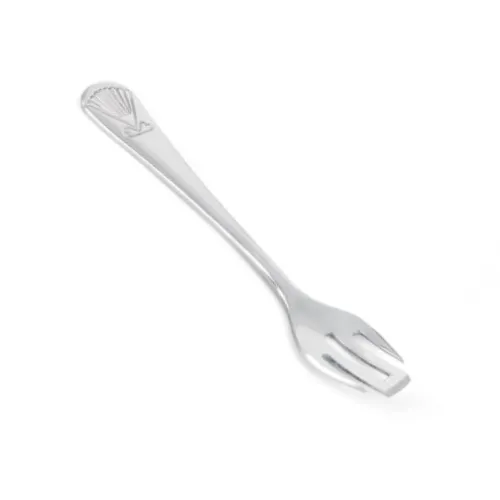
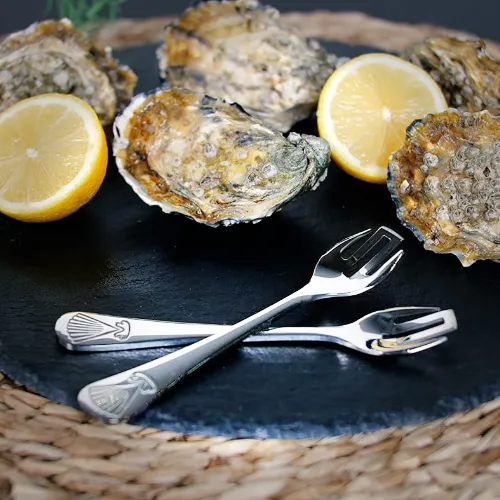
You’ll also want oyster forks for your guests. While some purists eat oysters directly from the shell, most people prefer a small fork to loosen the oyster and add their chosen accompaniments. French oyster forks have short, narrow tines perfect for this delicate work. A set of 6-12 is ideal for entertaining.
Arrange lemon wedges around the platter’s edge, and if you’re feeling fancy, prepare a small bowl of mignonette sauce (shallots in red wine vinegar).
FAQ
Can you eat oysters in months without an R?
Yes, though the rule still holds for sea-born oysters, which spawn in summer and turn milky and soft. Sterile triploid oysters, sold as huîtres des quatre saisons, don’t spawn and are available year round. If you want a traditional sea-born oyster, stick to September through April.
How many oysters per person?
Six as a starter, twelve as a main course. For a Christmas or New Year réveillon where oysters open the meal, six per person is the standard.
What is the difference between a fine and a spéciale?
The fill index, which measures drained flesh weight against total weight. Fines score between 6.5 and 10.5 and are leaner with more liquor. Spéciales score above 10.5, meaning more flesh, a richer taste and a longer finish.
Why are some French oysters green?
A diatom called Haslea ostrearia grows in the clay claires of Marennes-Oléron and releases a pigment, marennine, which binds to the oyster’s gills. It’s a natural process, a mark of quality, and a requirement of the Fine de Claire Verte Label Rouge.
What size oyster should a beginner order?
No. 3, or No. 4 if the texture worries you. Remember the numbering runs backwards: No. 0 is enormous, No. 5 is small.
Are triploid oysters genetically modified?
Not in the legal sense. No genes have been inserted. They’re bred by crossing tetraploid and diploid oysters to produce a sterile animal with three sets of chromosomes. There’s no obligation to label them, which is what most of the argument is about.
How long do oysters keep?
Around 7 to 10 days from the packing date on the box if stored flat, cup down, under a damp cloth at 5 to 10°C. They’re better in the first day or two.
Over to you
Not everyone likes oysters. Some people try them once, hate the texture, and never go back. That’s fine. Life’s too short to eat things you don’t enjoy just because they’re considered sophisticated.
But if you’re curious, French oysters are the ones to try. The variety of flavours between regions is genuinely interesting. Cancale oysters taste nothing like Mediterranean ones. The grading system, whilst confusing, does mean something. And the whole tradition of eating them at Christmas feels properly special without being pretentious. And yes, have them with champagne if you can. Some clichés exist for good reasons.
What kind of French oysters have you tried, or is this all new territory?
If you’ve never had them, December is the moment. Most fishmongers stock them in the run-up to Christmas and the quality is at its best. Start with half a dozen No. 3 fines de claire. Worst case you’ve spent the price of a takeaway discovering oysters aren’t for you. Best case you’ve found a new obsession.
And if you’re already converted, tell me which region you rate. Are you Team Cancale with the big briny Atlantic ones, or do you prefer the refinement of Marennes-Oléron? Have you tried the Mediterranean ones, or do you find them too mild?
Let me know in the comments, or ask me anything about oysters. I’m always happy to talk about them. Possibly too happy.
This post may contain affiliate links. If you buy through them I earn a small commission at no extra cost to you, and it helps keep this blog running. Please read my disclosure policy for more information. I am grateful for your support.
Thankyou for such a comprehensive resource
Currently on ile d’oleron and enjoying both eating and learning how to shuck oysters
Île d’Oléron is one of the great French oyster islands (for other readers who might be interested!), so you really couldn’t be learning to shuck in a better spot. I hope you’re enjoying every single one you eat and successfully open!
This is a fantastic, comprehensive article! Well done. My only suggestion would be to switch the images depicting the two species (Huîtres creuses and Huîtres plates). They’re currently reversed, with the flat oyster assigned to the cupped description.
Thank you so much, Julie! And well spotted. You’re absolutely right, the creuses and plates images were the wrong way round. I’ve swapped them, so it should all make sense now. Really appreciate you taking the time to let me know 🙂