Plum Tart with Frangipane
 Prep Time 30 minutes
  Cook Time 45 minutes
  Total Time 2 hours 15 minutes
  Servings 8
Ingredients
For the pâte brisée
- 250 gr plain flour
- 125 gr unsalted butter cold
- 50 ml water cold
- 1 egg yolk, optional, makes it richer
- 1 pinch salt
For the frangipane
- 100 gr unsalted butter
- 100 gr caster sugar
- 100 gr ground almonds
- 2 eggs
- 1 tbsp plain flour
For the filling
- 800 gr red plums reine-claude, quetsche, or any firm plums
- 2 tbsp caster sugar for sprinkling
- 1 tbsp icing sugar for dusting
Equipment
Instructions
Make the pâte brisée
- Put the flour and salt in a large bowl or food processor. Add the cold butter cubes.If using a food processor, pulse until the mixture looks like breadcrumbs. If working by hand, rub the butter into the flour with your fingertips, work quickly so the butter stays cold.Beat the egg yolk (if using) with the cold water. Pour it over the flour mixture and bring it together into a dough. Add a splash more water if it's too dry. Don't overwork it and stop as soon as it comes together.Shape into a flat disc, wrap in cling film, and refrigerate for at least 1 hour. Overnight is fine too.The butter must stay cold. Work fast, handle it as little as possible. Overworking develops gluten and makes the pastry tough and shrink-y.
Line the fluted tart dish
- Take the pastry out of the fridge and let it sit for 10 minutes, makes it easier to roll.Lightly flour your work surface. Roll the pastry out to about 3mm thick, slightly bigger than your fluted tart dish.Lift it carefully (roll it around the rolling pin if it helps) and drape it over the tin. Press it gently into the corners and up the sides. Trim the excess with a sharp knife, leaving a 1cm overhang.Prick the base all over with a fork. Put it back in the fridge for 20 minutes, this stops it shrinking.Preheat your oven to 180°C (160°C fan).If you want to blind bake (optional but recommended): Line the pastry with parchment, fill with baking beans or rice, and bake for 15 minutes. Remove the beans and parchment, then bake for another 5 minutes until pale golden. Let it cool while you make the frangipane.Blind baking isn't essential for this tart because the frangipane absorbs moisture, but it helps if your plums are very juicy.
Make the frangipane
- Beat the soft butter and sugar together until light and fluffy, about 3 minutes with an electric mixer, longer by hand.Add the eggs one at a time, beating well after each addition. Don't worry if it looks slightly curdled.Fold in the ground almonds and flour with a spatula or wooden spoon. Mix until just combined.The frangipane should be smooth and spreadable. If it's too thick, add a teaspoon of milk.
Prepare the plums
- Wash the plums. Cut them in half from top to bottom, twist to separate the halves, and remove the stones.If your plums are massive, cut each half into thirds. You want pieces that sit flat.Don't peel them, the skin adds colour and flavour.
Assemble the tart
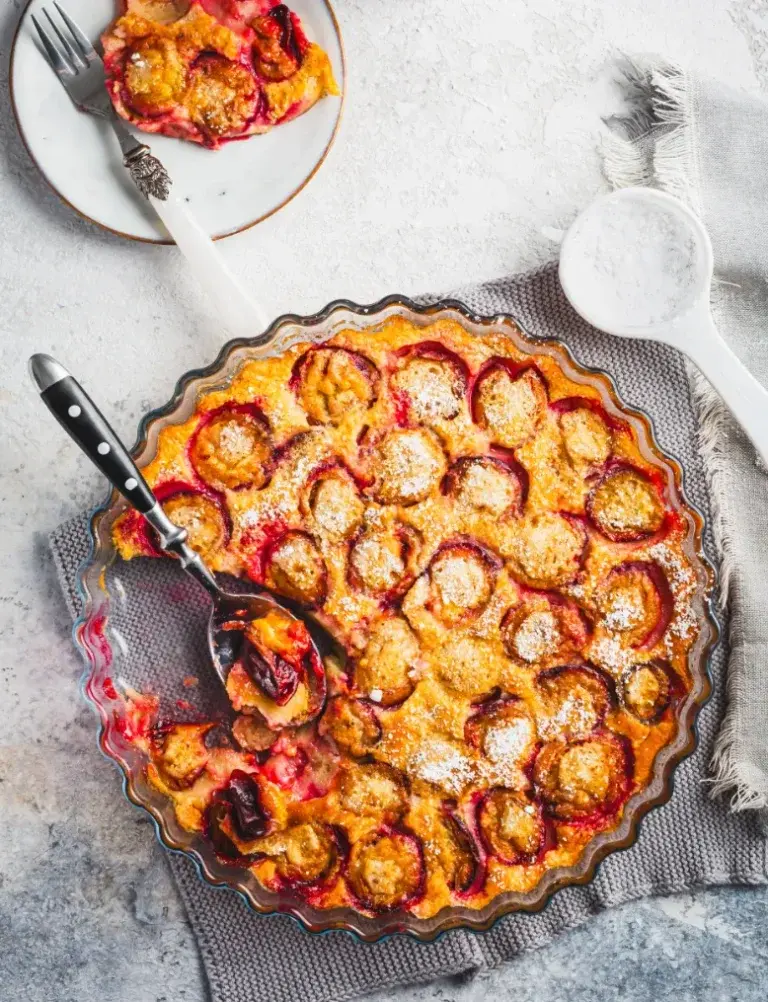
- Spread the frangipane evenly over the pastry base, about 1cm thick. Use a spatula to smooth it out.Arrange the plum halves cut-side up on top of the frangipane, starting from the outside and working in circles towards the centre. Pack them in quite tightly, they'll shrink as they cook.Press them gently into the frangipane so they're sitting in it, not on top of it.Sprinkle the 2 tablespoons of caster sugar over the top.
Bake
- Bake for 40-45 minutes until the frangipane is puffed up, golden brown, and set. The plums should be soft and slightly caramelized at the edges.If the edges of the pastry are browning too fast, cover them loosely with foil.Let the tart cool in the tin for 10 minutes, then carefully remove it and transfer to a wire rack.Serve warm or at room temperature, dusted generously with icing sugar just before serving.
Notes
- Plum varieties: Reine-claude (greengage) and quetsche (damson) plums are classic, but any firm, slightly tart plums work. Avoid very watery varieties, they’ll make the tart soggy.
- Make ahead: The pastry can be made up to 3 days ahead and kept in the fridge, or frozen for a month. The frangipane can be made a day ahead and kept covered in the fridge. Bring it to room temperature before using. The assembled tart is best eaten the day it’s baked, but keeps for 2 days at room temperature.
- Almond allergy: Replace the ground almonds with the same weight of extra flour and add a teaspoon of vanilla extract. Won’t be frangipane, but still delicious.
- Too sweet: If your plums are very sweet, reduce the sugar in the frangipane to 80g.
- Serving: Brilliant with crème fraîche, vanilla ice cream, or just on its own with coffee.
- Pastry shrinkage: If your pastry keeps shrinking, you’ve overworked it or it wasn’t cold enough when it went in the oven. Chill it properly between steps.
- Soggy bottom: If the base is soggy, you didn’t blind bake it or your plums were too juicy. Next time, cook the plums briefly in a pan to release some of their juice before using them.
About this recipe
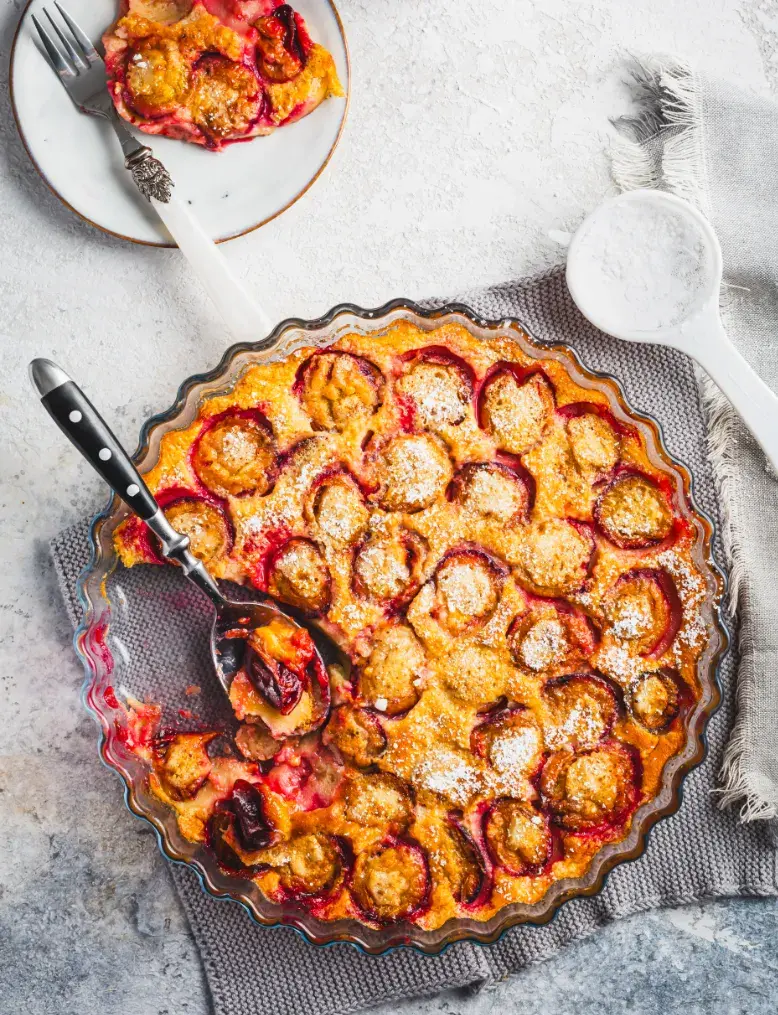
From August through October, when plums are everywhere at the market, this plum tart frangipane gets made in French kitchens. It’s a beautiful combination of buttery almond cream and tart juicy fruit, and once you’ve tried it you really can’t get enough of it. We certainly can’t.
The pastry
The base for this tart is pâte brisée, which translates as broken pastry and is named for the technique of breaking butter into flour to make it short and crumbly. It’s the workhorse pastry dough of French cooking. It is less sweet than pâte sablée, sturdier than pâte sucrée, and equally happy under a savoury filling or a sweet one. For a frangipane plum tart it gives you exactly the structure you need to hold the fruit and the almond cream without going soft underneath. And of course that matters a lot with juicy fruit like plums.
The frangipane
Frangipane is a buttery almond cream: butter, sugar, ground almonds and eggs beaten together. The name is attributed to Marquis Muzio Frangipani, an Italian nobleman whose chef supposedly created it in the 16th century. Or perhaps it comes from an old French word for bread made with almond milk. Nobody really agrees, and nobody particularly cares when they’re eating it, it’s simply delicious. It’s also used in the famous Galette des Rois.
What matters is what it does in this tart. It puffs up around the fruit during baking and absorbs any juice the plums release, which means no soggy base and no waterlogged pastry. It also adds a richness and depth that a plain custard filling just can’t match. Almonds and plums are such a natural combination. The nuttiness of the frangipane balances the tartness of the fruit perfectly, and together they’re really something special in this plum tart recipe.
The plums
The plums matter considerably in this recipe, so do pay attention to what you buy. You want firm fruit with a bit of tartness rather than something overly ripe and watery. Quetsches, the small purple Alsatian damson plums, are the classic choice. That perfect balance of sweet and sharp is what makes the finished tart genuinely interesting rather than just sweet. Reine-claude greengages work equally well.
Red and yellow plums are fine too but avoid anything too soft or juicy. Victoria plums can be unreliable because of their water content. If you’re not sure about the plums you have, cook them briefly in a dry pan first to release some liquid, drain them, and then use them in the tart. It takes five minutes and saves you in the end from a soggy base.
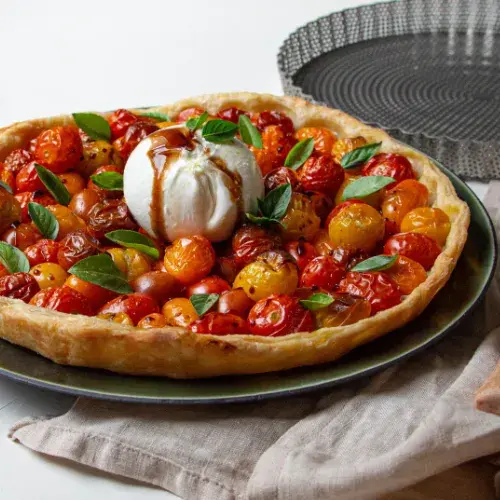
And don’t skip the sugar scattered over the top before baking. It caramelises slightly at the edges of each plum half as it cooks, which gives you those dark, slightly jammy borders that make a proper frangipane plum tart look as good as it tastes.
The variations
This plum and frangipane tart is the most common version, but it has regional cousins. Some people add a splash of rum to the almond cream, which is also very tasty. Some use pâte sablée instead of pâte brisée for a richer, more crumbly base. And others skip the frangipane entirely and use a more simple egg custard, which gives a lighter result. The quetsche version from Alsace is essentially the same recipe with smaller, more tart fruit.
Mind you, all of them are correct! French home baking has always accommodated variation within a basic framework, and this tart is no exception. I recommend you make this plum tart recipe way first, then adjust to whatever plums you have and whatever your instinct tells you. That’s really the most French approach there is.
The right dish for a plum tart
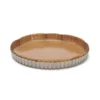
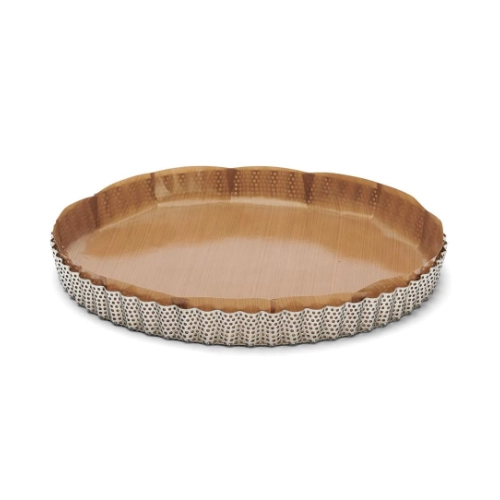
A frangipane plum tart really should be made in a fluted tart dish. And not just because it looks beautiful, though it does. The fluted edges actually increase the surface area of the pastry rim and help it bake more evenly. So it’s pretty and practical at the same time.
I recommend the De Buyer fluted dish for this. The stainless steel conducts heat directly and efficiently, which gives you a properly crisp base rather than a pale soggy one. And it releases cleanly once cooled, which really matters here because the caramelised fruit juices at the edges can get a little sticky. The last thing you want is to leave half your tart behind in the tin. De Buyer has been making professional French kitchen equipment since 1830, and for a classic French tart like this one, it just feels right to use a French dish, don’t you think?
How to serve it
Serve it with coffee after lunch, or as dessert with a generous spoonful of crème fraîche alongside. It keeps well for a day or two, though the pastry softens slightly as it sits. Make it when plums are in season, use good French butter of course, and don’t overthink it.
Share your feedback and spread the love!
If you try this recipe, I’d love to hear how it turns out! Leave a ★★★★★ rating and your thoughts in the comments, it helps fellow French foodies discover this recipe too. Snap a photo and tag me @obviously.french on Instagram if you’re sharing your bake or cooking online. Don’t forget to save this recipe to Pinterest so you’ll always have it handy for your next French-inspired meal!
Disclosure: Just so you know, this post contains sponsored content and/or affiliate links, If you make a purchase through these links, I may receive a small commission. Doesn’t cost you anything extra. I only link to things that are actually worth your time. All opinions are my own!