Profiteroles
 Prep Time 20 minutes
  Cook Time 35 minutes
  Total Time 55 minutes
  Servings 6
Ingredients
For the profiteroles
- 125 ml whole milk
- 125 ml water
- 100 gr unsalted butter
- 1 tbs sugar
- 1/4 tsp salt
- 140 gr plain flour sifted
- 4 egg at room temperature
For the homemade whipped cream filling
- 300 ml Double cream chilled
- 30 gr icing sugar
- 1 tsp vanilla extract
For the chocolate ganache
- 200 gr dark chocolate 65% cacao, chopped
- 200 ml Double cream
Equipment
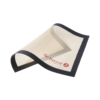
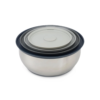
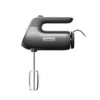
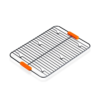
Instructions
1. Make the choux pastry
- Place the water, milk, butter, sugar, and salt in a medium saucepan over medium heat. Stir until the butter melts and the mixture comes to a boil. Remove from heat, add all the flour at once, and stir vigorously with a wooden spoon until the dough forms a ball and pulls away from the sides of the pan.
2. Cool slightly and add eggs
- Transfer the dough to a bowl or mixer. Let it cool for about 10 minutes. Add the eggs one at a time, beating well after each addition until the dough is smooth and glossy. The dough should fall in a thick ribbon from the spoon.
3. Pipe and bake
- Preheat the oven to 220°C (425°F). Pipe small mounds (about 3-4 cm diameter) onto the lined baking tray, spacing well apart. Smooth any peaks with a wet finger. Bake for 10 minutes, then reduce heat to 165°C (325°F) and bake for another 20-25 minutes until golden and puffed. Avoid opening the oven during baking.
4. Cool
- Remove from the oven and pierce each puff with a skewer to let steam escape. Cool completely on a wire rack.
5. Make the homemade whipped cream
- Pour the chilled double cream into a large, cold mixing bowl. Add the icing sugar and vanilla extract. Whisk with an electric mixer until soft peaks form, the cream should be light, fluffy, and hold its shape but still be smooth. Be careful not to overwhisk or else you will get butter!
6. Prepare chocolate ganache
- Heat the double cream gently until just boiling. Pour over the chopped chocolate in a bowl. Let sit for 2-3 minutes, then whisk until smooth and glossy.
7. Assemble
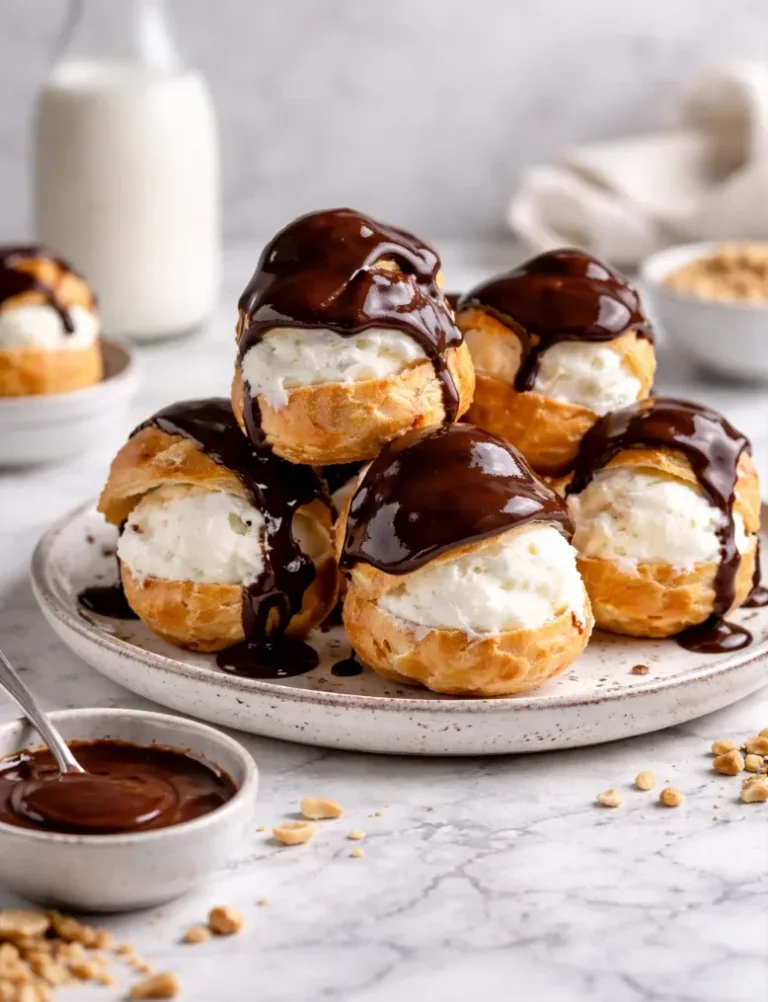
- Slice each profiterole in half horizontally. Spoon or pipe a generous dollop of the homemade whipped cream into the base and replace the top. Drizzle generously with warm chocolate ganache just before serving!
Notes
- For the best profiteroles, drying the dough well on the stove before adding eggs is crucial as it ensures a light, hollow puff that won’t collapse.
- When piping, keep the sizes even so they bake consistently. Avoid opening the oven door during baking to prevent sudden temperature drops that can deflate the puffs.
- Using chilled cream straight from the fridge helps the whipped cream hold its shape longer.
- Assemble the profiteroles just before serving to keep the pastry crisp and the cream fresh.
- If you want to prepare ahead, bake the choux shells in advance and freeze them; reheat briefly in the oven before filling and serving.
About this recipe
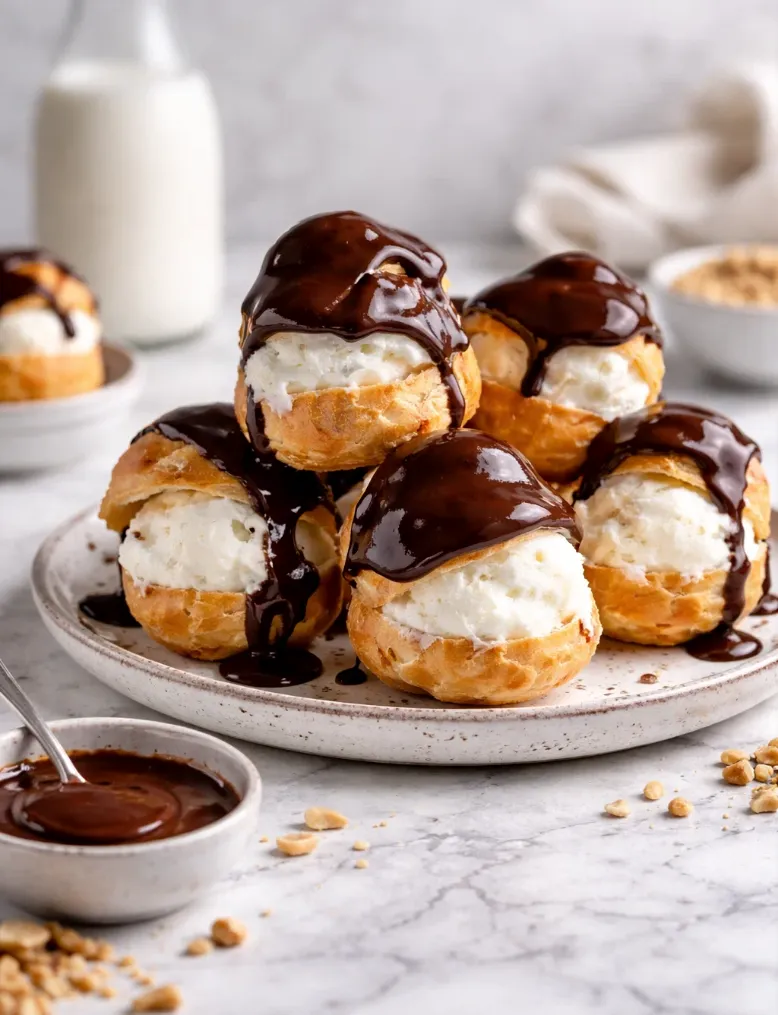
Profiteroles are one of the most satisfying things in French pâtisserie: small choux buns, filled with cold whipped cream, drizzled with warm chocolate ganache. The contrast between the crisp pastry, the cold cream, and the warm chocolate is the whole point, and it requires no elaborate technique beyond learning the choux. Once you have that, the rest is assembly.
Where profiteroles come from
The concept of small filled buns dates to the Renaissance, when French pastry chefs drew from Italian traditions that came to France through Catherine de Medici’s court in the 16th century. But the modern profiteroles french tradition, made with proper choux pastry, emerged in the 19th century when classical French pâtisserie was being codified and refined.
The name profiterole originally referred to a small profit or bonus, the word used for a little something extra, an indulgence beyond the standard. That meaning suited small filled pastries perfectly: they were celebratory, slightly luxurious, and associated with occasions rather than everyday eating. The chocolate ganache topping became standard as chocolate became more widely available and affordable through the 19th century, adding richness to what was already a well-balanced dessert.
Choux pastry for profiteroles
The choux pastry for profiteroles is the same dough used for éclairs, Paris-Brest, gougères, and the croquembouche that towers over French wedding tables. It is one of the foundational preparations in French pâtisserie, and understanding it opens up a significant proportion of the classical pastry repertoire.
What makes choux unusual is the technique. The dough is cooked twice: first in a saucepan on the hob, where the flour gelatinises in the hot water and butter, then in the oven, where the steam trapped inside the dough causes it to puff up and hollow out. There is no raising agent. The steam is the raising agent.
The dough needs to be the right consistency before it goes into the piping bag. Too wet and the buns spread flat rather than rising. Too dry and the steam cannot build up enough pressure to hollow them properly. The test is the ribbon test: the dough should fall from a spoon in a smooth, thick ribbon. If it drops in chunks it needs more egg. If it pours it has too much.
The filling
My preferred filling for a dessert profiterole is whipped cream, cold and lightly sweetened. It sets off the warm chocolate better than pastry cream, which is also delicious but richer and slightly heavier. Ice cream works well too and is the filling used in many French restaurant versions, where the profiteroles are assembled to order and the cold of the ice cream creates an even stronger contrast with the warm chocolate.
Whatever you use, fill the profiteroles at the last possible moment. Filled choux softens quickly as the moisture from the filling migrates into the pastry. Unfilled choux buns can be made ahead and stored in an airtight container, or frozen and refreshed in a hot oven for a few minutes before filling.
The croquembouche connection
The french profiteroles tradition reaches its most spectacular form in the croquembouche, the towering cone of profiteroles bound with caramel that stands at the centre of French wedding tables. The name means crunches in the mouth, a reference to the set caramel that coats each bun. If you marry a French person, this is what appears instead of a tiered cake. It is considerably more impressive and considerably more difficult to eat elegantly.
The right piping equipment
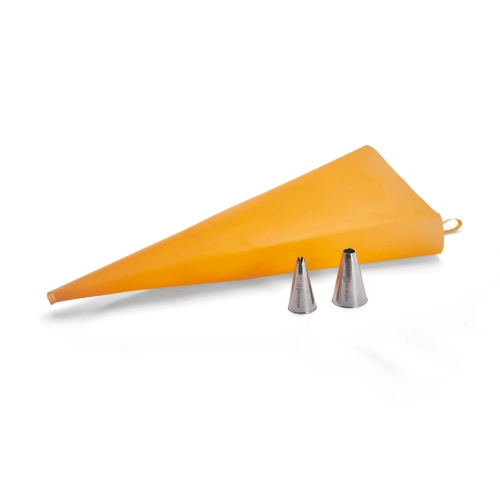
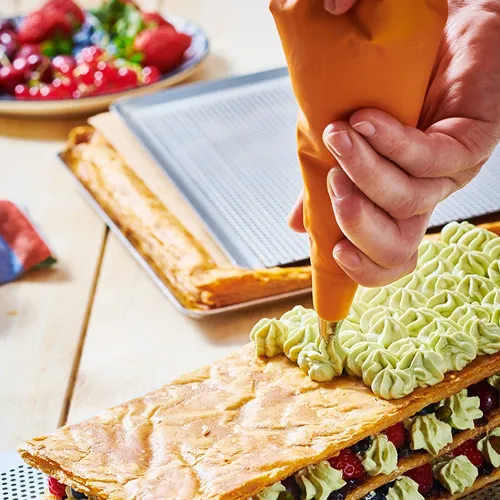
Consistent profiteroles require consistent sizing, and consistent sizing requires piping rather than spooning. I use the De Buyer piping bag for the choux pastry for profiteroles. The bag handles the warm, fairly stiff dough without splitting or losing shape under pressure, and the control it provides means each bun is the same size, which matters for even baking. Unevenly sized choux bakes unevenly: small ones are done whilst large ones are still raw in the centre. A good piping bag removes that variable entirely.
The same bag works for filling the baked profiteroles afterwards, using a small plain nozzle to pipe cream directly into the base of each bun without splitting the pastry.
Share your feedback and spread the love!
If you try this recipe, I’d love to hear how it turns out! Leave a ★★★★★ rating and your thoughts in the comments, it helps fellow French foodies discover this recipe too. Snap a photo and tag me @obviously.french on Instagram if you’re sharing your bake or cooking online. Don’t forget to save this recipe to Pinterest so you’ll always have it handy for your next French-inspired meal!
Disclosure: Just so you know, this post contains sponsored content and/or affiliate links, If you make a purchase through these links, I may receive a small commission. Doesn’t cost you anything extra. I only link to things that are actually worth your time. All opinions are my own!