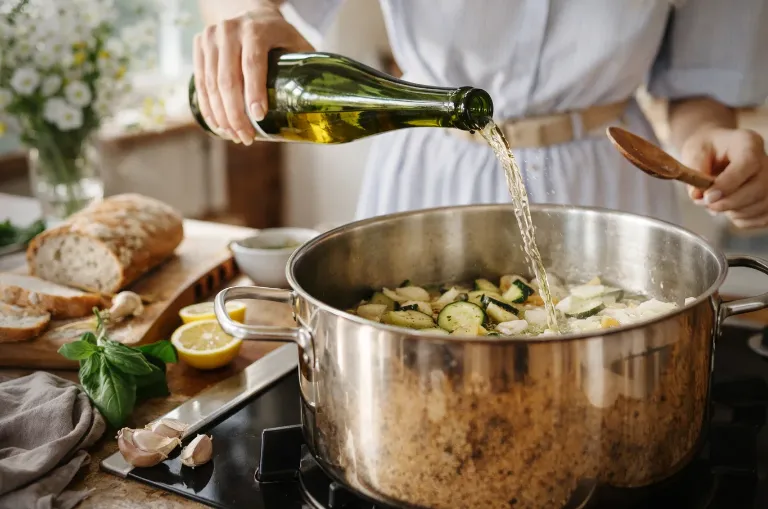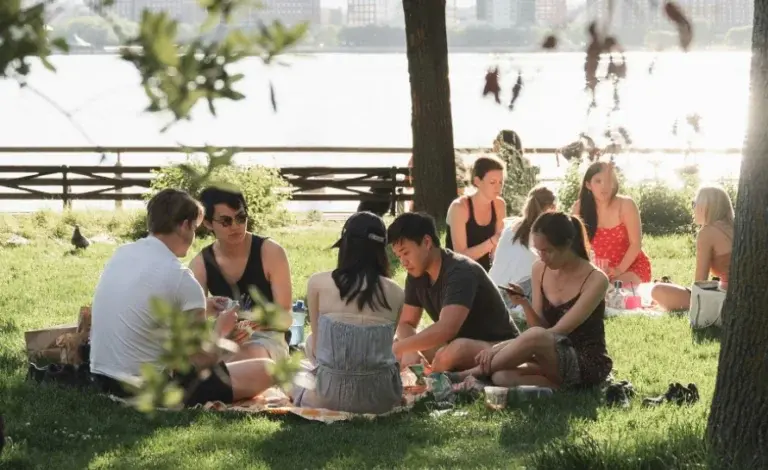
If you love being outdoors and you love food as much as I do, picnics are the obvious answer to summer. Eating outside simply feels different. The garden is lovely and the closest option, but putting a backpack on and walking into the Parc Naturel de la Brenne (or any stretch of nature, really) to find a quiet spot, then laying everything out on the grass, is one of the better things life has to offer.
It’s the whole process that does it. Packing the cool bag, choosing the spot, deciding what to bring. It makes you slow down before you’ve even left the house.
A picnic in France can be anything from a blanket in a city park to a full production with a folding table, proper glasses and a tablecloth. What follows is everything I’ve learned about which picnic food actually survives the journey, what to leave at home, how to pack it so nothing arrives crushed, and the timings that keep it all safe in the heat.
Short on time? Jump to the best picnic foods at a glance, the packing guide, or the FAQ.
Yes, picnic is a French word
First a quick word on the origin of this word and ritual, picnics are born in France. And yes, I’m secretly proud of that.
Pique-nique first appears in print in a Paris pamphlet from May 1649, written to celebrate the end of the first Fronde. Piquer means to peck or nibble, and nique in its older sense meant something worthless, a trifle, nothing at all. So a pique-nique was roughly “a nibble of nothing”. Which, given how seriously the French now take picnic food, is quite ironic.
Originally, it had nothing to do with eating outdoors. A repas à pique-nique simply meant a meal where everyone paid their share or brought a dish, so nobody was in anybody’s debt. The 1778 Académie française dictionary defines it exactly that way. English borrowed the word in the 18th century, and the outdoor meaning came later. Which means the original picnic was a potluck, not a picnic blanket.
Table of Contents
The best picnic foods at a glance
Food
Why it works
Travel time
Cake salé
Slices clean, eaten by hand, better the next day
All day in a cool bag
Pan bagnat
Designed to be pressed and left to soak
Best after 3 to 4 hours
Quiche or savoury tart
Firmer and fuller-flavoured at room temperature
All day, transported whole
Fougasse
Dense, oily crumb that doesn’t go stale
All day
Hard cheese (Comté, Ossau-Iraty)
Doesn’t sweat or collapse in heat
All day
Tapenade and rillettes
Sealed jar, no assembly needed
Cool bag, few hours
Financiers and madeleines
Individual, sturdy, no plate required
All day
Fresh fruit
Zero preparation, zero risk
All day
Picnic food ideas: what to actually bring
Bread and crackers
A French picnic starts with bread, because everything else is a spread, a cheese or a tapenade waiting for something to sit on. Which bread matters more than people expect, and it’s worth getting right before you’re an hour from home.
Baguette
Wonderful if you’re eating within an hour of leaving. Any longer and it goes soft, chewy or quietly crushed at the bottom of the bag. Baguettes are engineered to be eaten the day they’re baked, ideally the hour they’re baked.
Fougasse
The Provençal flatbread, olive oil based and usually studded with olives, lardons or herbs. Dense enough to survive a morning in a bag and emerge with its crust intact. My default when we’re walking any distance.
Pain de campagne
A thick crust protects everything inside, and a whole round loaf arrives looking much as it did when it left the kitchen. Buy it whole and tear it at the picnic.
Crackers
Worth bringing alongside the bread, or instead of it if you’re travelling light. Shop-bought does the job, but homemade savoury biscuits with black olives are something else entirely. They travel in a tin, keep for days and don’t shatter the moment a knife touches them.
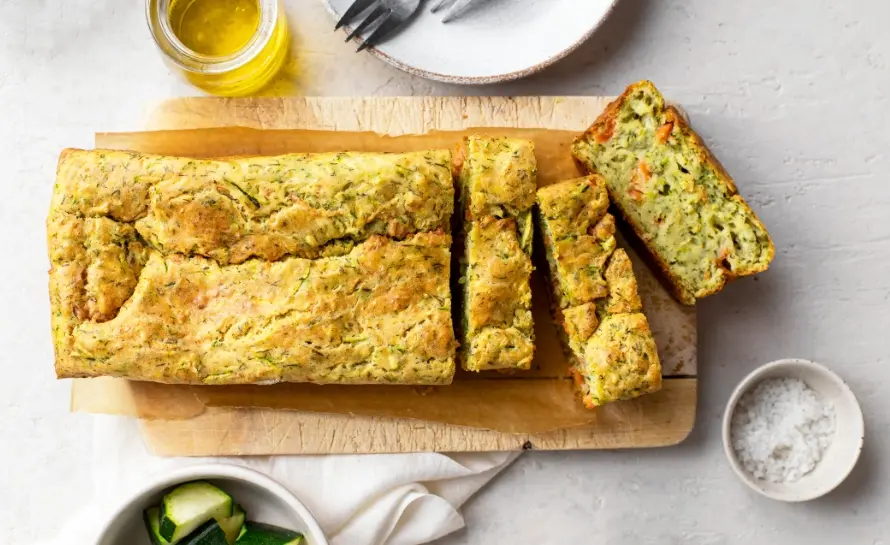
Cake salé, the picnic hero
If you ask around in France what they bring to a summer picnic, most of them will mention cake salé. It’s the single most useful thing in this entire article.
Cake salé, literally means savoury cake. Same batter method as any loaf cake, same tender moist crumb, except instead of sugar and vanilla you’ve got olives, cheese, tuna, courgette, sun-dried tomatoes or smoked salmon folded through. It rises, it goes golden, and it slices into clean pieces that hold together in your hand with no plate required.
It’s been the backbone of French picnicking food for decades, originally a way of using up leftovers in rural kitchens before it moved into apéros, buffets and picnics across the country.
The courgette and smoked salmon version is particularly good in summer, light enough for the heat and substantial enough to actually fill you up. It keeps well in a cool bag and is usually better the day after you make it, which makes the evening before exactly the right time to bake.
My neighbour makes hers with olives, gruyère and sun-dried tomatoes. Last week I made one with feta, courgette and walnuts and it disappeared in about ten minutes. The base stays the same and everything else is whatever’s in the fridge. If you have children, it’s also a reliable way of getting vegetables into them without a negotiation.
Pan bagnat, the sandwich built for picnics
If cake salé is the picnic hero, pan bagnat is the one nobody outside France knows about and everybody should. It’s a Niçois sandwich, a round crusty roll rubbed with garlic, soaked with olive oil and filled with the components of a salade niçoise: tomato, tuna or anchovy, hard-boiled egg, black olives, spring onion, sometimes raw broad beans or artichoke. No lettuce, no mayonnaise, no butter.
Pan bagnat means soaked bread in Niçois, and that’s the whole point. You assemble it, wrap it tightly, and press it under something heavy for a few hours. The oil and tomato juice soak into the crumb and the whole thing becomes denser and better as it sits. It is the only sandwich I know of that is actively improved by being made in advance and carried around in a bag.
Make it the night before, weight it in the fridge overnight, and it’s at its peak by lunchtime the next day. Nothing else in this article rewards the wait quite so directly.


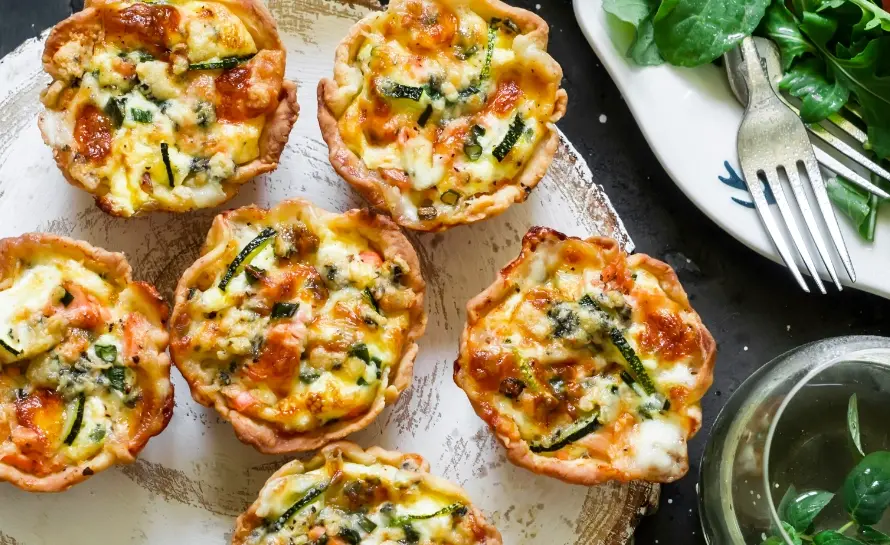
Quiches and savoury tarts
A quiche Lorraine eaten at room temperature on a sunny afternoon is just excellent. The filling is set firm, the flavour is fuller and richer than straight from the oven, and it slices into clean wedges that hold their shape to the last piece.
Transport it whole and slice on arrival. A pre-sliced quiche weeps into its own base on the journey. Whole, it holds.
Mini quiches are even better for a picnic, because individual portions mean no knife required and nothing to juggle when you’re sitting on a blanket. The salmon and courgette mini quiches are lighter than a classic Lorraine and works beautifully in the heat. Spinach and ricotta tarts are the same idea, individual-sized, perfectly happy at room temperature, and easy to pass around.
Pissaladière is the other one worth knowing: the Niçois onion tart with anchovies and black olives, no cheese, no cream, and completely happy at room temperature for hours. It was designed to be sold in slabs from a bakery and eaten standing up, which makes it close to perfect picnic food.
Cream-filled tarts are a different story
Strawberry tarts, berry tarts, anything built on pastry cream/crème pâtissière should be saved for a table where you can plate them at the last minute. The pastry cream needs refrigeration, the pastry softens quickly once assembled, and they’re fragile in a way that makes a picnic bag a risky place! Let them be at their best somewhere else.
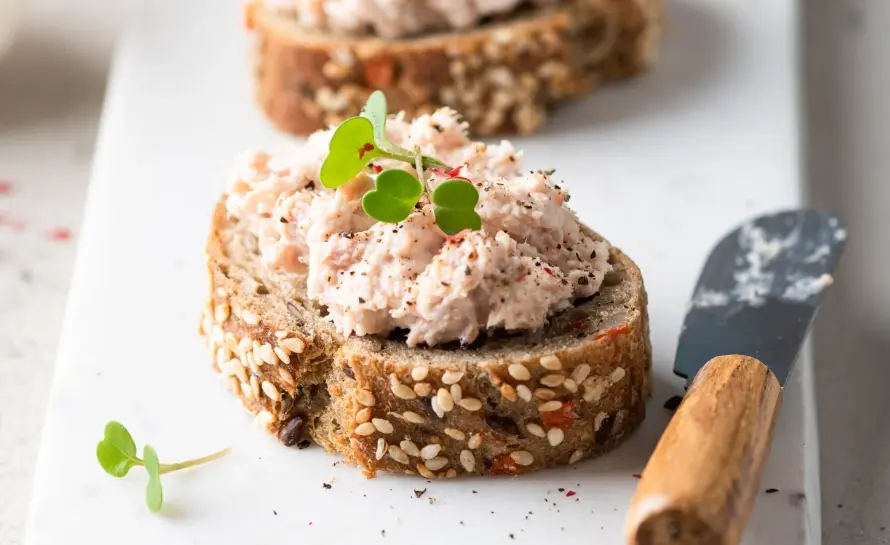
Spreads and tapenades
Rillettes de thon
A smooth tuna spread, is one of the best things you can bring anywhere. With good bread and a few cornichons alongside, the apéritif is sorted before you’ve even unpacked the rest of the bag.
Cervelle de canut
This is the Lyon version of herb cream cheese: fromage blanc beaten with shallots, garlic, herbs and white wine vinegar until it’s sharp and creamy. Very good with bread or raw vegetables. Because it’s fresh cheese it needs to stay cold, so this one belongs in the cool bag rather than the backpack.
Tapenade
A tapenade is made with black olives, capers, anchovy and olive oil takes about ten minutes and is so much better than anything from a jar. It’s also the most heat-tolerant thing on this list, being essentially oil and salt.
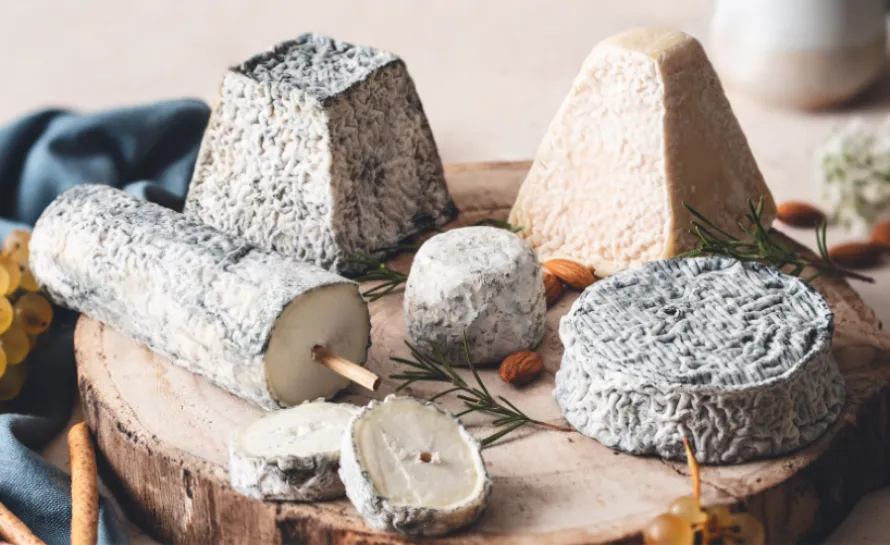
Cheese
Absolutely take cheese. The trick is choosing ones that can sit in a bag for a few hours, or packing a cool bag properly so you can bring whatever you like. The rule is simple: dry and firm makes it to the picnic. The riper and softer it is, the more it needs a cool bag and the sooner it needs eating.
Hard cheeses
Comté from the Jura, anywhere from a few months to several years old, is probably the best picnic cheese in France. It doesn’t suffer in warm weather and it slices cleanly. Emmental, Mimolette, Meule Fruitée and Beaufort all work, as do hard sheep cheeses like Ossau-Iraty and Etorki.
Aged goat cheeses
Aged goat cheeses in the smaller, drier formats are also good travellers. You can take a Pouligny-Saint-Pierre, a Crottin de Chavignol, Picodon, Chabichou, Valençay, Selles-sur-Cher or a Sainte-Maure de Touraine.
Bloomy rinds
Young bloomy rind cheeses are fine, but stay away from the riper ones. A young Brie or Camembert travels well enough, but a two-week-old Brie de Meaux will melt and become considerably more of a situation than a pleasure in warm weather.
The sweet end
A French picnic ends with something sweet, and conveniently the best sweet things for outdoor eating are also the easiest to make and carry.
Financiers
Financiers are the great example. Small golden rectangles, essentially engineered for transport, sturdy enough to survive a bag. A tin of them is still one of the most satisfying things you can produce at the end of a picnic lunch.
Madeleines
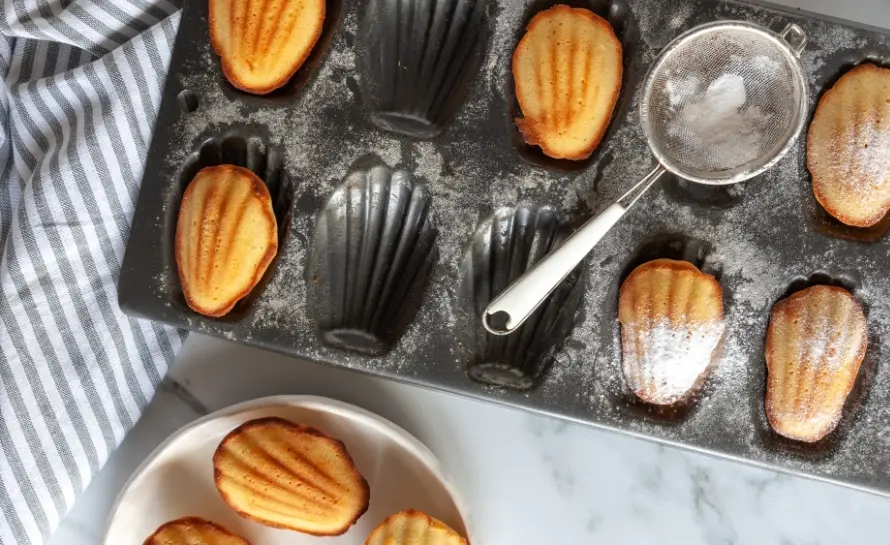
Madeleines are the same in spirit. Individual portions, delicate enough to feel like a treat, and at their absolute best a few hours after baking, which is exactly when you’ll be eating them.
Dense loaf cakes
Dense loaf cakes like lavender and lemon or fruit and nut slice cleanly, hold together in transit and are better the day after you make them. Another argument for baking the evening before.
No-cook picnic food
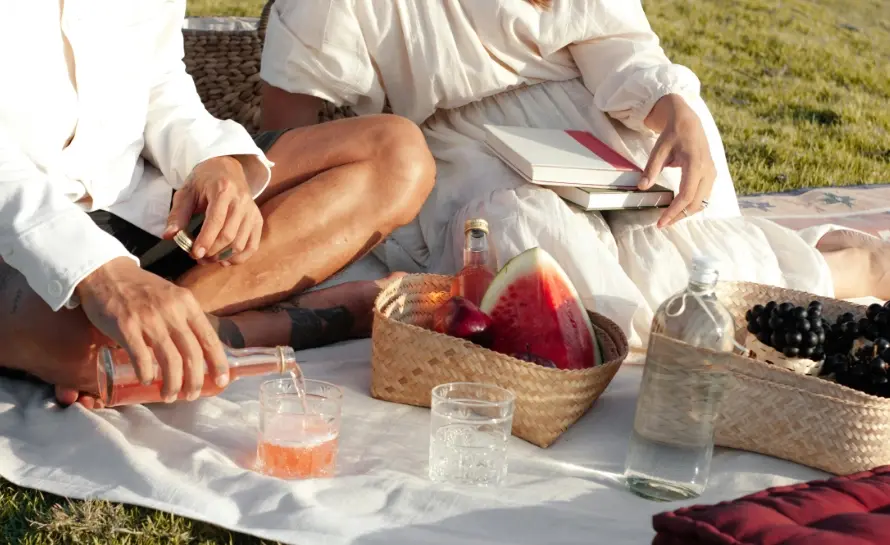
Some of the best food to have at a picnic requires no cooking whatsoever.
Tomatoes and flaky salt
Fresh tomatoes bought that morning and eaten with flaky salt from Camargue is one of the great summer pleasures. Just bring the salt separately and slice the tomatoes when you arrive rather than ahead of time. A small pot of French flaky salt costs almost nothing and it changes what a tomato tastes like in a way that’s completely disproportionate to the effort involved!
Radishes with butter and salt
The most French thing on this list. Whole radishes with French salted or unsalted butter, a pile of again flaky salt from Camargue. You dip and eat with your hands. Don’t forget to bring the butter in the cool bag.
Oeufs mimosa
Hard-boiled eggs with the yolks mashed with a little mayonnaise and mustard and piped back in. Genuinely traditional picnic food in France, but they’re a fresh-egg-and-mayonnaise product, so they need to stay properly cold and be eaten first.
Raw vegetables, nuts, olives and cornichons
Carrots, cucumber, peppers, either with a dip or on their own. are great with a dip or on their own. Good olives, cornichons, and a handful of nuts (walnuts, hazelnuts, almonds) need zero cooking and survive any journey.
Fruit
Fruit is some of the best picnic food going. You really can’t go wrong there. They all work the same way: wash them at home, dry them, put them in a container, and they’ll be just as good three hours later as they were when you left.
Apricots and peaches need a little more care since they bruise easily in a bag, but a padded container and a bit of attention to what’s sitting on top of them and they travel fine, and a ripe peach eaten outdoors in August is worth the effort.
Apples and oranges are the reliable all-conditions option, happy at any temperature, needing no attention, and brilliant at the end of a meal when you want something fresh and clean after the cheese and the cake.
Watermelon is obviously glorious outdoors but honest about its limitations: it needs cutting, it really should be cold, and it makes a considerable amount of mess. Entirely worth it on a very hot day at a proper sit-down picnic. Less practical when you’re working from a backpack and a blanket in a park.
What not to bring
- Anything bound in mayonnaise: potato salad, coleslaw, egg mayonnaise. These are the classic culprits in summer food poisoning cases and they degrade fast once they warm up. If you must, keep them at the bottom of the cool bag against an ice pack and eat them first.
- Dressed leaf salads: they wilt within twenty minutes. Bring the components separately and dress on arrival, or bring a grain salad instead.
- Very ripe soft cheese: as above. It doesn’t travel, it leaks, and it will find your bread.
- Cream-filled anything: pastry cream, chantilly, cheesecake, mousse.
- Avocado: it browns, it bruises, and it is never as good as it was in the kitchen.
- Cold cooked seafood: unless you have a genuinely cold bag and are eating within a couple of hours.
Picnic food safety in the heat
Boring, but this is the part that decides whether the afternoon ends well.
Bacteria multiply fastest between about 4°C and 60°C (40°F to 140°F). The working rule used by food safety agencies is straightforward: perishable food shouldn’t sit out of the cool bag for more than two hours, and no more than one hour once the air temperature goes above 32°C (90°F). That clock is cumulative, so taking the cheese out, putting it back and taking it out again all counts.
What that means in practice:
- Pack cold, not cool: chill everything thoroughly in the fridge before it goes in the bag. A cool bag maintains a temperature, it doesn’t create cold.
- Pack the bag full: a full cool bag stays cold far longer than a half-empty one. Fill gaps with a bottle of water you’ve frozen overnight, which doubles as a drink later.
- Two bags beat one: drinks in one, food in the other. The drinks bag gets opened constantly; the food bag can stay shut.
- Keep it in the shade: and never in a hot car boot. A car parked in the sun in July gets hotter than any oven-free space has a right to be.
- Serve in stages: put out one dish at a time rather than laying the whole spread on the blanket for three hours.
- Wash the fruit and vegetables at home: and bring hand wipes or a small bottle of water and soap for hands.
If it’s a very hot day and you’re walking any distance, build the picnic around things that don’t care: fougasse, tapenade, hard cheese, cured sausage, fruit, nuts, financiers. That’s a genuinely good lunch and nothing on it is on a timer.
What to drink
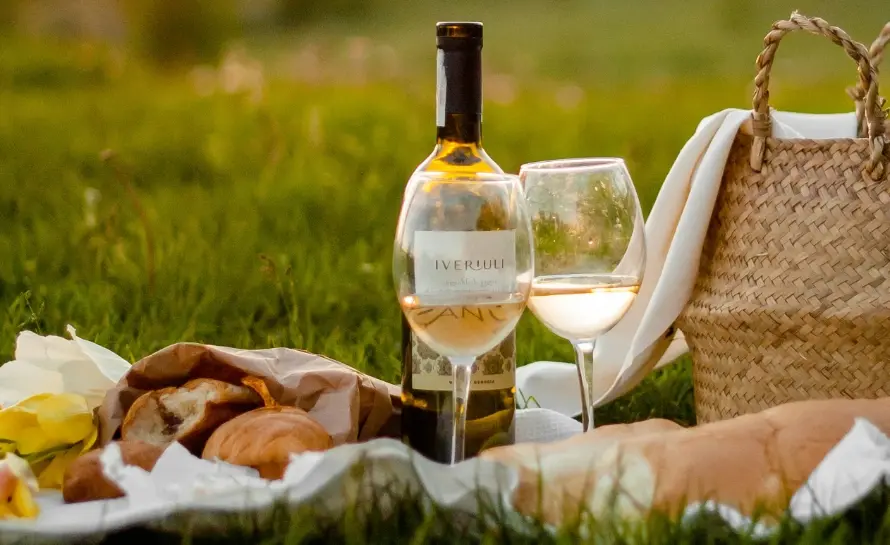
Rosé
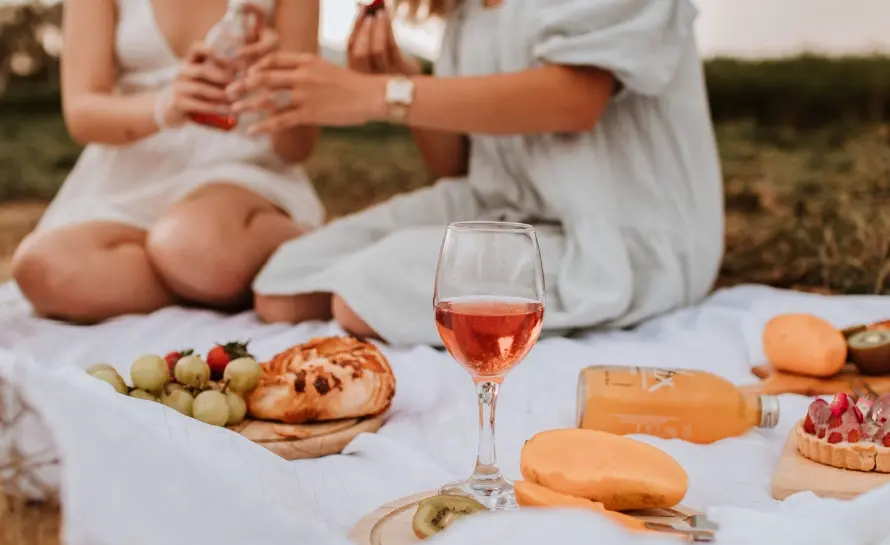
A nice chilled Provençal rosé (pale, dry with a faint strawberry edge), is the default setting for a French summer picnic.
Light red
A light red served cool works just as well and in France this is considered completely normal: a young Beaujolais, a Loire Pinot Noir, or a Saumur served at around 16°C pairs well with the food and holds up better in moderate heat than a full-bodied red would.
White
White is right if the spread leans on fish. Rillettes de thon, pissaladière and salmon tarts all pair better with a crisp white Burgundy or a Muscadet than with rosé.
White is the answer if the spread leans on fish or goat cheese, and this is where a picnic gets more interesting than people expect.
With rillettes de thon, pissaladière and salmon tarts, you want something crisp and mineral. A Chablis is the classic: taut, unoaked, with enough acidity to cut through oily fish and anchovy without arguing with it. A Pouilly-Fuissé is the richer end of white Burgundy if the tart is creamy rather than sharp.
With goat cheese, Sauvignon Blanc from the Loire is one of the great French pairings and worth planning the picnic around. A Sancerre or a Pouilly-Fumé against a Crottin de Chavignol is a combination that comes from the same stretch of river, which is usually a sign you’re onto something.
With quiche, cake salé and cheese generally, a Mâcon-Villages Chardonnay does the job without demanding attention.
If you want one bottle that handles a whole Provençal spread, a white Côtes de Provence made from Rolle, the grape Italy calls Vermentino, is the answer. Ultimate Provence’s white has that lemon and white pepper character that sits happily alongside tapenade, tomatoes and hard cheese, and it’s vegan if that matters to your table.
And on budget, an Entre-Deux-Mers from Bordeaux is the most underrated white in France. Dry, brisk, cheap, and completely at home with everything on a picnic blanket.
Extra tips
Whatever you choose, it needs to be properly cold and it needs a screwcap or a corkscrew you’ve actually packed. Bring one white and one rosé if you’re feeding more than four, since half the table will want each. And keep the bottle wrapped in a wet tea towel in the shade rather than standing in the sun looking decorative. If there’s a cold stream or lake where you’re sitting, that’s better still, which is the oldest trick in French picnicking!
Homemade drinks
Kir
If you’re feeling fancy, you can pre-mix a good kir to take with you. You need a good blackcurrant liqueur (crème de cassis), an Aligoté or a Muscadet (which is what I use), and an empty flip top glass bottle. Mix one part cassis to four parts wine, seal it, and you’re ready to enjoy your French cocktail at your picnic.
French ponche
If you’re looking for something lighter, you can make a homemade French ponche. The French version isn’t the sticky-sweet bowl of student parties: it’s a bottle of light Provençal rosé, a handful of sliced strawberries and peaches, a few sprigs of fresh mint, and enough sparkling water or lemonade to lighten it. Leave it overnight in the fridge, pour it into a empty flip top glass bottle for the journey, and it arrives at the picnic light pink, cold, and lovely.
Alcohol-free
Strawberry or raspberry syrup diluted in good sparkling water is the French summer classic and is honestly perfect on a hot afternoon. A jug of cold mint infusion works too.
Practical note
Drinking alcohol in public parks is restricted in some French towns and in parts of Paris, and rules vary by commune. Worth a quick check if you’re picnicking somewhere municipal rather than in open countryside.
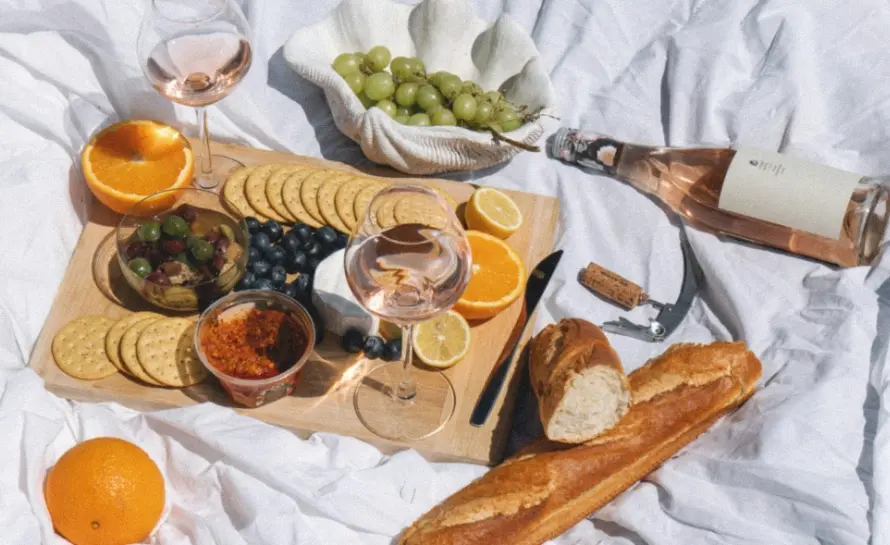
How to pack picnic food
Choosing a cool bag size
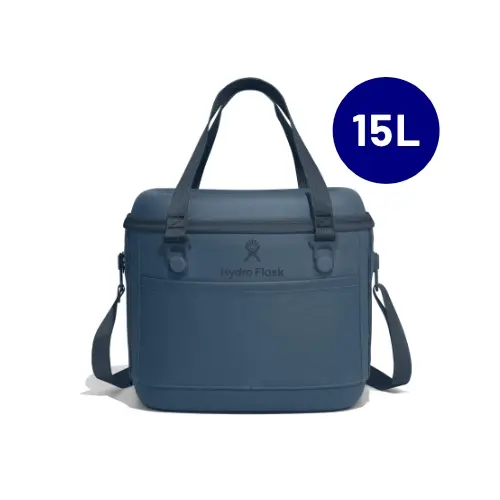
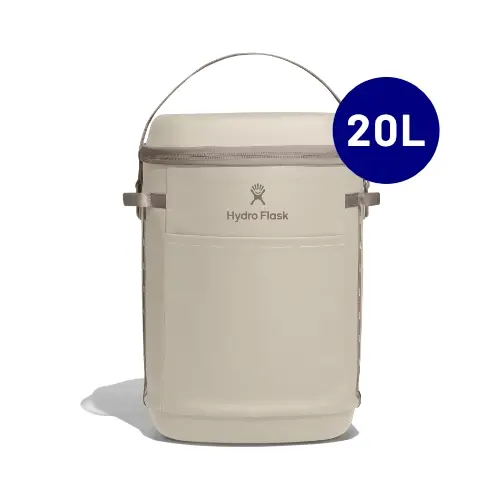
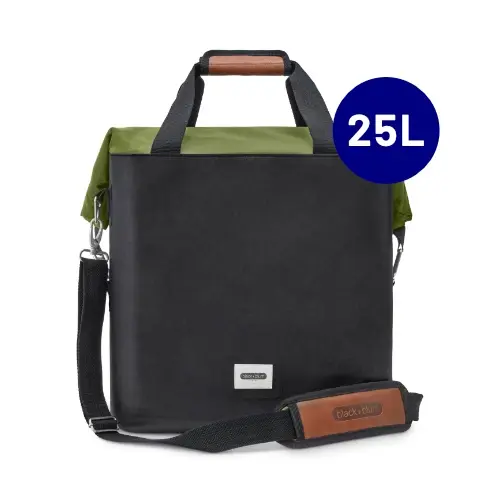
The size of your cool bag is worth thinking about before you leave the house rather than at the moment you’re trying to fit a whole quiche, a cake salé, two blocks of cheese, a bottle of rosé, and a jar of rillettes into something clearly designed for four cans of beer.
2 people
A small cool bag of around 10 to 15 litres handles everything comfortably.
4 people
Here you’re looking at 20 to 25 litres at minimum, especially if you’re bringing drinks alongside the food.
6+ people
Two bags are simply more practical than one enormous one, partly for carrying and partly because one can stay closed and cold while you eat from the other.
Packing order, bottom to top
- Ice packs on the bottom, since cold falls.
- Anything with mayonnaise, fresh cheese or egg directly against them.
- Cheese, sealed jars in the middle.
- Quiches, cakes and tarts in rigid boxes above that.
- Bread, fruit and anything crushable on top.
- A final ice pack laid flat across the top if there’s room.
Drinks travel in the other bag or on the outside. A frozen water bottle tucked down the side of the food bag is the most useful thing you can add.
Containers
For quiches and cakes
You can transport a quiche in a cake box and cakes in rectangular ones. Or pre-slice and pack in a container roomy enough not to squash anything.
For salads, fruit, cheese and crackers
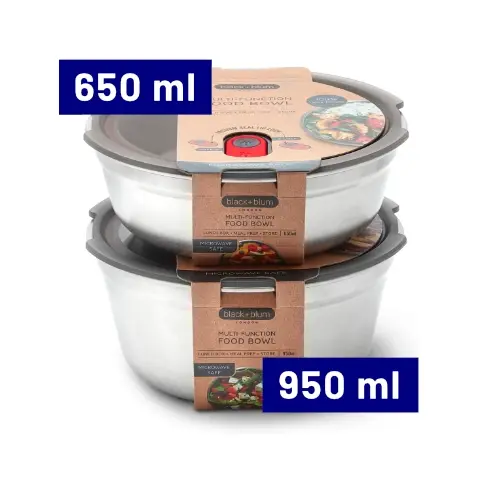
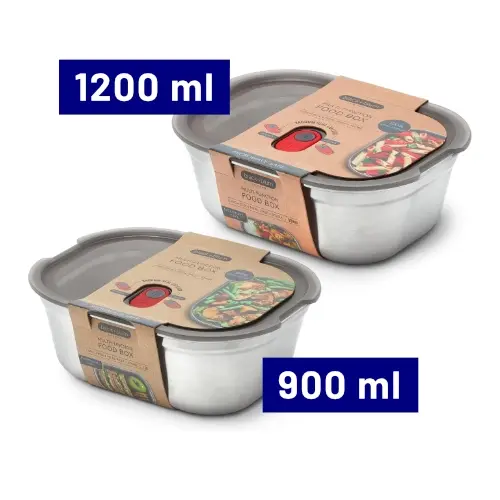
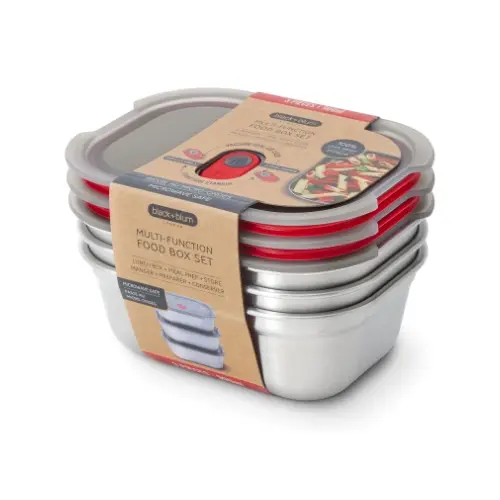
Stainless steel food containers are the best answer for tabbouleh or salad components. The material is sturdy, they’re properly leakproof, and they protect what’s inside rather than just holding it.
What to look for
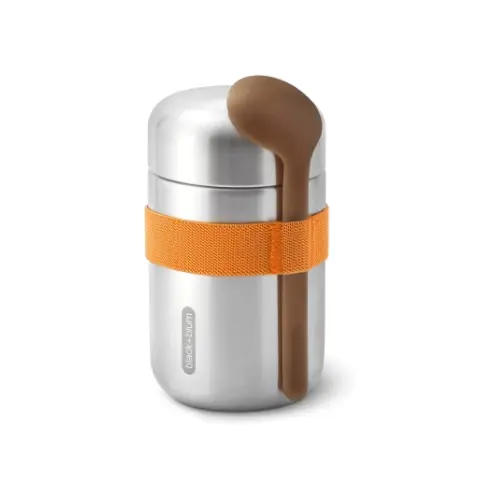
Stackable, a genuinely leakproof seal rather than a snap lid, and a size range rather than one big box. Black+Blum stainless steel containers are the ones we use. A set of two or three covers most situations, means no single-use plastic, and nothing ends up smelling of last week’s lunch.
For spreads and tapenades
Spreads with fresh cheese or cream and tapenades will travels happily in a sealed glass jar if you eat it within an hour of leaving the house. If you travel a bit further, a insulated food jar will do the trick to keep your spreads fresh.
Knives and cutlery
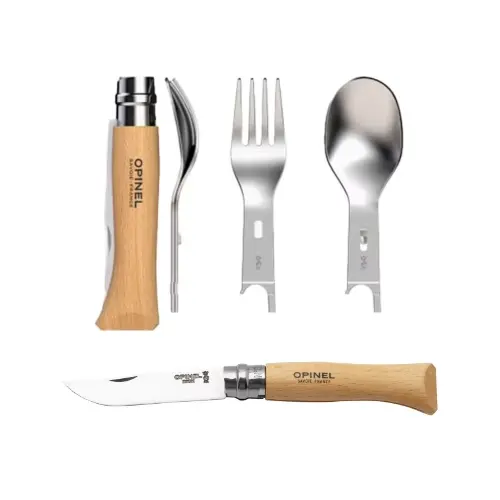
Both my husband and I have a set of the Opinel Picnic+ set for when we go out and about. It’s the original known pocketknife, but it comes with a fork and spoon that you can snap into place with the knife’s Virobloc safety ring. We both think they’re pretty amazing and even if we don’t plan a picnic, they are in the car wherever we go.
When to make what
When
What
Two days before
Savoury biscuits, tapenade, rillettes
The evening before
Cake salé, quiche, pan bagnat (weighted overnight), loaf cakes, ponche
Same morning
Madeleines, financiers, buy the bread, wash and box the fruit
At the picnic
Slice the quiche, slice the tomatoes, dress the salad
FAQ
What is the best picnic food that won’t spoil?
Anything built on oil, salt or dry cheese rather than dairy and eggs. Fougasse, tapenade, hard cheeses like Comté or Ossau-Iraty, cured sausage, olives, nuts and whole fruit all cope with a warm afternoon. Cake salé and quiche are fine in a cool bag. Avoid anything bound with mayonnaise or filled with cream.
How long can picnic food safely sit out?
Two hours out of the cool bag, and one hour once the air temperature is above 32°C (90°F). The clock is cumulative, so taking a dish out and putting it back still counts. Serve one dish at a time rather than laying everything out for the whole afternoon.
What do the French actually eat at a picnic?
Bread, cake salé, quiche or pissaladière, a spread like tapenade or rillettes de thon, hard cheese, saucisson, radishes with butter and salt, tomatoes with fleur de sel, fruit, and something small and sweet like financiers or madeleines. Rosé or a light red served cool.
What should you not bring to a picnic?
Anything bound in mayonnaise, dressed leaf salads, very ripe soft cheese, cream-filled pastries, avocado, and cold cooked chicken or seafood unless you have a properly cold bag and will eat within a couple of hours.
What size cool bag do I need?
Ten to fifteen litres for two people, twenty to twenty-five for four, and two separate bags for six or more. Keep drinks in one and food in the other so the food bag stays shut.
Is picnic a French word?
Yes. Pique-nique appears in a Paris pamphlet from 1649, from piquer, to nibble, and nique, meaning a trifle. Originally it described a meal where everyone contributed a dish or paid their share, with no outdoor element at all. English borrowed it in the 18th century.
Over to you
The best French picnic I’ve been to was a fête des voisins, it’s a national neighbourhood party that started in Paris in 1999 and now held across France on the last Friday in May. Everyone on a street or in a village comes out and brings their own food. You try dishes you’ve never had, work out new combinations, catch up with neighbours you haven’t seen in months and meet the ones who’ve just arrived. Which is what happened to us when we first moved here.
I remember asking my neighbour what to bring and having no real idea what would survive the heat or the journey. Everything I picked up since then is in this article, now you can go and make something good for your next picnic!
What’s your non-negotiable picnic food? Is there something your family always brings that I’ve missed? I’m always looking for another cake salé variation, and I’ll happily take recommendations for anything that improves after four hours in a bag.
This post may contain affiliate links. If you buy through them I earn a small commission at no extra cost to you, and it helps keep this blog running. Please read my disclosure policy for more information. I am grateful for your support.